
loading...
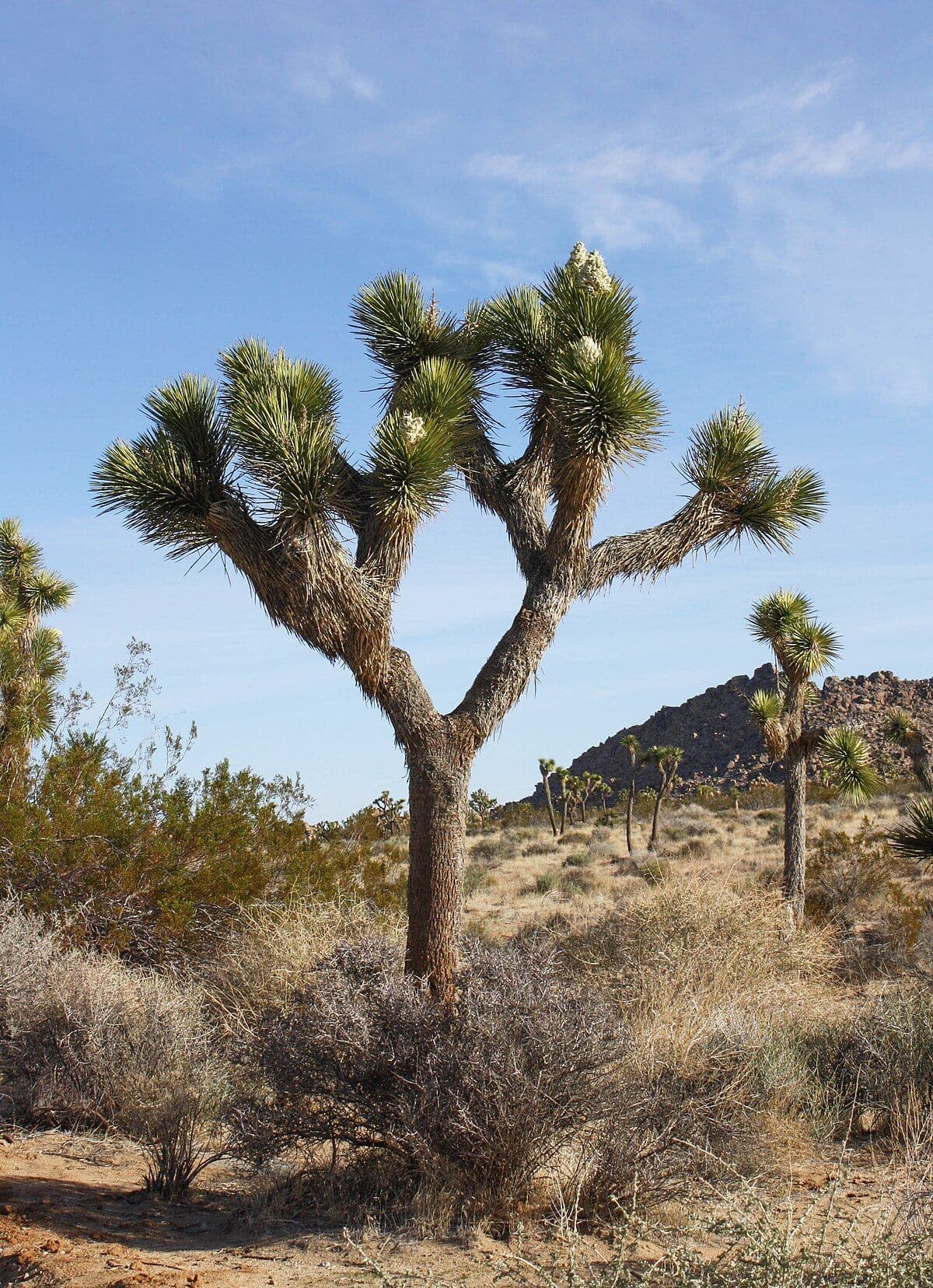


A species of yucca that grows into a tree-like shape, characterized by its spiky leaves and clusters of white flowers. It is native to the southwestern United States and is known for its unique, twisted appearance.
Summary
The Joshua Tree, scientifically named Yucca brevifolia, is a unique species of tree native to the arid southwestern regions of the United States, specifically California, Arizona, Utah, and Nevada. The Joshua Tree is most notably found in the Joshua Tree National Park in California, which covers an area of more than 1,234 square miles. This iconic plant is an essential piece of the Mojave Desert ecosystem, providing habitat and food for a variety of species.
The Joshua Tree has a distinctive appearance with its rough bark and dense, spiky leaves. They can grow up to 40 feet tall, although the average height is between 15 to 20 feet. The trees have a lifespan of about 150 to 200 years, but some are believed to be even older. The Joshua Tree grows very slowly, with an estimated growth rate of half an inch to three inches per year. It does not have tree rings like many other trees, making it difficult to determine its exact age.
The Joshua Tree has an interesting pollination process. It relies on the female Yucca Moth for pollination, as the moth carries the pollen from the male to the female flowers. This symbiotic relationship ensures the survival of both the tree and the moth. The moth larvae feed on the Joshua Tree seeds, but not all, allowing the tree to reproduce.
The tree is named after the biblical figure Joshua, due to the unique shape of the tree which reminded the Mormon settlers of a biblical story where Joshua reaches his hands up to the sky in prayer. The trees are also known for their resilience and ability to survive in harsh desert conditions, withstanding temperatures over 100 degrees Fahrenheit during summer and well below freezing in winter.
Joshua Trees are not only significant for their ecological role but also for their cultural importance. They have been a source of inspiration for artists, musicians, and photographers for years. The tree was famously featured on the cover of U2s album The Joshua Tree. The Joshua Tree National Park attracts over 1.5 million visitors each year, who come to admire the trees, explore the desert landscape, and enjoy outdoor activities such as hiking, camping, rock climbing, and wildlife watching.
However, the Joshua Tree faces several threats. Climate change, wildfire, and habitat loss due to urban development are the major threats to the tree. These factors have resulted in a significant decline in the tree population. The U.S. Fish and Wildlife Service has been petitioned to protect the Joshua Tree under the Endangered Species Act.
The Joshua Tree has a rich history and is a beloved icon of the American Southwest. Their unique appearance and ability to thrive in harsh conditions have inspired awe and admiration. Despite the threats they face, efforts are being made to protect and preserve these remarkable trees for future generations to enjoy.
The Joshua Tree is more than just a tree; it is a symbol of survival and resilience. It stands as a testament to the beauty of nature and the importance of biodiversity. Its significance extends beyond its ecological role, resonating with the cultural and artistic heritage of the regions where it is found. The Joshua Tree remains a vital and fascinating part of our natural world.
Human Use and Interaction
The Joshua Tree, scientifically known as Yucca Brevifolia, is a species of tree yucca native to the arid southwestern regions of the United States. This iconic plant plays a significant role in human use and interaction, particularly within the Joshua Tree National Park, a popular tourist destination in Southern California. From its cultural significance to its economic value and its contribution to local ecosystems, the Joshua Tree is an integral part of human life in these areas.
The Joshua Tree has long been a symbol of the American Southwest. Its unique shape and resilience in the face of harsh desert conditions have made it a potent symbol of survival and endurance. For the indigenous tribes of the region, such as the Serrano, Cahuilla, Chemehuevi, and Mojave peoples, the Joshua Tree holds cultural and spiritual significance. They used parts of the tree for food, medicine, and crafting materials. The fibrous leaves were woven into baskets, sandals, and other useful items, while the flower buds and seeds were eaten either raw or roasted.
With the arrival of European settlers and the subsequent expansion of the American West, the Joshua Tree continued to play a vital role in human survival. Settlers used the trees wood for fence posts and fuel. Its edible parts provided a valuable food source in the harsh desert environment. However, the rapid development of the region also led to a significant decrease in Joshua Tree populations. This led to efforts in the early 20th century to protect the tree and its habitat, resulting in the establishment of the Joshua Tree National Park in 1936.
Today, the Joshua Tree National Park attracts over a million visitors each year. Visitors come from all over the world to hike, camp, rock climb, and photograph the stunning desert landscapes and its iconic trees. This influx of visitors has a significant economic impact on the surrounding communities, providing jobs and revenue for local businesses. However, this mass tourism also presents challenges in terms of managing human impact on the fragile desert ecosystem. Park authorities work tirelessly to balance the need for tourism and recreation with the necessity of preserving the park's natural and cultural resources.
Scientific research is another area where human interaction with the Joshua Tree is evident. Scientists study the tree to understand more about desert ecosystems, climate change, and plant evolution. The Joshua Tree's ability to survive in the harsh desert conditions makes it a valuable subject for studying adaptation and survival strategies. Additionally, the tree's complex relationship with the yucca moth, its only pollinator, is of particular interest to ecologists and evolutionary biologists.
However, the Joshua Tree is facing significant threats due to human activities. Climate change, driven by human-induced global warming, is making the desert environment even harsher. Rising temperatures and decreasing rainfall are making it increasingly difficult for the tree to survive and reproduce. Urban development and agriculture are also encroaching on the tree's habitat, leading to loss of population and genetic diversity. These threats have led to increased conservation efforts, including proposals to list the Joshua Tree as a threatened species under the Endangered Species Act.
In conclusion, the Joshua Tree is intricately linked to human use and interaction in the American Southwest. From indigenous use to modern tourism and scientific research, the tree is a vital part of the region's history, economy, and ecology. However, the future of the Joshua Tree is uncertain due to the threats posed by human-induced climate change and habitat loss. Continued research and conservation efforts are vital to ensure the survival of this iconic species and the ecosystems it supports.
Cultural and Symbolic Significance
The Joshua tree, scientifically known as Yucca brevifolia, is a distinct plant species native to the southwestern United States, particularly the Mojave Desert. This iconic tree is deeply rooted in the cultural and symbolic fabric of the region, being revered by the Native American tribes that have inhabited the area for centuries, and continuing to inspire modern artists, musicians, and nature enthusiasts.
In Native American culture, the Joshua tree holds significant value. The Cahuilla people, indigenous to the Colorado Desert and San Jacinto Mountains, used the tree's tough leaves to weave sandals and baskets, while its flower buds and raw or roasted seeds served as a nutritional food source. For these tribes, the Joshua tree was not merely a plant, but a vital resource essential for survival.
The Serrano and the Mojave tribes also hold the Joshua tree in high regard. They used the tree's root systems as a guide to finding water in the desert, a crucial ability in the harsh, arid environment. The tree's fibrous leaves were used to make cordage, and the sharp, pointed ends of the branches were often used as needles. The Joshua tree became a symbol of life and sustenance in the desert, a beacon of hope in an otherwise inhospitable landscape.
Moreover, the Joshua tree has religious significance. The tree got its name from Mormon pioneers who crossed the Mojave Desert in the mid-19th century. To them, the tree's outstretched branches resembled the biblical figure Joshua reaching his hands up to the sky in prayer. This image resonated with the pioneers, who were themselves on a spiritual journey, and thus, the Joshua tree became a symbol of faith and perseverance.
In modern times, the Joshua tree continues to inspire and captivate. The unique, almost otherworldly appearance of the tree has made it a favorite among photographers and artists. It has been featured prominently in various forms of media, from album covers to film settings, further embedding it into popular culture.
One of the most notable instances of this is Irish rock band U2's 1987 album 'The Joshua Tree.' The album cover features a stark, black and white image of a lone Joshua tree, symbolizing desolation and resilience. The album was a critical and commercial success, and the image of the Joshua tree became synonymous with the band. This helped to elevate the tree's status, making it a global icon.
In addition to its cultural and symbolic significance, the Joshua tree also has ecological importance. It is a keystone species in the Mojave Desert, providing food and shelter for a variety of wildlife, including the Yucca moth, which has a unique symbiotic relationship with the tree. The moth pollinates the tree's flowers as it lays its eggs, ensuring the continuation of both species. This ecological role further underscores the Joshua tree's significance, not just as a symbol, but as an integral part of the desert ecosystem.
Today, the Joshua tree stands as a symbol of survival and resilience in the face of adversity. Its twisted, gnarled form, standing tall in the harsh desert landscape, serves as a testament to nature's tenacity. As such, it continues to inspire, reminding us of our capacity to endure and thrive, no matter the circumstances.
The Joshua tree's status is, however, threatened by climate change, which has caused a decline in its numbers. This has led to a greater appreciation for the tree and efforts to conserve it. The Joshua Tree National Park in California, where many of these trees are found, has become a popular tourist destination, drawing visitors from around the world who come to marvel at these majestic trees and learn about their cultural and ecological significance.
In summary, the Joshua tree is more than just a plant; it is a symbol that holds deep cultural, symbolic, and ecological significance. From its use by Native American tribes to its influence on modern art and music, the Joshua tree is a testament to the enduring power of nature and the human spirit. Despite the challenges it faces, the Joshua tree continues to stand tall, a beacon of resilience in the heart of the desert.
Aesthetic and Experiential
The Joshua Tree, a unique species of yucca, sets forth a distinct aesthetic that has captured the imagination of artists, photographers, and nature lovers for decades. Its aesthetic appeal is largely due to its unusual shape, with spiky leaves that spring from the top in all directions, and its ability to thrive in the arid desert environment. The Joshua Tree is not just a plant, but an icon, lending its name to one of the most popular national parks in the United States, as well as a seminal album by the rock band U2.
Standing tall and solitary in the desert, the Joshua Tree epitomizes resilience and strength. It is a testament to the beauty that can be found in harsh, unforgiving landscapes. Its twisted, bristled branches reaching up towards the sky create a stark contrast against the smooth, rolling sand dunes. This unique shape is due to the trees adaptive response to the environment, growing upwards to reach higher, moister air currents. This adaptation has led to a tree with a remarkable silhouette that is instantly recognizable, even from great distances.
Lighting plays a significant role in the aesthetic of the Joshua Tree, especially during sunrise and sunset when the soft, warm hues of the sun cast long, dramatic shadows. The tree, with its many branches, creates an intricate pattern of shadows on the desert floor, adding to the visual complexity of the landscape. Additionally, the tree's pale, greenish-yellow bark reflects sunlight in a way that highlights its texture and adds depth to the overall visual experience.
The Joshua Tree's aesthetic appeal extends beyond its physical presence. It has been immortalized in numerous works of art, from stunning photographs to abstract paintings, and has even inspired music, literature, and film. Its striking appearance and the stark desert environment in which it is found have made it a symbol of solitude, resilience, and the beauty of nature.
The experiential aspect of the Joshua Tree is equally compelling. Experiencing the Joshua Tree firsthand involves a journey to the desert, where one can truly appreciate the harsh yet beautiful environment in which this tree thrives. Whether viewed up close, where one can touch its rough bark and see the delicate blossoms that it produces in the spring, or from a distance, where one can appreciate its unique shape against the backdrop of the desert landscape, the Joshua Tree offers a multisensory experience. The sound of the wind rustling its spiky leaves, the smell of the desert air, and the feeling of the coarse sand underfoot all add to the immersive experience.
The Joshua Tree National Park, where many of these trees can be seen, offers a variety of experiences. Visitors can hike through the desert, exploring the diverse flora and fauna, and even camp under the stars. The park is particularly popular for stargazing, as the lack of light pollution allows for a clear view of the night sky. The sight of the Joshua Tree silhouetted against the milky way is an experience that many visitors find profoundly moving.
Experiencing the Joshua Tree also involves understanding its ecological importance. The tree plays a crucial role in the desert ecosystem, providing food and shelter for a variety of species. The Joshua Tree's blossoms are pollinated by the yucca moth, in a symbiotic relationship that has evolved over millions of years. The trees also provide nesting sites for birds and their fallen branches offer refuge for desert creatures. This ecological role adds another layer to the experience of the Joshua Tree, emphasizing its importance and the need for its conservation.
In conclusion, the aesthetic and experiential aspects of the Joshua Tree are deeply intertwined. The tree's unique shape, color, and texture, along with the harsh yet beautiful desert landscape in which it is found, create a visual experience that has inspired countless works of art. At the same time, experiencing the Joshua Tree involves a journey to the desert, where one can appreciate its role in the ecosystem, touch its rough bark, hear the wind rustle its leaves, and see the stars shine brightly above. The Joshua Tree is truly a symbol of resilience, strength, and the beauty of nature.
References
Share with friends
A species of yucca that grows into a tree-like shape, characterized by its spiky leaves and clusters of white flowers. It is native to the southwestern United States and is known for its unique, twisted appearance.
Common Name
Joshua Tree
Scientific Name
Yucca brevifolia
Family
Asparagaceae
Native Region / Habitat
Southwestern United States
Tree Type
Evergreen
Lifespan / Age Range
150-200 years
Growth Habit
Upright, tree-like
Leaves / Foliage Description
Spiky, evergreen leaves
Trunk
Fibrous, swollen, and branching
Fruit / Flowering Characteristics
Large, brown, oval capsules
Ecological Role
Provides habitat and food for a variety of desert species
Related Trees of The World


About
Where Wisdom Meets AI Utopia Edutainment
Wisdomia.ai is a 3D AI edutainment platform that seamlessly blends learning with immersive play. As the first AI-powered 3D Web 3.0 marketplace created by creators for creators. Founded by renowned serial entrepreneur and author Dinis Guarda, Wisdomia empowers individuals to flourish in an ecosystem designed for collective wisdom EQ. Join us in shaping humanity's future as we harness the power of AI to visualise and create a better world—where technology serves human potential, and innovation is guided by utopian wisdom.
Contact us
Produced by

