
loading...
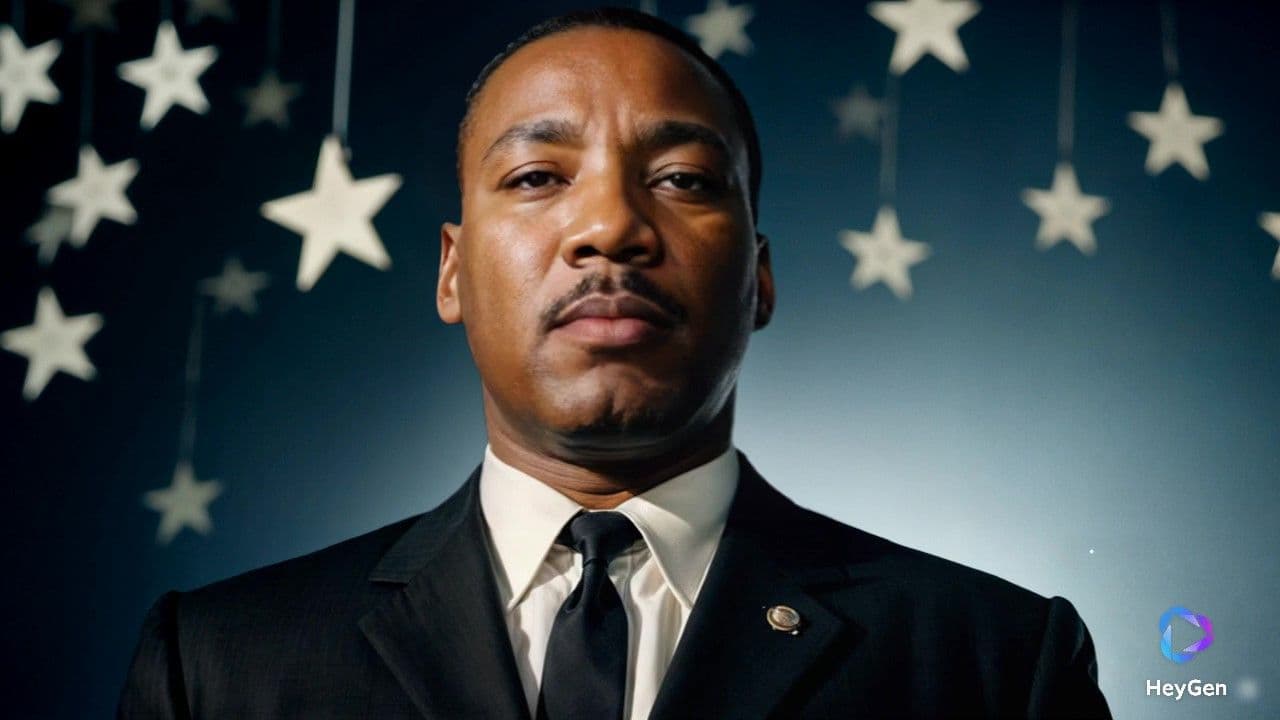


 Martin Luther King Junior
Martin Luther King Jr. was an influential American civil rights leader known for his advocacy of non-violent protest and his role in ending legal segregation of African Americans. He delivered the famous I Have a Dream speech and received the Nobel Peace Prize in 1964. He was assassinated in 1968.
Vision
Martin Luther King Jr.s vision was one of equality, justice, and peace. He envisioned a world where people would not be judged by the color of their skin, but by the content of their character. This vision was deeply rooted in his belief in the fundamental equality and dignity of all human beings. He believed that all people are created equal and that they are endowed by their Creator with certain unalienable rights, among them life, liberty, and the pursuit of happiness.
King was deeply influenced by his Christian faith and his understanding of the social gospel. He believed that it was the duty of Christians to fight for justice and equality. He saw the struggle for civil rights not just as a political movement, but as a moral and spiritual struggle. He believed that racism, poverty, and militarism were all interconnected and that they were all forms of violence that needed to be resisted.
King was also influenced by his study of Mahatma Gandhi and his philosophy of nonviolent resistance. He believed that nonviolence was the most powerful weapon available to oppressed people in their struggle for freedom. He believed that through nonviolent resistance, it was possible to achieve social change without resorting to violence. He believed that love and compassion were the most powerful forces in the world and that they could overcome hate and violence.
King’s vision was not just for the United States, but for the whole world. He spoke out against imperialism and colonialism and called for an end to the Vietnam War. He called for a revolution of values that would prioritize people over profits and justice over power. He believed that it was possible to build a beloved community where all people could live together in peace and harmony.
King’s vision was not just a dream, but a call to action. He believed that change was possible and that it was the duty of every individual to work towards that change. He believed that every individual had the power to make a difference and that through collective action, it was possible to bring about social change. He believed in the power of the people and in the power of nonviolent resistance.
King’s vision was revolutionary in its time and it remains revolutionary today. It calls for a radical transformation of society and a radical transformation of the human heart. It calls for a world where all people are treated with dignity and respect, where all people have the opportunity to fulfill their potential, and where all people can live together in peace.
King’s vision is a vision of hope. It is a vision of a world where justice is a reality for all people, where poverty is eradicated, and where war is a thing of the past. It is a vision of a world where love and compassion are the guiding principles and where all people are recognized and valued for their inherent worth and dignity.
Despite the many challenges and setbacks, King never lost faith in his vision. He believed in the power of love to overcome hate, in the power of truth to overcome lies, and in the power of justice to overcome injustice. He believed that even in the face of seemingly insurmountable obstacles, it was possible to keep moving forward and to keep working towards a better world.
King’s vision is a vision that continues to inspire people all over the world. It is a vision that calls us to work towards a world of justice, peace, and love. It is a vision that challenges us to be better, to do better, and to love better. It is a vision that calls us to live out our highest ideals and to strive for a world where all people are free and equal.
King’s vision is a vision that is as relevant today as it was over fifty years ago. It is a vision that continues to guide and inspire people all over the world. It is a vision that continues to challenge us to confront the injustices of our time and to work for a world of peace, justice, and equality.
King’s vision is a vision that calls us to imagine a better world and to work to make that world a reality. It is a vision that calls us to live out the values of love, justice, and peace in our daily lives. It is a vision that calls us to stand up for what is right and to resist what is wrong. It is a vision that calls us to be agents of change and to be bearers of hope.
In the end, King’s vision is a vision of a world transformed. It is a vision of a world where the walls of hatred and prejudice have been torn down and where the bridges of love and understanding have been built. It is a vision of a world where all people can live together in peace and harmony, where all people are treated with dignity and respect, and where all people have the opportunity to fulfill their potential. It is a vision of a world where love and justice reign supreme.
Biography
Martin Luther King Jr. was born on January 15, 1929, in Atlanta, Georgia. He was the second child of Martin Luther King Sr., a pastor, and Alberta Williams King, a former schoolteacher. He was named Michael King Jr. at birth, but his father later changed his name to Martin Luther King Jr., in honor of the German theologian Martin Luther.
King attended segregated public schools and at the age of 15, he was admitted to Morehouse College, the alma mater of both his father and maternal grandfather, where he studied medicine and law. However, after being influenced by Morehouse president Benjamin E. Mays, an outspoken advocate for racial equality, King decided to enter the ministry. He was ordained before graduating college with a degree in sociology.
King then enrolled in a graduate program at Boston University, completing his coursework in 1953 and earning a doctorate in systematic theology two years later. While in Boston, King met Coretta Scott, a young singer from Alabama who was studying at the New England Conservatory of Music. They were married in June 1953 and had four children together.
In 1954, King became pastor of the Dexter Avenue Baptist Church in Montgomery, Alabama. He was a strong worker for civil rights for members of his race. King was, by this time, a member of the executive committee of the National Association for the Advancement of Colored People, the leading organization of its kind in the nation.
On December 1, 1955, Rosa Parks was arrested for refusing to give up her seat on a city bus. The Montgomery Bus Boycott, led by King, soon followed. The boycott lasted for 385 days, and the situation became so tense that King's house was bombed. King was arrested during this campaign, which concluded with a United States District Court ruling in Browder v. Gayle that ended racial segregation on all Montgomery public buses.
In 1957, he was elected president of the Southern Christian Leadership Conference, an organization formed to provide new leadership for the now burgeoning civil rights movement. King's leadership and the pressures from active participation in massive protests led to major, oftentimes violent, reactions from government authorities and white supremacists. His home was bombed again, and he was frequently arrested.
King's influence was felt during the successful desegregation campaign in Birmingham, Alabama, in 1963, and in the March on Washington, D.C., where he delivered his famous 'I Have a Dream' speech. He was arrested and jailed for his participation in these civil rights activities. His philosophy of nonviolent resistance led to his receipt of the Nobel Peace Prize in 1964.
King's work to end segregation and racial discrimination helped to lead to the enactment of the Civil Rights Act of 1964 and the 1965 Voting Rights Act. In 1968, King was planning a national occupation of Washington, D.C., to be called the Poor Peoples Campaign, when he was assassinated on April 4 in Memphis, Tennessee. His death was followed by riots in many U.S. cities.
Since his assassination, King's ideas and memory have lived on, shaping the struggle for freedom and equality in America. He was posthumously awarded the Presidential Medal of Freedom and the Congressional Gold Medal. Martin Luther King Jr. Day was established as a holiday in numerous cities and states beginning in 1971; the holiday was enacted at the federal level by legislation signed by President Ronald Reagan in 1986. Hundreds of streets in the U.S. have been renamed in his honor, and a county in Washington State was also renamed for him. The Martin Luther King Jr. Memorial on the National Mall in Washington, D.C., was dedicated in 2011.
Awards and Recognition
Martin Luther King Jr. was a prominent leader of the American civil rights movement and a symbol of nonviolent resistance. His tireless efforts to fight for racial equality and social justice earned him numerous awards and recognitions during his lifetime and posthumously.
One of King's most notable recognitions was the Nobel Peace Prize, which he received in 1964 at the age of 35, making him the youngest man to ever receive the award at the time. The Norwegian Nobel Committee awarded King the prize for his nonviolent struggle against racial segregation, a testament to his relentless dedication to the American Civil Rights Movement.
King also received the Presidential Medal of Freedom, the highest civilian award in the United States. This honor was posthumously awarded by President Jimmy Carter in 1977, over a decade after King's assassination. The award recognized King's exceptional contribution to the cause of freedom and justice, his nonviolent resistance to racial prejudice, and his significant role in shaping American history.
In addition to these major awards, King received numerous other honors throughout his life and after his death. In 1957, he was awarded the Spingarn Medal from the National Association for the Advancement of Colored People (NAACP) for outstanding achievement by an African American. The same year, he was also named Time Magazine's Man of the Year, an honor that recognized his leadership in the civil rights movement.
In 1966, King was awarded the Margaret Sanger Award by the Planned Parenthood Federation of America for his courageous resistance to bigotry and his unwavering commitment to justice. He was also posthumously awarded the Congressional Gold Medal in 2004, one of the highest civilian awards in the United States.
King's legacy also lives on in the countless schools, streets, and buildings named in his honor across the United States and around the world. In 1986, Martin Luther King Jr. Day was established as a U.S. federal holiday, celebrated on the third Monday in January, near his birthday on January 15. This national recognition of King's life and work further cements his place as a pivotal figure in American history.
King's work has also been recognized in the form of numerous statues, memorials, and commemorations around the world. The Martin Luther King Jr. Memorial, located in Washington, D.C., was dedicated in 2011 and stands as a testament to his global influence. The memorial features a 30-foot statue of King and a 450-foot inscription wall, etched with excerpts from his speeches, sermons, and writings.
King's academic achievements were also notable. He earned a Bachelor of Arts degree in Sociology from Morehouse College, a Bachelor of Divinity from Crozer Theological Seminary, and a PhD in Systematic Theology from Boston University. Morehouse College, Crozer Theological Seminary, Boston University, and numerous other institutions have since established scholarships, professorships, and academic programs in King's honor.
Despite the numerous awards and recognitions, King never sought personal glory. He saw himself as a servant of the people, using his voice to fight against injustice and inequality. He dedicated his life to the struggle for civil rights, believing in the power of nonviolent protest and the possibility of a more equal and just society. His legacy continues to inspire millions around the world, reminding us of the enduring power of a single voice for justice.
References
- Biography of Martin Luther King Jr.
- Martin Luther King Jr. - The Nobel Peace Prize 1964
- King’s Vision of Equality: A Dream or Reality?
- Martin Luther King, Jr. - Civil Rights Leader
- I Have a Dream Speech by Martin Luther King Jr.
- The Legacy of Martin Luther King Jr.
- The Assassination of Martin Luther King Jr.
- The Impact of Christianity on Martin Luther King Jr.
- Martin Luther King Jr. and the Global Struggle for Justice
- Martin Luther King Jr. and the Freedom Struggle
Share with friends
Martin Luther King Jr. was an influential American civil rights leader known for his advocacy of non-violent protest and his role in ending legal segregation of African Americans. He delivered the famous I Have a Dream speech and received the Nobel Peace Prize in 1964. He was assassinated in 1968.
City of Residence
Atlanta
Known For
Leader in the Civil Rights Movement
Born
1929
Location
Civil Rights Leader
Social Media/Website
Company Name
Southern Christian Leadership Conference
Education
PhD in Systematic Theology
Personal Details
Martin Luther King Jr. was an American clergyman, activist, and leader in the civil rights movement. He is best known for advancing civil rights using nonviolent civil disobedience based on his Christian beliefs.
Recognition
Nobel Peace Prize (1964), Presidential Medal of Freedom (1977, posthumous), Congressional Gold Medal (2004, posthumous)
Related TITANS OF THE WORLD


About
Where Wisdom Meets AI Utopia Edutainment
Wisdomia.ai is a 3D AI edutainment platform that seamlessly blends learning with immersive play. As the first AI-powered 3D Web 3.0 marketplace created by creators for creators. Founded by renowned serial entrepreneur and author Dinis Guarda, Wisdomia empowers individuals to flourish in an ecosystem designed for collective wisdom EQ. Join us in shaping humanity's future as we harness the power of AI to visualise and create a better world—where technology serves human potential, and innovation is guided by utopian wisdom.
Contact us
Produced by

