
loading...
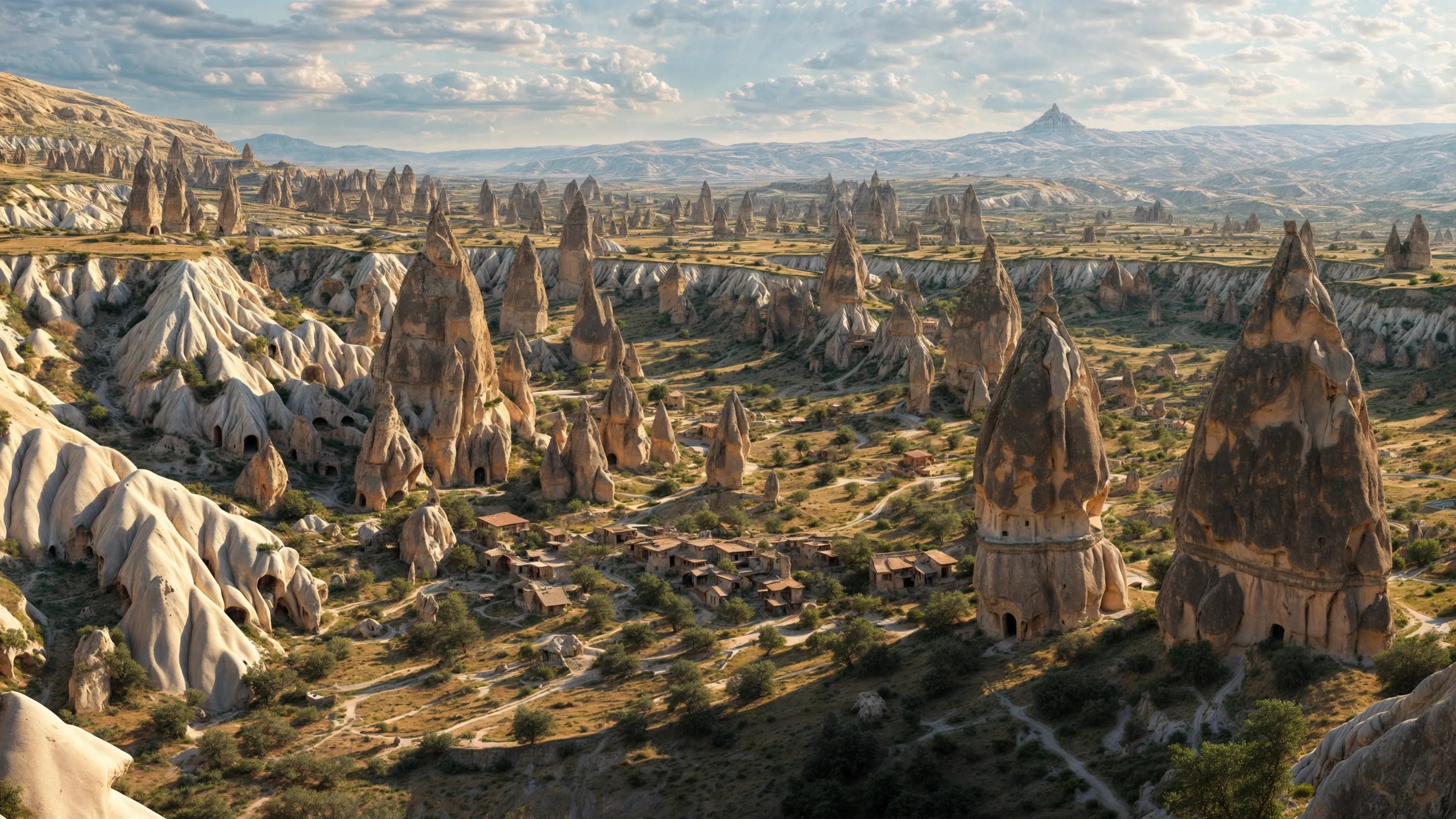

NameCappadociaArchitectural StyleCave Dwellings and Fairy ChimneysSignificanceKnown for its distinctive fairy chimneys, tall, cone-shaped rock formations clustered in Monks Valley, Göreme and elsewhere. It has a unique historical and cultural heritage with its beautiful natural scenery and historical sites which were listed in the Type of StructureHistorical Region / Natural SiteLocationNevsehir Province, Turkey


History
Cappadocia, located in central Turkey, is a region steeped in history dating back to the Bronze Age. It was an important location in the Hittite Empire and later became a key territory for the Roman Empire. The name Cappadocia means 'the land of beautiful horses', reflecting its historical significance as a trading route. Over millennia, various civilizations have inhabited Cappadocia, each leaving their distinct marks in the form of architecture, artwork, and cultural traditions.
Read More:
how has the development of technology positively affected our wellness?
Architecture
The architecture in Cappadocia is unique and heavily influenced by its geological features. Most notably, the region is known for its fairy chimneys, which are tall, cone-shaped rock formations. Over centuries, humans have hollowed out these natural structures to create homes, churches, and monasteries. The Göreme Open Air Museum, a UNESCO World Heritage site, showcases many of these ancient rock dwellings. The region is also known for its underground cities, like Derinkuyu and Kaymakli, which were used as hiding places during invasions and could accommodate thousands of people.
Cultural and Religious Significance
Religion has played a significant role in the development of Cappadocia. The region became a major focus of Christian activity and monastic life in the 4th century. The rock-cut churches, decorated with Byzantine frescoes, symbolize this deep religious history. These churches were often hidden within the landscape, providing a safe place for Christian communities during times of persecution. Today, Cappadocia is a melting pot of cultures, reflecting its history as a meeting point between different civilizations.
Legacy
The legacy of Cappadocia is its enduring ability to adapt and endure. Its unique blend of natural and man-made wonders continues to captivate visitors, offering a rich tapestry of history that spans several millennia. The cultural heritage of Cappadocia, from its rock-cut dwellings to its underground cities, continues to inform and inspire contemporary life in the region.
Fun Facts
The soft volcanic rock of Cappadocia has been eroded over millennia to create the unique 'fairy chimneys' for which the region is famous. Also, the region's underground cities, some of which go eight levels deep, were sophisticated enough to include ventilation shafts and wells. Today, Cappadocia is one of the world's top destinations for hot air ballooning, offering stunning views of its unique landscape.
References
Share with friends
Architectural Style
Cave Dwellings and Fairy Chimneys
Significance
Known for its distinctive fairy chimneys, tall, cone-shaped rock formations clustered in Monks Valley, Göreme and elsewhere. It has a unique historical and cultural heritage with its beautiful natural scenery and historical sites which were listed in the
Type of Structure
Historical Region / Natural Site
Location
Nevsehir Province, Turkey
Latitude
38.665
Longitude
34.713


