
loading...
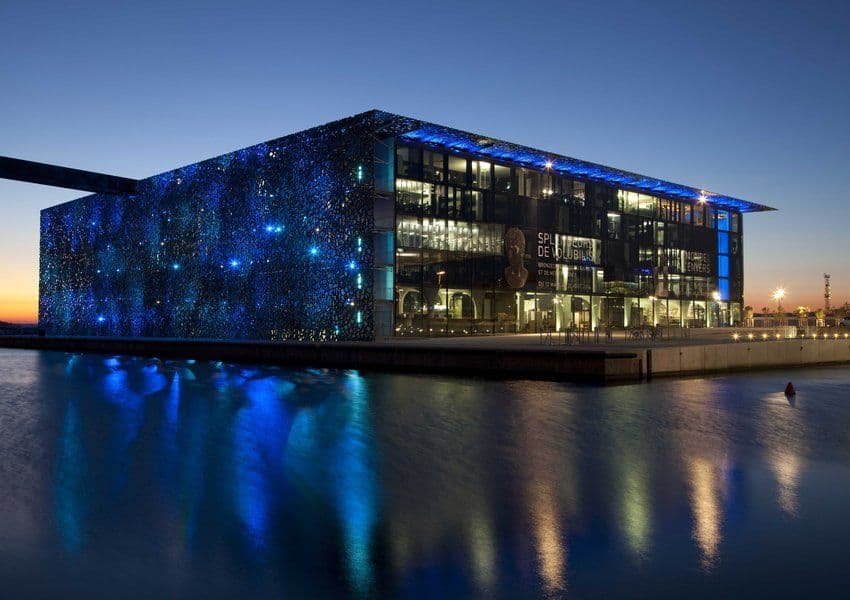


The Museum of European and Mediterranean Civilisations is a national museum located in Marseille, France. It was inaugurated on 7 June 2013 as part of Marseille-Provence 2013, a year when Marseille was designated as the European Capital of Culture. The museum is devoted to European and Mediterranean civilisations, with a permanent collection charting historical and cultural cross-fertilisation in the Mediterranean basin.
Overview
The Museum of European and Mediterranean Civilisations, commonly known as MUCEM, is a national museum located in Marseille, France. The museum is situated in the Fort Saint-Jean, a historical monument, and a new modern building designed by architect Rudy Ricciotti. The museum's primary aim is to showcase the rich diversity of the Mediterranean world, bridging the gap between Europe and the Mediterranean.
Inaugurated in 2013, the museum is a testament to Marseille's status as the European Capital of Culture. The MUCEM is dedicated to the civilization of Europe and the Mediterranean, from antiquity to modern times. It is the first major national museum to be located outside of Paris, highlighting France's commitment to decentralization and cultural democracy.
The MUCEM has an expansive collection comprising more than 350,000 objects. The collection covers a wide range of subjects, including archaeology, art history, ethnology, and social history. The museum's collection includes artifacts from the Mediterranean world, including Greece, Italy, Spain, and North Africa, as well as from other parts of Europe.
The museum is divided into several sections. The Fort Saint-Jean, a historical monument dating back to the 17th century, houses temporary and permanent exhibitions. The J4, a modern building connected to the fort by a high footbridge, houses the museum's main exhibitions. The Centre for Conservation and Resources, located in the Belle de Mai neighborhood, is responsible for the preservation of the museum's collections.
One of the most striking features of the MUCEM is its architecture. The modern building, designed by Rudy Ricciotti, is a stunning piece of contemporary architecture. The exterior of the building is covered in a latticework shell made from fiber-reinforced concrete, creating a play of light and shadow. The building's design is intended to reflect the Mediterranean's interplay of light and darkness, and the complex relationship between the sea and the land.
The MUCEM's exhibitions are equally impressive. The museum's permanent exhibition, 'The Gallery of the Mediterranean,' provides a panoramic view of the Mediterranean world, covering a period of more than 4,000 years. The exhibition is divided into two sections: the first section focuses on the Mediterranean as a 'cradle of civilizations,' exploring the historical and cultural exchanges that have shaped the region. The second section explores contemporary Mediterranean societies, focusing on issues such as migration, urbanization, and cultural diversity.
In addition to its permanent exhibition, the MUCEM also hosts a variety of temporary exhibitions. These exhibitions cover a wide range of topics, from ancient civilizations to contemporary art and culture. The museum also organizes numerous cultural events, including concerts, theater performances, and film screenings, furthering its role as a cultural hub in Marseille.
Education is a key part of the MUCEM's mission. The museum offers a wide range of educational programs, including workshops, guided tours, and educational resources, to engage and educate visitors of all ages. The museum also collaborates with schools and universities to promote the study and understanding of the Mediterranean world.
The MUCEM is not just a museum, but also a public space. The museum's rooftop offers a panoramic view of Marseille and the Mediterranean Sea. The museum's gardens, designed by landscape architect Michel Desvigne, offer a peaceful retreat in the heart of the city. The museum's restaurants and cafes, which serve Mediterranean cuisine, further contribute to the museum's role as a social and cultural hub.
The Museum of European and Mediterranean Civilisations has become a symbol of Marseille's cultural renaissance. By showcasing the rich diversity of the Mediterranean world and fostering cultural dialogue, the MUCEM contributes to the construction of a shared Mediterranean identity. With its innovative architecture, expansive collections, and engaging exhibitions, the MUCEM is a must-visit destination for anyone interested in the history and culture of the Mediterranean.
Key Highlights & Collections
The Museum of European and Mediterranean Civilisations, also known as MUCEM, is a national museum situated in the city of Marseille, France. It is dedicated to presenting the historical and cultural development of European and Mediterranean civilizations from ancient times to the present day.
The museum was inaugurated in 2013 as part of Marseille-Provence 2013, a yearlong celebration of the city as the European Capital of Culture. The MUCEM is housed in a modern building designed by architect Rudy Ricciotti, and it is the first museum in the world dedicated to Mediterranean civilizations. Its collections include over a million objects, making it one of the richest in the world.
The museum's permanent collection showcases the breadth and depth of Mediterranean civilizations. It includes archaeological finds, artworks, manuscripts, and everyday objects from across the region. The collection is divided into several thematic areas, including 'The Invention of Gods', 'The Treasury of the Wheat', 'New Times', and 'The Age of Globalization'. Each theme explores a different aspect of Mediterranean history and culture.
The 'Invention of Gods' exhibit explores the development of religious beliefs and practices in the Mediterranean region. It includes a variety of religious artifacts, from ancient Egyptian amulets to Christian icons and Islamic calligraphy. The exhibit also includes a section on mythology and folklore, showcasing the shared stories and legends that have shaped Mediterranean cultures.
The 'Treasury of the Wheat' exhibit focuses on the role of agriculture in the development of Mediterranean civilizations. It features a range of objects related to farming and food production, including ancient grain mills, Roman terracotta figurines of goddesses of the harvest, and medieval manuscripts on agriculture. The exhibit also explores the social and economic implications of agriculture, including the rise of city-states and the development of trade networks.
The 'New Times' exhibit explores the transformations of the Mediterranean world from the 16th to the 19th centuries. It includes objects related to the era's major political, religious, and cultural shifts, including the Reformation, the Enlightenment, and the Industrial Revolution. Highlights of the exhibit include a 16th-century Ottoman astrolabe, a Venetian merchant's account book, and a French Revolutionary cockade.
The 'Age of Globalization' exhibit focuses on the Mediterranean region in the 20th and 21st centuries. It includes objects related to major events and trends, from World War I and the decolonization movements to the rise of tourism and the refugee crisis. The exhibit showcases a range of objects, including a Greek fisherman's cap, a Palestinian refugee's key, and a Tunisian street vendor's cart.
In addition to its permanent collection, the MUCEM also hosts rotating temporary exhibits. These exhibits often focus on specific themes or periods in Mediterranean history, or they showcase works by contemporary artists from the region. Past exhibits have included 'Picasso and the Mediterranean', 'The Golden Age of English Painting', and 'Zineb Sedira: Standing Here Wondering Which Way to Go'.
The museum also offers a variety of educational programs and activities. These include guided tours, workshops, lectures, and film screenings. The museum's educational mission is to promote understanding and appreciation of Mediterranean cultures, and to foster dialogue and exchange between different cultures.
The MUCEM is not just a museum, but also a cultural center. It has a library, a bookshop, and a cinema. It also has several spaces for events and performances, including a 400-seat auditorium and a rooftop terrace with stunning views of the Mediterranean Sea and the city of Marseille.
The museum's architecture is a highlight in itself. The building is covered with a latticework shell of fibre-reinforced concrete, creating a striking contrast with the surrounding historic buildings. The museum is connected to the nearby Fort Saint-Jean by a high footbridge, creating a unique cultural complex that blends old and new.
The Museum of European and Mediterranean Civilisations is a unique institution that offers visitors a comprehensive understanding of the rich and diverse cultures of the Mediterranean region. Its collections, exhibits, and programs make it a must-visit destination for anyone interested in history, culture, and art.
Visitor Experience
The Museum of European and Mediterranean Civilisations, often referred to as MUCEM, is a unique cultural institution located in Marseille, France. Celebrating the diversity and shared heritage of the Mediterranean and European civilizations, the museum offers a comprehensive exploration of the region's history, culture, and art.
Visiting MUCEM is an immersive experience that transcends the usual museum visit. The museum's striking modern architecture, designed by architect Rudy Ricciotti, contrasts beautifully with the ancient Fort Saint-Jean, which is part of the museum's complex. The intricate latticework of the main building's facade reflects the interwoven histories and cultures that the museum celebrates.
The museum complex is vast, stretching over an area of 45,000 square meters. It includes the new Ricciotti building, the Fort Saint-Jean, and a garden. The three sites are connected by a high footbridge, allowing visitors to move seamlessly between the different spaces. This architectural layout provides a unique visitor experience, blending indoor and outdoor spaces and offering stunning views over the city of Marseille and the Mediterranean Sea.
The journey through MUCEM begins at the top floor of the Ricciotti building, where a permanent exhibition explores the history of the Mediterranean from antiquity to the present day. The displays, which are organized around themes such as religion, agriculture, and trade, are highly interactive, making the visit both educational and engaging. Artifacts from different periods and regions, including ancient Greek vases, Roman statues, and Ottoman ceramics, are presented alongside contemporary works of art, reflecting the enduring influence of the Mediterranean civilizations.
The museum also hosts temporary exhibitions that delve into specific aspects of the Mediterranean and European cultures. These exhibitions are often interdisciplinary, combining history, anthropology, archaeology, and art. They offer new perspectives on the region's cultural traditions and current issues, such as migration, urbanization, and environmental challenges.
The museum's educational mission extends beyond the exhibition halls. A wide range of workshops, lectures, and cultural events are organized throughout the year, catering to visitors of all ages. These activities provide opportunities to learn more about the region's heritage, engage with experts, and participate in debates on contemporary issues. The museum also offers guided tours and educational programs for schools, making MUCEM a valuable resource for local and national education.
The visit continues at the Fort Saint-Jean, which houses the museum's Mediterranean Garden. This open-air space is a living exhibition, featuring a variety of plants from the Mediterranean region. The garden is organized into thematic areas, each representing a different aspect of the Mediterranean landscape, such as the maquis, the garrigue, and the olive grove. The garden also hosts temporary exhibitions and installations, offering a unique combination of art, nature, and heritage.
The museum's restaurant, located on the top floor of the Ricciotti building, is another highlight of the visit. Offering a panoramic view over the sea and the city, the restaurant serves Mediterranean cuisine, with a focus on local and seasonal products. The menu changes regularly, reflecting the diversity and richness of the region's culinary traditions. The museum's bookshop and boutique, located on the ground floor, offer a wide range of books, objects, and souvenirs related to the museum's collections and exhibitions. They are perfect places to find a unique memento of your visit or a special gift.
The Museum of European and Mediterranean Civilisations is not only a museum but also a cultural hub, a meeting place, and a bridge between different cultures and epochs. Its innovative approach to museum design and curation, its commitment to education and public engagement, and its celebration of diversity and shared heritage make it a must-visit destination for anyone interested in the history and culture of the Mediterranean and Europe.
Whether you are a history enthusiast, an art lover, a student, or a tourist, a visit to MUCEM will be a rewarding and enriching experience. You will leave with a deeper understanding of the region's past and present, a greater appreciation of its cultural diversity, and a renewed sense of connection with the Mediterranean and European civilizations.
References
Britannica: Museum of European and Mediterranean Civilisations
The New Yorker: The Mucem, A Museum for the Twenty-First Century
Fodor's Travel: Museum of European and Mediterranean Civilizations (Mucem)
Lonely Planet: Musée des Civilisations de l'Europe et de la Méditerranée
Architectural Digest: The Mucem Museum in Marseille
Viator: Museum of European and Mediterranean Civilizations (MUCEM)
ArchDaily: Mucem - Rudy Ricciotti
TripSavvy: MUCEM - Museum of European and Mediterranean Civilisations
France Today: MUCEM, Marseille
The Guardian: Mucem museum, Marseille
World Monuments Fund: Museum of European and Mediterranean Civilizations
The Architectural Review: Rudy Ricciotti and RFR's Mucem museum, Marseille
PlanetWare: Museum of European and Mediterranean Civilizations (MuCEM)
Share with friends
The Museum of European and Mediterranean Civilisations is a national museum located in Marseille, France. It was inaugurated on 7 June 2013 as part of Marseille-Provence 2013, a year when Marseille was designated as the European Capital of Culture. The museum is devoted to European and Mediterranean civilisations, with a permanent collection charting historical and cultural cross-fertilisation in the Mediterranean basin.
Museum Name
Museum of European and Mediterranean Civilisations
Location
Marseille, France
Type of Museum
Civilisation and History
Year Established
2013
Notable Collections/Features
Art, Artefacts, and Historic Objects from Europe and Mediterranean
Website


About
Where Wisdom Meets AI Utopia Edutainment
Wisdomia.ai is a 3D AI edutainment platform that seamlessly blends learning with immersive play. As the first AI-powered 3D Web 3.0 marketplace created by creators for creators. Founded by renowned serial entrepreneur and author Dinis Guarda, Wisdomia empowers individuals to flourish in an ecosystem designed for collective wisdom EQ. Join us in shaping humanity's future as we harness the power of AI to visualise and create a better world—where technology serves human potential, and innovation is guided by utopian wisdom.
Contact us
Produced by

