
loading...
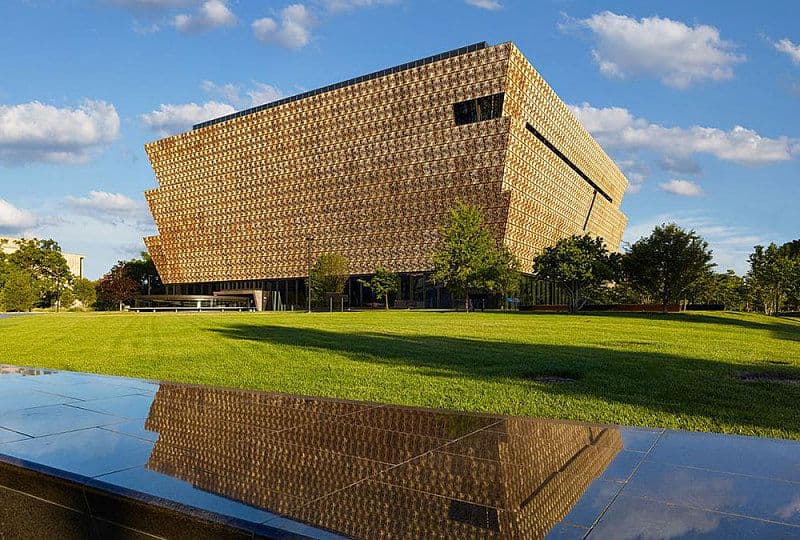


 Museums of the World National Museum of African-American History and Culture (Smithsonian Institution)
The National Museum of African American History and Culture is a Smithsonian Institution museum located on the National Mall in Washington, D.C., in the United States. It was established in December 2003 and opened its doors in September 2016. It has over 36,000 objects in its collection related to such subjects as community, family, the visual and performing arts, religion, civil rights, slavery, and segregation.
Overview
The National Museum of African-American History and Culture (NMAAHC) is a Smithsonian Institution Museum located in Washington D.C. It is the only national museum devoted exclusively to the documentation of African American life, history, and culture. This prestigious institution has collected more than 36,000 artifacts and nearly 100,000 individuals have become members. It stands as a beacon of hope and a representation of the African American journey in the United States.
Established by Act of Congress in 2003, it took more than a decade of planning and construction before the museum officially opened its doors on September 24, 2016. The dedication ceremony was led by then-President Barack Obama. The museum is located on the National Mall in a 5-acre tract adjacent to the Washington Monument. The 400,000-square-foot building is a striking bronze-colored structure with a design inspired by the three-tiered crowns used in Yoruban art from West Africa.
Designed by British-Ghanaian architect Sir David Adjaye, the museum's design represents not just the African American past, but also the present and future. The exterior paneling, known as the Corona, is a reference to the intricate ironwork crafted by enslaved African Americans in Louisiana, South Carolina, and elsewhere. The Corona is made up of 3,600 bronze-colored cast-aluminum panels. The building is also eco-friendly, with features such as green roofs, solar panels, and a geothermal cooling system.
Inside, the museum includes five floors of exhibition space, education and conference facilities, a theater, a café, and a store. The artifacts and exhibitions in the museum are divided into three categories: History, Community, and Culture. These collections cover topics from the Middle Passage and slavery to the Civil Rights Movement, segregation, and beyond. The museum also explores the influence of African Americans on the arts, sports, and music.
The History collection includes artifacts such as a segregation-era Southern Railway car, a Tuskegee Airmen training plane, and the coffin of Emmett Till, a 14-year-old boy whose brutal murder in 1955 galvanized the Civil Rights Movement. The Community collection showcases stories of notable African Americans and their contributions to the nation, while the Culture collection highlights African American creativity and its influence on American and world culture.
The NMAAHC also offers a variety of educational and public programs. These include workshops, lectures, performances, and screenings, all aimed at promoting understanding and appreciation of African American history and culture. The museum also has partnerships with other Smithsonian museums and research centers, as well as other institutions and organizations around the world.
The NMAAHC is not just a museum, but a living institution that continues to collect, preserve, and display artifacts of African American history and culture. It is a place of reflection, celebration, and education, where visitors can explore the richness and diversity of the African American experience. The museum's mission is to help all Americans see how their stories, their histories, and their cultures are shaped by global influences, and to explore what it means to be an American.
Since its opening, the museum has become a must-visit destination for those visiting Washington D.C. The museum's significance reaches far beyond its walls, serving as a symbol of resilience, overcoming, and the ongoing fight for equality. The NMAAHC stands as a testament to the African American struggle for freedom and equality, a struggle that continues to this day. It is not just a record of the past, but a beacon of hope for the future.
Despite its relative newness, the National Museum of African-American History and Culture has made a significant impact, not just in America, but around the world. It is a place that celebrates African American culture and history in all its complexities and nuances. It is a place of learning, understanding, and most importantly, a place that fosters dialogue and promotes healing and reconciliation. It is a place that recognizes and honors the contributions and sacrifices of African Americans throughout history, and their enduring legacy in shaping the United States and the world.
Key Highlights & Collections
The National Museum of African-American History and Culture (NMAAHC) is a part of the Smithsonian Institution and is the only national museum dedicated entirely to the documentation of African American life, history, and culture. Located in Washington D.C., the museum consists of five floors of exhibitions that illustrate the richness and diversity of the African American experience, from the beginnings of slavery to the present day. It is a place to explore and discover the myriad contributions of African Americans to the fabric of our nation's history.
One of the key highlights of the museum is the 'Slavery and Freedom' exhibit. This collection explores the complex story of slavery and freedom which forms an integral part of America's history. The exhibit features items like shackles used to bind slaves, the cabin of a mid-19th century slave, and a statue of Clara Brown who was a slave and later became a community leader and philanthropist.
The 'Defending Freedom, Defining Freedom: Era of Segregation 1876-1968' is another significant exhibit, showcasing the struggles and victories during the era of segregation. It includes a segregated rail car from the Southern Railway and a guard tower from Louisiana's notorious Angola Prison. The exhibit also houses the dress that Rosa Parks was sewing on the day she refused to give up her seat, sparking the Montgomery Bus Boycott.
Another fascinating aspect of the museum is the 'Musical Crossroads' exhibit. This collection tells the story of African American music from the arrival of the first Africans to the present day. It includes items such as Louis Armstrong's trumpet, Chuck Berry's Cadillac, and clothing worn by music legends like Michael Jackson and Lena Horne.
The 'Sports: Leveling the Playing Field' exhibit showcases the contributions of African American athletes both on and off the field. The collection includes items like the heavyweight championship belt won by boxer Joe Louis, the Olympic gold medals won by Carl Lewis, and a uniform worn by the Negro Leagues baseball star, Satchel Paige.
The museum also features the 'Cultural Expressions' exhibit, a collection that illustrates the visual arts, religion, and the creativity of the African American community. The exhibit includes works from renowned African American artists like Romare Bearden and Elizabeth Catlett, as well as artifacts that represent the influence of African American culture in areas such as fashion and dance.
Furthermore, the museum's 'A Century in the Making' collection tells the story of efforts to establish a national museum to collect, preserve, and interpret the history of African Americans. It features photographs, letters, and artifacts that document the journey of the museum from concept to completion.
The 'Military History' exhibit showcases the participation of African Americans in the military from the Revolutionary War to the present. It includes items such as a uniform worn by Colin Powell, the first African American Chairman of the Joint Chiefs of Staff, and the Medal of Honor awarded to Christian Fleetwood during the Civil War.
Finally, the 'Power of Place' exhibit demonstrates how African American history has been shaped by the places and communities that African Americans have created over the centuries. It includes historical items from places like Tulsa's Greenwood district, often referred to as 'Black Wall Street', and the Chicago home of Emmett Till, whose brutal murder was a catalyst for the Civil Rights Movement.
In addition to these exhibits and collections, the NMAAHC offers a variety of educational programs and digital resources designed to inspire learning and conversation about African American history and culture. From interactive exhibits and hands-on activities to in-depth seminars and lectures, the museum provides a wealth of opportunities for visitors of all ages to engage with this rich and complex history.
The National Museum of African-American History and Culture stands as a testament to the resilience, creativity, and enduring legacy of African Americans. It is a place of learning, reflection, and celebration, where visitors can gain a deeper understanding and appreciation of the many ways that African Americans have shaped and influenced our nation.
Visitor Experience
The National Museum of African American History and Culture (NMAAHC) is a Smithsonian Institution museum located in Washington, D.C. As a national museum, it illuminates and celebrates the rich diversity of the African American experience. The museum is a place where visitors can learn about the history, culture, and contributions of African Americans, from the earliest days of the United States to the present day.
The NMAAHC offers a variety of exhibits and collections that span over 600 years of African American history. The collections include a wide range of artifacts, photographs, and documents that tell the story of African American life, art, history, and culture. The museum's exhibit space is divided into several thematic areas, including slavery and freedom, segregation, civil rights, and contemporary life. Each area presents a different aspect of African American history and culture, providing a comprehensive and holistic view of the African American experience.
Upon entering the museum, visitors are immediately welcomed by a stunning three-tiered, bronze-colored building that is a work of art in itself. The museum's design, inspired by Yoruba art, represents uplift and resiliency. Inside, visitors are greeted by a vast, open space filled with natural light, creating an inviting atmosphere for exploration and discovery. The museum's architectural design not only adds to the aesthetic experience of visiting the museum but also symbolizes the journey of African Americans.
Visitors are encouraged to start their journey through the museum from the lower levels and make their way upwards. The history gallery, located in the lower levels, takes visitors on a chronological journey through African American history, starting from the transatlantic slave trade to the civil rights movement, and up to the present day. The history gallery provides an immersive experience, with artifacts, photographs, and interactive displays that bring history to life. The exhibits are both educational and emotional, providing a powerful insight into the struggles, triumphs, and resilience of African Americans throughout history.
As visitors move upwards through the museum, they encounter the community and culture galleries. The community gallery showcases the ways in which African Americans have shaped and been shaped by their communities, with exhibits focusing on topics like education, religion, and military service. The culture gallery, on the other hand, celebrates African American creativity and cultural expressions, with exhibits showcasing African American music, literature, visual arts, fashion, and cuisine.
Beyond the galleries, the museum also offers a variety of educational and public programs that further enhance the visitor experience. These programs include lectures, workshops, performances, and film screenings, among others. These programs not only provide additional learning opportunities but also encourage dialogue and engagement among visitors.
For those interested in research, the NMAAHC offers the Earl W. and Amanda Stafford Center for African American Media Arts (CAAMA) and the Robert Frederick Smith Explore Your Family History Center. CAAMA showcases the museum's vast collection of photographs and film, and offers a space for exploring African American history through visual media. The Family History Center, on the other hand, provides resources and tools for visitors interested in genealogy and family history research.
The museum also offers several amenities to improve the visitor experience. These include a museum shop, where visitors can purchase books, apparel, and other items related to African American history and culture, and a cafe, which offers a menu inspired by African American cuisine. Accessibility is also a priority at the NMAAHC, with services and resources available for visitors with disabilities.
Visiting the NMAAHC is not just a trip to a museum, but a profound journey through African American history and culture. The museum offers a space where visitors can learn, reflect, and connect with the African American experience. Whether a first-time visitor or a returning one, the NMAAHC provides an unforgettable and deeply enriching experience.
In conclusion, the National Museum of African American History and Culture is more than a museum. It is a place of learning, reflection, dialogue, and celebration. It provides a comprehensive and immersive experience that illuminates the rich diversity and profound contributions of African Americans. The museum is not only a testament to the resilience and spirit of African Americans but also a beacon of hope and unity, inviting all visitors to partake in a shared and inclusive understanding of American history.
References
*National Museum of African American History and Culture Official Website
*How the National Museum of African American History and Culture Came to Be | Smithsonian Magazine
*National Museum of African American History and Culture | National Park Service
*A look inside the Smithsonian's African American museum | Harvard Gazette
*National Museum of African American History Opens Its Doors | NPR
*National Museum of African American History: 'A century in the making' | BBC News
*National Museum of African American History and Culture | Time Out Washington D.C.
*National Museum of African American History and Culture | Lonely Planet
*National Museum of African American History and Culture | TripAdvisor Reviews
*National Museum of African American History and Culture: A Century in the Making | History.com
*The Paradox of the New National Museum of African American History and Culture | The Atlantic
*National Museum of African American History and Culture (2016-) | BlackPast
*Inside the National Museum of African American History and Culture | Curbed
*What's inside the new Smithsonian African American museum? | PBS NewsHour
*First Look: The National Museum of African American History and Culture | Architect Magazine
*Smithsonian's African American museum: What to see and do | USA Today
*National Museum of African American History and Culture: What to Know | Travel + Leisure
*Smithsonian's African American museum to reopen Friday | NBC News
*Smithsonian African American museum to reopen in May | ABC News
*Take a Tour of the Smithsonian's Breathtaking Black History Museum | Wired Magazine
Share with friends
The National Museum of African American History and Culture is a Smithsonian Institution museum located on the National Mall in Washington, D.C., in the United States. It was established in December 2003 and opened its doors in September 2016. It has over 36,000 objects in its collection related to such subjects as community, family, the visual and performing arts, religion, civil rights, slavery, and segregation.
Museum Name
National Museum of African-American History and Culture (Smithsonian Institution)
Location
Washington, D.C., United States
Type of Museum
Ethnic museum, History museum
Year Established
2003
Notable Collections/Features
Slavery and Freedom 1400-1877, Defending Freedom, Defining Freedom: Era of Segregation 1876–1968, A Changing America: 1968 and Beyond, Culture Galleries
Website


About
Where Wisdom Meets AI Utopia Edutainment
Wisdomia.ai is a 3D AI edutainment platform that seamlessly blends learning with immersive play. As the first AI-powered 3D Web 3.0 marketplace created by creators for creators. Founded by renowned serial entrepreneur and author Dinis Guarda, Wisdomia empowers individuals to flourish in an ecosystem designed for collective wisdom EQ. Join us in shaping humanity's future as we harness the power of AI to visualise and create a better world—where technology serves human potential, and innovation is guided by utopian wisdom.
Contact us
Produced by

