
loading...
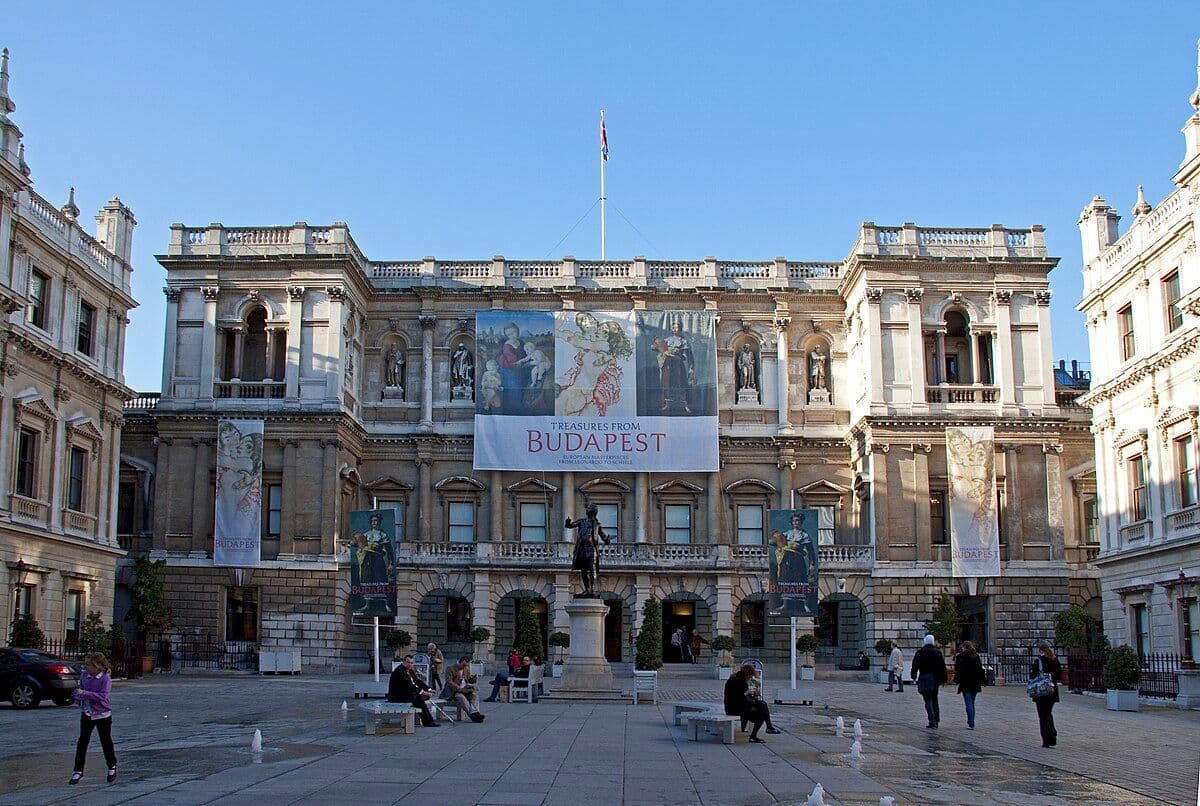


The Royal Academy of Arts is an independent, privately funded institution led by eminent artists and architects. Its purpose is to promote the creation, enjoyment and appreciation of the visual arts through exhibitions, education and debate.
Overview
The Royal Academy of Arts (RA) is an art institution based in Burlington House on Piccadilly in London. It has a unique position as an independent, privately funded institution led by eminent artists and architects. Its purpose is to promote the creation, enjoyment and appreciation of the visual arts through exhibitions, education and debate.
The Royal Academy of Arts was founded through a personal act of King George III on 10 December 1768 with a mission to promote the arts of design in Britain through education and exhibition. The motive in founding the Academy was twofold: firstly, to raise the professional status of the artist by establishing a sound system of training and expert judgement in the arts, and secondly, to arrange the exhibition of contemporary works of art attaining an appropriate standard of excellence.
Supporters wanted to foster a national school of art and to encourage appreciation and interest among the public based on recognised canons of good taste. Fashionable taste in 18th-century Britain was based on continental and traditional art forms, providing contemporary British artists little opportunity to sell their works. From 1746 the Foundling Hospital, through the efforts of William Hogarth, provided an early venue for contemporary artists in Britain. The success of this venture led to the formation of the Society of Artists of Great Britain and the Free Society of Artists.
Among the founders were two women, a notable rarity in the 18th century, Angelica Kauffman and Mary Moser. The original Royal Academicians were all practising artists, the President was a portrait painter, Joshua Reynolds, and the first exhibition of contemporary art, the Summer Exhibition, opened in 1769. It was held, has been held every year since without exception.
The Royal Academy does not receive financial support from the state or the Crown. Its income is from exhibitions, trust and endowment funds, receipts from its trading activities, and from the subscriptions of its Friends and corporate members. It also gains funds through sponsorship and donations which enable the academy to carry on its programme of exhibitions and maintain its collection of works of art.
The Royal Academy Schools form the oldest art school in Britain, and have been providing training for artists since 1769. The Schools offer a three-year postgraduate programme to fifteen students each year. The programme is based on a system of mentoring and includes a curriculum of contextual studies. The RA Schools places emphasis on individual studio practice, and its former students include J. M. W. Turner, Sir Thomas Lawrence, Lord Leighton, Sir John Everett Millais and Sir Edwin Landseer.
The Royal Academy also hosts a series of lectures and events. It has a programme of talks, performances, film screenings and symposiums. The Academy's library is one of the most significant art libraries in the country and the RA also publishes a number of catalogues, books and other materials, including the magazine RA, which are available in the Academy's shop and via its website.
In the 21st century, the Academy has undergone significant redevelopment. The new RA opened in 2018 as part of the Academy's 250th anniversary celebrations. The redevelopment was carried out by Sir David Chipperfield and included linking Burlington House and Burlington Gardens with a bridge, creating new exhibition spaces, a lecture theatre, a project space for students and the public, and a Clore Learning Centre. The Academy is thus a beacon of art and learning, a gathering place for artists and art lovers, yet it is also a place of study, with a wide range of courses, lectures and symposia available for learners of all ages.
Not only does it provide a platform for contemporary and modern art, but it also houses a significant collection of art, prints, and historical items. The collection includes significant pieces by Reynolds, Gainsborough, Turner, Constable and many other luminaries of the art world.
Overall, The Royal Academy of Arts continues to fulfil its founding mission, to promote not just the appreciation and understanding of art, but also its practice. It is a vibrant, forward-thinking and dynamic institution which blends tradition with a progressive attitude to the visual arts. The Royal Academy of Arts is a unique institution, entirely independent of government funding, that continues to be led by the artists and architects elected by their peers as Royal Academicians.
Key Highlights & Collections
The Royal Academy of Arts Museum, located in Burlington House on Piccadilly in London, is one of the most prestigious art institutions in the world. Founded by King George III in 1768, the Royal Academy has a unique position as an independent, privately funded institution led by eminent artists and architects. Its purpose is to promote the creation, enjoyment, and appreciation of the visual arts through exhibitions, education, and debate.
One of the key highlights of the Royal Academy of Arts Museum is the annual Summer Exhibition. This is the world’s largest open submission art exhibition, bringing together art in all mediums – prints and paintings, film, photography, sculpture, architectural works and more – by leading artists, Royal Academicians and household names as well as new and emerging talent. This exhibition has been held every year without interruption since 1769, even during the World Wars.
Another key highlight is the Royal Academy Schools. It is the oldest art school in Britain and offers the only three-year postgraduate programme in Europe. Its notable alumni include JMW Turner, William Blake, and John Soane. The schools offer a free-tuition policy ensuring that talent and potential are the only criteria for admission.
The museum’s collection is another major attraction, featuring works from some of the most influential artists in history. It holds a significant number of works by its members, the Royal Academicians, a group of up to 80 eminent artists and architects. The collection includes significant works from the Renaissance period, as well as masterpieces from the 18th and 19th centuries. Notable works include 'The Taming of the Shrew' by Edwin Landseer, 'The Death of Major Peirson' by John Singleton Copley and 'An Election' series by William Hogarth.
The Royal Academy also houses the Michelangelo's Taddei Tondo, the only marble by Michelangelo in the UK. This unfinished marble relief sculpture portrays the Virgin Mary, the Christ Child, and the infant St John the Baptist. It is considered one of the most important works in the Royal Academy’s collection.
Another standout piece in the collection is 'The Last Supper' by Benjamin West. This large-scale painting is a reimagining of the Biblical scene, showcasing West’s skill in composition and colour. It is seen as a significant contribution to the development of history painting during the 18th century.
The museum’s extensive library and archive are also key features. The Royal Academy’s library is one of the largest and most significant art libraries in the country. It holds a comprehensive collection of books, prints, drawings, photographs, and archives that offer an unrivalled record of the history of British art from the 18th century to the present. The archives include personal papers and correspondence of past Academicians, minutes of its meetings, and a collection of photographs and portraits of Academicians.
The Royal Academy of Arts Museum also has an active programme of temporary exhibitions. These exhibitions often focus on major artists or themes in art history. Past exhibitions have featured works by Ai Weiwei, Anselm Kiefer, David Hockney, and Antony Gormley. These exhibitions are often accompanied by a rich programme of lectures, debates, and educational activities.
The Royal Academy also holds regular events and public programmes, including talks, tours, workshops, and performances. These events provide opportunities for visitors to engage with art and artists in new ways, deepen their understanding of the works on display, and participate in the creative process.
The Royal Academy of Arts Museum is not just an art museum; it is an active community of artists that promotes the appreciation and understanding of art. It is a place where art is made, exhibited, and debated, making it a vital part of the cultural life of the country and the world.
Visitor Experience
Established in 1768, The Royal Academy of Arts, located in the heart of London, is an independent institution led by eminent artists and architects. Its unique purpose is to promote the creation, appreciation, and understanding of visual arts through exhibitions, education, and debate. As a visitor to this prestigious institution, you are guaranteed to have a fabulous experience that will leave you with a profound appreciation for art.
Upon entering the museum, visitors are greeted by the magnificent Burlington House. This historic building, with its grand staircase and beautifully decorated rooms, sets the tone for the visit. Each room is filled with an array of stunning artworks from a variety of periods and styles, ensuring there is something to captivate every art enthusiast. The museum also offers guided tours, which are led by knowledgeable guides who provide essential context and insights into the displayed works.
The Royal Academy of Arts holds an annual Summer Exhibition, which has been a tradition since the Academy's inception. This is the world's largest open submission art exhibition and it brings together a diverse mix of established and emerging artists. As a visitor, you have the opportunity to purchase these works, directly supporting the artists. This is a unique experience that sets the Royal Academy apart from other art museums.
Aside from the Summer Exhibition, the Royal Academy also hosts a variety of other exhibitions throughout the year. These exhibitions showcase works from renowned artists, both from the past and contemporary times. The exhibitions are carefully curated, and the displayed works are often accompanied by interesting stories about the artists and their inspiration, making the visit both educational and inspiring.
A visit to the Royal Academy would not be complete without exploring the RA Schools. Established in the same year as the Academy, the RA Schools offer the only free three-year postgraduate programme in Europe. Visitors can book a guided tour of the Schools' historic studio spaces, or attend one of the annual public events. This offers a unique insight into the creative process of the artists and the opportunity to witness first-hand the future of visual arts.
Another feature that enhances the visitor experience at the Royal Academy is its vast collection of books and archival materials in the RA library. The library, which is open to the public, has an extensive collection of books, prints, drawings, and photographs. Visitors can explore this wealth of resources at their leisure, adding another dimension to their visit.
In addition to the exhibitions and collections, the Royal Academy also offers a range of educational programmes and events. These include talks, workshops, and courses, which are designed to deepen the understanding and appreciation of art. Regardless of your level of knowledge or interest in art, these programmes provide an engaging way to learn more about the world of visual arts.
For those looking to take a break during their visit, the Royal Academy has a delightful café and restaurant. The restaurant, with its stunning frescoed ceiling, offers a sophisticated dining experience, while the café provides a more casual setting. Both serve a selection of delicious meals and refreshments, making them the perfect places to relax and reflect on the artworks seen.
To round off the visit, there is the Royal Academy shop. It offers a broad range of books about art and architecture, artist materials, prints, and gifts. Each product is carefully selected to reflect the Academy's commitment to promoting art. This means visitors can take a piece of the Royal Academy home with them, serving as a memento of their visit.
In conclusion, a visit to the Royal Academy of Arts is a thrilling journey through the world of art. The combination of its rich history, diverse exhibitions, educational programmes, and beautiful setting ensures a memorable experience for all visitors. Whether you are an art aficionado or a casual observer, the Royal Academy of Arts offers an enriching and inspiring experience that will leave you with a deeper understanding and appreciation of the world of visual arts.
References
Share with friends
The Royal Academy of Arts is an independent, privately funded institution led by eminent artists and architects. Its purpose is to promote the creation, enjoyment and appreciation of the visual arts through exhibitions, education and debate.
Museum Name
Royal Academy of Arts
Location
Burlington House, Piccadilly, London, United Kingdom
Type of Museum
Art Museum
Year Established
1768
Notable Collections/Features
British art and architecture, temporary exhibitions from around the world


About
Where Wisdom Meets AI Utopia Edutainment
Wisdomia.ai is a 3D AI edutainment platform that seamlessly blends learning with immersive play. As the first AI-powered 3D Web 3.0 marketplace created by creators for creators. Founded by renowned serial entrepreneur and author Dinis Guarda, Wisdomia empowers individuals to flourish in an ecosystem designed for collective wisdom EQ. Join us in shaping humanity's future as we harness the power of AI to visualise and create a better world—where technology serves human potential, and innovation is guided by utopian wisdom.
Contact us
Produced by

