
loading...
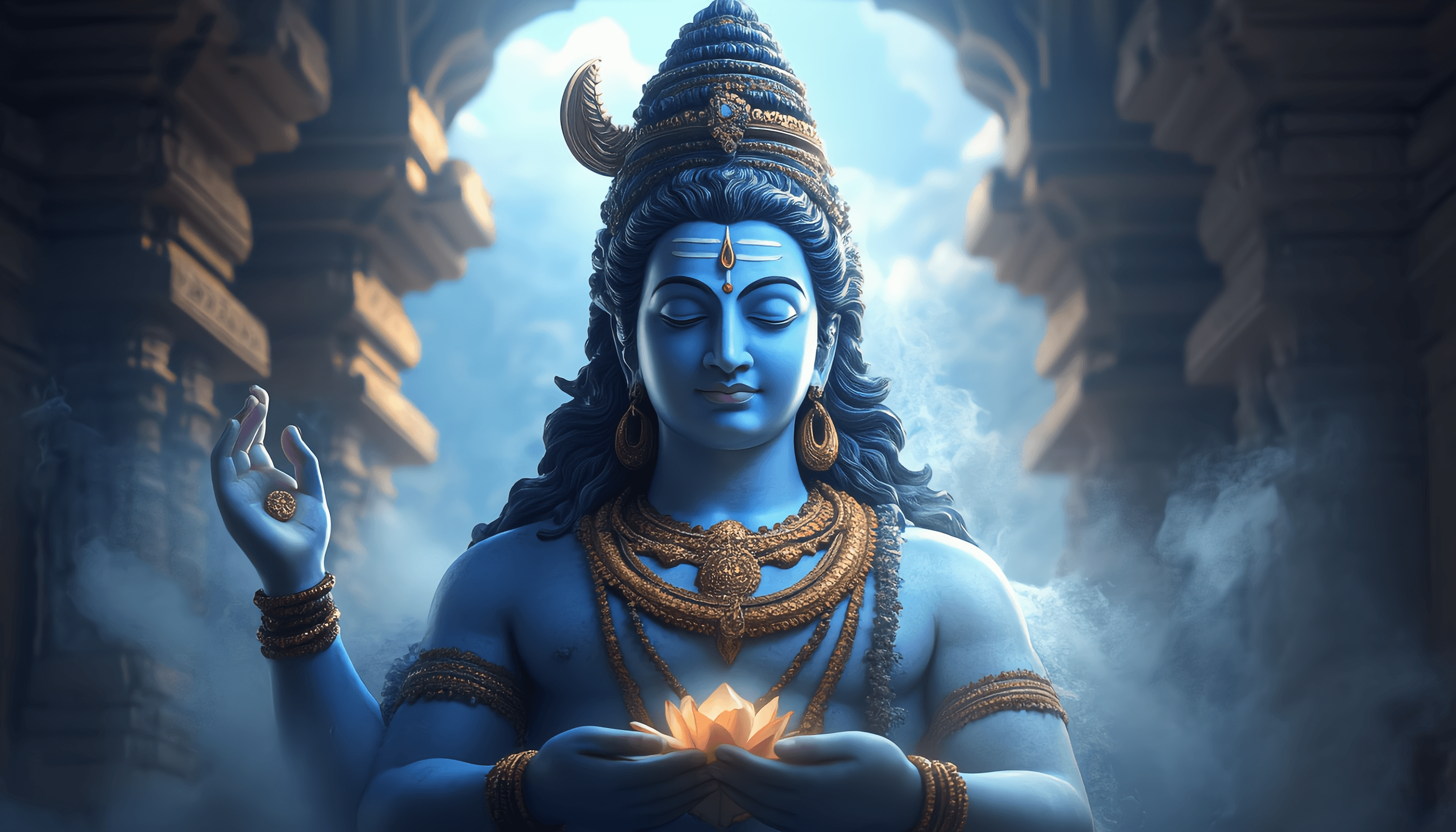


Lord Vishnu, a central figure in Hinduism, is revered as the protector and Preserver of the universe. He is part of the Trimurti, which includes Brahma, the creator, and Shiva, the destroyer. Vishnu plays a vital role in maintaining cosmic order and righteousness, known as Dharma. Characterised by qualities of mercy, goodness, and harmony, Vishnu's embodiment of harmony brings a sense of peace and balance to his devotees. He is believed to actively oversee the universe, intervening during times of crisis to restore balance by combating chaos and evil.
Introduction
Lord Vishnu, a central figure in Hinduism, is revered as the protector and Preserver of the universe. He is part of the Trimurti, which includes Brahma, the creator, and Shiva, the destroyer. Vishnu plays a vital role in maintaining cosmic order and righteousness, known as Dharma. Characterised by qualities of mercy, goodness, and harmony, Vishnu's embodiment of harmony brings a sense of peace and balance to his devotees. He is believed to actively oversee the universe, intervening during times of crisis to restore balance by combating chaos and evil.
In the Vaishnavism tradition, Lord Vishnu is not just a deity, but the Supreme God, a belief that underlines his paramount importance in Hinduism. He is often referred to as Narayana or Hari, and his esteemed status is illustrated by depictions of Brahma emerging from a lotus flower that sprouted from Vishnu's navel. As Narayana, Vishnu is tasked with safeguarding humanity and the cosmos, frequently incarnating on Earth in various forms or avatars to confront demonic threats and ensure the continuity of cosmic harmony.
Lord Vishnu is believed to reside in the celestial city of Vaikuntha on Mt. Meru, a realm that is a sight to behold. It is adorned with gold, precious jewels, and beautiful lotus-filled lakes, creating a divine and serene atmosphere that befits the abode of the Preserver of the universe.
The Significance of Names
Vishnu, a central figure in Hindu mythology, is celebrated through numerous names that highlight his multifaceted nature and divine attributes. Each name carries a unique meaning, reflecting different aspects of his character and roles within the universe.
- One prominent name, Narayana, translates to "He who rests on the waters," symbolising his cosmic slumber in the primordial ocean.
- Hari, meaning "the remover of suffering," underscores his protective and salvific nature.
- Govinda translates to "Protector of cows," mainly associated with his incarnation as Krishna.
- Jagannatha means "Lord of the universe," emphasising his sovereignty over all creation.
- Padmanabha, or "Lotus-naveled one," refers to the lotus that emerges from his navel upon which Brahma is seated. In broader terms, he is recognised as the Preserver who pervades all, and Narayan represents his essence residing in all beings.
- Further names include Kesava, meaning "the one with beautiful hair," indicative of his connection to life's creation and preservation.
- Vasudeva, which refers to his incarnation as Krishna, meaning "son of Vasudeva."
- Raghunatha, meaning "lord of the Raghus," connects to his incarnation as Ram.
These names reveal Vishnu's divine qualities and illustrate the various forms and roles he adopts across different mythologies.
Appearance/ Iconography
Vishnu is often depicted as a serene and majestic figure, embodying the infinite essence of the universe. He is shown with various objects, each symbolising profound messages for humanity.
- Complexion: Vishnu is often shown with a dark blue or green complexion, symbolising his infinite nature. This complexion represents the vastness of the universe, as the dark blue or green colour is often associated with the endless expanse of the sky or the ocean, emphasising Vishnu's all-pervading nature.
- Four arms: He is portrayed with four arms, each holding a symbolic object
- Shankha (conch shell): Symbolises the divine sound of creation and cosmic order.
- The Chakra (discus): in one of his hands is not just a weapon, but a symbol of the mind's power to destroy evil and ignorance, instilling a sense of strength and authority in the viewer.
- Gada (Mace): Symbolises the power of time, destruction, strength, and authority over the forces of chaos.
- The Padma (Lotus) he holds is not just a flower, but a symbol of purity, spiritual awakening, and divine grace, invoking a sense of spiritual awakening in the audience.
- Garuda: Vishnu's divine vahana (mount) is Garuda, a mythical bird resembling a large eagle, symbolising speed and strength.
- Shesha Naga: The cosmic serpent on which Vishnu reclines, representing the eternal and infinite nature of the universe.
- Srivatsa: A curl of hair on Vishnu's chest that symbolises his consort, Lakshmi
- Kaustubha Mani: A precious gem that Vishnu wears on his chest
- Garments: Vishnu is typically depicted wearing yellow or blue garments.
- Crown: Vishnu wears a divine crown, symbolising his supreme authority.
Historical Narratives and Roles
Vishnu, with his awe-inspiring power, plays a crucial role in preserving and maintaining Dharma in Hindu Puranas. He is regarded as a protector of the universe, often manifesting in various forms to uphold cosmic order. His narratives, which illustrate these significant roles, are prominently featured in revered texts and epics such as the Mahabharata, Ramayana, and Puranas.
- Preserver of Order: Vishnu's primary function is maintaining cosmic order, Dharma, and balance in the universe. Dharma, a fundamental concept in Hinduism, refers to an individual's moral and ethical duties and rights and the social order that sustains these duties and rights. Vishnu's role in preserving Dharma is, therefore, of the utmost importance in Hindu mythology.
- Protector of the Earth: Vishnu, the divine protector, often intervenes to safeguard the Earth and its inhabitants from evil or cosmic destruction. One well-known narrative describes Vishnu rescuing the Earth in the form of a boar (Varaha) from the demon Hiranyaksha.
- Samudra Manthana (Churning of the Ocean): Vishnu guides the gods and demons in churning the cosmic ocean to obtain Amrita (nectar of immortality).
- Gajendra Moksha: Vishnu rescues the elephant king Gajendra from a crocodile, symbolising his role as a saviour.
- Vamana's Trivikrama: Vishnu, in his Vamana avatar, impressively outsmarts the demon king Bali and claims the three worlds.
- Protection of Prahlada: Vishnu protects his devotee, Prahlada, from his demon father, Hiranyakashipu.
Regional Variance
Vishnu worship in India is a fascinating tapestry of regional variations, a testament to the country's rich and diverse cultural landscape. While Vishnu is revered across India and globally, the forms and significance attributed to him vary from region to region. This diversity, where certain areas may emphasise specific aspects or avatars of Vishnu, underscores the depth and adaptability of his worship across the nation.
- South India: Vishnu, revered as Venkateshwara, holds significant importance in the region, especially at the renowned Tirumala temple. Within the broader context of Vaishnavism, Sri Vaishnavism is an essential tradition that emphasises devotion to Vishnu and his consort, Lakshmi.
- North India: In northern India, Vishnu is predominantly honoured through his incarnations of Krishna and Ram. The temples at Mathura, dedicated to Krishna, and Ayodhya, associated with Ram, serve as essential pilgrimage destinations for devotees.
- Jagannath Temple, Puri (Odisha): The form of Vishnu worshipped here, Jagannath, is celebrated with unique rituals and festivals that are a sight to behold and a mystery to unravel.
- Pandharpur (Maharashtra): Vithoba, a form of Vishnu, is widely worshipped by the Varkari sect, a significant community that plays a crucial role in the diversity of Vishnu worship in India.
- Guruvayur (Kerala): Guruvayurappan, a form of Krishna, is a principal deity.
- Southeast Asia: The influence of prominent Hindu kingdoms, notably the Khmer Empire, extended Vishnu worship into this region. The grand temple complexes like Angkor Wat, where Vishnu was frequently depicted, stand as a testament to the integration of Hindu artistic and religious traditions in Southeast Asia.
Incarnations
Vishnu, a significant deity in Hinduism, is renowned for his multiple incarnations, known as avatars. These avatars are considered divine manifestations that he adopts to restore Dharma and maintain cosmic order, especially when evil threatens the world's harmony. His most recognised avatars, the Dashavatara, a collection of ten primary forms, each carrying the weight of his divine mission, are of significant importance.
- Matsya (The Fish): Vishnu saves the ancient scriptures and sages from a great deluge.
- Kurma (The Tortoise): Vishnu takes the form of a tortoise to support Mount Mandara, which is used as a churning rod for the nectar of immortality.
- Varaha (The Boar): Vishnu rescues the Earth from the demon Hiranyaksha by lifting it from the ocean.
- Narasimha (The Man-Lion): Vishnu takes the form of a half-man, half-lion to defeat the demon king Hiranyakashipu, who was immune to being killed by man or beast.
- Vamana (The Dwarf): Vishnu appears as a dwarf to subdue the demon king Bali and restore the balance of power.
- Parashurama (The Warrior with an Axe): Vishnu incarnates as a Brahmin warrior to rid the Earth of corrupt rulers.
- Ram (The Prince of Ayodhya): Vishnu incarnates as Ram to defeat the demon king Ravana and rescue his wife, Sita.
- Krishna (The Divine Cowherd): Vishnu incarnates as Krishna to guide the Pandavas in the Mahabharata and deliver the Bhagavad Gita.
- Buddha (The Enlightened One): Some traditions include Siddhartha Gautama, the Buddha, as an incarnation of Vishnu, emphasising his role in spreading wisdom and peace.
- Kalki (The Future Avatar): Vishnu is prophesied to appear as Kalki, a warrior on a horse, to end the current age of darkness and corruption, known as Kali Yuga.
Text or Epic associated
Vishnu is a prominent deity in Hinduism, playing a crucial role in various significant texts and epics. His influence is intricately interwoven throughout many key Hindu scriptures, showcasing his importance.
- The Vedas: Vishnu's presence in the Vedas is marked by his 'three strides,' a symbol of vastness that also associates him with light and sometimes Indra. This Vedic role serves as the cornerstone for his later, more central position as the preserver god in Hinduism.
- The Bhagavad Gita, a central text in the Mahabharata, is where Lord Krishna, an incarnation of Vishnu, imparts crucial guidance to the warrior Arjuna on topics such as duty, Dharma, and devotion.
- The Ramayana, an epic of heroic proportions, narrates the life and adventures of Lord Ram, another incarnation of Vishnu. His quest to rescue his wife, Sita, from the demon king Ravana is a source of inspiration for many.
- The Puranas, particularly the Vishnu Purana, are a treasure trove of information about Vishnu's cosmic role, incarnations, and divine attributes. The descriptions are so awe-inspiring that they leave a lasting impression on the reader.
- The Mahabharata: Vishnu is a central character, with Krishna guiding the Pandavas through their trials, particularly in the Bhagavad Gita, where he teaches about the nature of reality and the paths to salvation.
In conclusion, Vishnu is a multifaceted deity, embodying the divine role of Preserver and protector within the cosmic order. His narratives, incarnations, and divine qualities inspire devotion and resonate deeply with followers, establishing him as one of the most cherished deities in Hinduism.
References
Encyclopedic and General Knowledge Sources
Wikipedia – Vishnu
https://en.wikipedia.org/wiki/Vishnu
Wikipedia – Trimurti
https://en.wikipedia.org/wiki/Trimurti
Wikipedia – Vaikuntha
https://en.wikipedia.org/wiki/Vaikuntha
Wikipedia – Dashavatara
https://en.wikipedia.org/wiki/Dashavatara
Institutional & Museum Sources
British Library – Hindu Deities in Manuscripts
https://www.bl.uk/collection-guides/hindu-deities-in-manuscripts
Indira Gandhi National Centre for the Arts (IGNCA)
http://ignca.gov.in/
National Museum, New Delhi – Vishnu Exhibits
https://museumsofindia.gov.in/repository/museum/national-museum-new-delhi
Chhatrapati Shivaji Maharaj Vastu Sangrahalaya (CSMVS), Mumbai – Vishnu in Art
https://csmvs.in/
Sacred Texts & Scriptural Databases
Internet Sacred Text Archive – Hinduism Collection
https://www.sacred-texts.com/hin/index.htm
Bharatavani – Digital Library of Indian Knowledge
https://bharatavani.in/
Wisdom Library – Vishnu and Related Concepts
https://www.wisdomlib.org/
Academic and Cultural Studies
Indian Culture and Heritage Portal – Ministry of Culture, Govt. of India
https://www.indianculture.gov.in/
Exotic India – Vishnu and His Avatars (Cultural Interpretation)
https://www.exoticindiaart.com/blog/the-10-avatars-of-vishnu/
Community & Devotional Sources
Facebook Group – Vishnu Devotees: Names and Symbolism
https://www.facebook.com/groups/4622856931087747/posts/26748504584762998/
Ramana Maharshi Foundation – Interpretations of Narayana
https://www.ramana-maharshi.org/narayana-another-name-for-vishnu-the-supreme-being/
Share with friends
Lord Vishnu, a central figure in Hinduism, is revered as the protector and Preserver of the universe. He is part of the Trimurti, which includes Brahma, the creator, and Shiva, the destroyer. Vishnu plays a vital role in maintaining cosmic order and righteousness, known as Dharma. Characterised by qualities of mercy, goodness, and harmony, Vishnu's embodiment of harmony brings a sense of peace and balance to his devotees. He is believed to actively oversee the universe, intervening during times of crisis to restore balance by combating chaos and evil.
Weapon
Sudarshana Chakra, Kaumodaki
Symbol
Conch, Discus, Lotus, Mace
Mount
Garuda
Consort
Lakshmi
Festivals
Vaikuntha Ekadashi, Rama Navami, Janmashtami


About
Where Wisdom Meets AI Utopia Edutainment
Wisdomia.ai is a 3D AI edutainment platform that seamlessly blends learning with immersive play. As the first AI-powered 3D Web 3.0 marketplace created by creators for creators. Founded by renowned serial entrepreneur and author Dinis Guarda, Wisdomia empowers individuals to flourish in an ecosystem designed for collective wisdom EQ. Join us in shaping humanity's future as we harness the power of AI to visualise and create a better world—where technology serves human potential, and innovation is guided by utopian wisdom.
Contact us
Produced by

