
loading...

 Yayoi Kusama Dies at 97, Leaving Behind One of Contemporary Art’s Most Recognisable Visual Worlds
Yayoi Kusama Dies at 97, Leaving Behind One of Contemporary Art’s Most Recognisable Visual Worlds
Thu Aug 27 2026
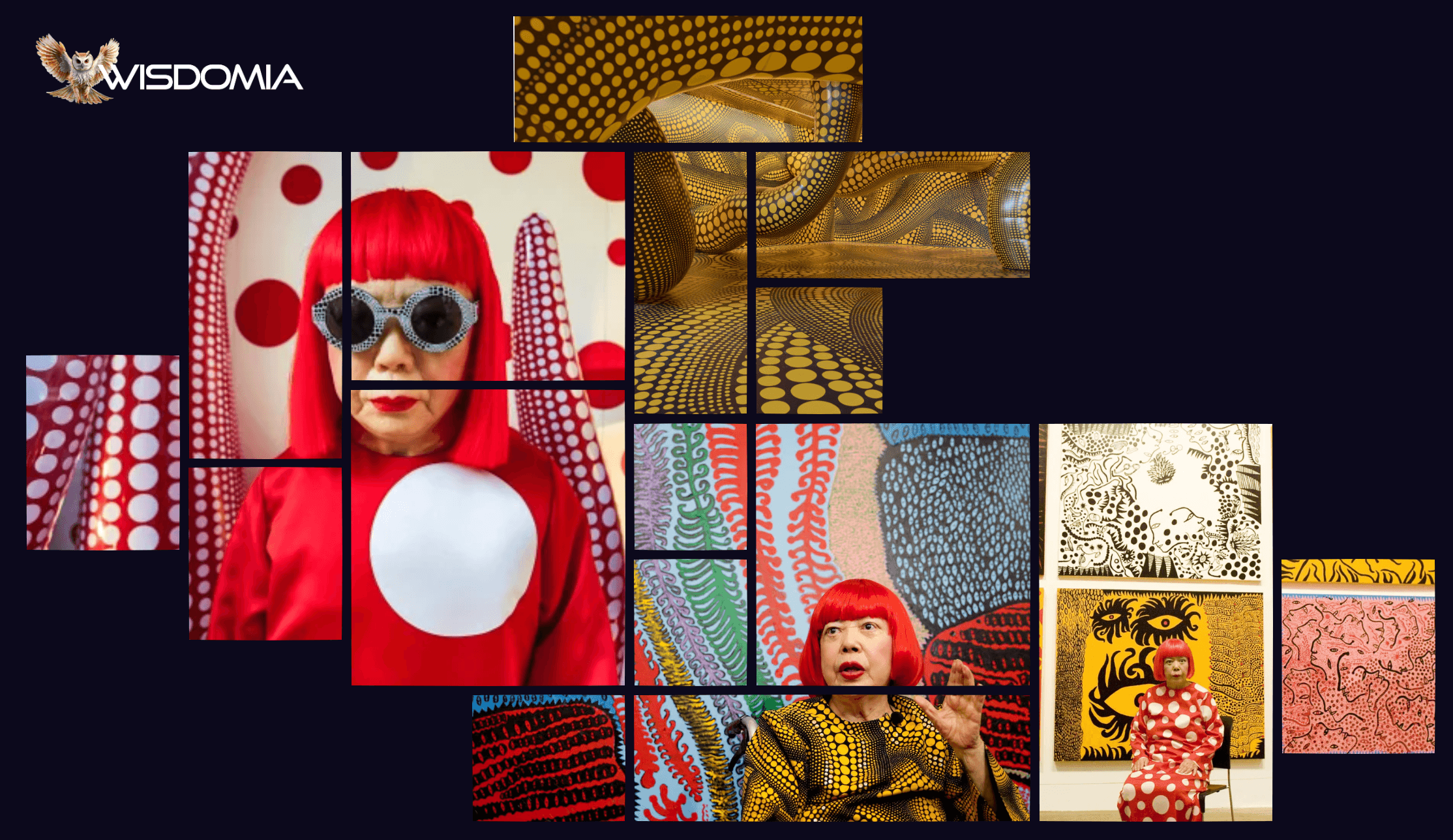
Yayoi Kusama dies aged 97, leaving behind a global artistic legacy shaped by polka dots, Infinity Mirror Rooms, pumpkins and immersive art.
Yayoi Kusama, the Japanese artist whose polka dots, mirrored rooms and pumpkin sculptures became some of the most recognisable images in contemporary art, has died aged 97.
Kusama’s studio confirmed that she died in Tokyo on 14 August 2026. She had continued working until close to the end of her life, adding to a body of work that stretched across more than seven decades.
Her career was unusual not only for its longevity, but for the way it moved between the art world and popular culture. Kusama was exhibited by major museums, collected by institutions and private buyers, and discussed alongside many of the most important artists of the 20th century. At the same time, her work became familiar to millions of people who may never have followed contemporary art closely.
From Childhood Visions to a Visual Language
The polka dots helped make that possible.
For Kusama, however, they were never simply decorative. She had spoken for many years about experiencing hallucinations from childhood, including patterns that seemed to spread across rooms, surfaces and objects around her. Repetition became one of the ways she translated those experiences into art.
That idea followed her throughout her career.
Born in Matsumoto, Japan, in 1929, Kusama began making art at a young age before moving to the United States in the late 1950s. In New York, she entered an art scene that was rapidly changing and often difficult for women, particularly foreign women, to navigate.
Her early Infinity Net paintings were made from repeated loops painted across large canvases. They were obsessive, minimal and almost without a clear centre. The effect was less about looking at one image than being absorbed by a surface that seemed as if it could continue indefinitely.
Kusama later expanded that interest in repetition into sculpture, performance and installation. During the 1960s, she staged public happenings and anti-war performances, often using bodies, dots and repetition to challenge the boundaries between the artwork and the viewer.
The Infinity Mirror Rooms That Changed Her Career
Her Infinity Mirror Rooms eventually became the works most closely associated with her name.
Inside them, mirrors multiply lights, objects and the viewer’s own reflection until the room seems to disappear. They are among the clearest examples of Kusama’s interest in what she called “self-obliteration”, the idea of losing a sense of the individual self inside something much larger.
Long before immersive art became a common part of museums and commercial exhibitions, Kusama was building spaces designed to be entered rather than simply observed.
That helped her work find a new audience decades later.
As social media grew, the Infinity Mirror Rooms became global visual phenomena. Photographs of visitors surrounded by endless points of light circulated far beyond galleries, introducing her work to people who may not have encountered it otherwise.
Pumpkins, Polka Dots and Popular Culture
Her pumpkins became just as recognisable.
Kusama had been fascinated by pumpkins since childhood and returned to them repeatedly throughout her career. The forms appeared in paintings, sculptures and installations, usually covered in her characteristic dots.
The yellow and black pumpkin on the Japanese island of Naoshima became one of her most famous works and one of the most photographed pieces of public art in Japan.
Kusama’s visual language also travelled into fashion and luxury.
Her collaborations with Louis Vuitton brought her dots and sculptural forms into shop windows, clothing, bags and large-scale retail installations. For some critics, these projects raised questions about the relationship between fine art and commercial culture. For others, they demonstrated just how far Kusama’s imagery had travelled.
Few contemporary artists have created a style that can be recognised so quickly.
Recognition Arrived Late
Her later success also came after years in which she was far less visible internationally.
Kusama returned to Japan in the 1970s and later chose to live voluntarily in a psychiatric hospital in Tokyo, working from a studio nearby. She was open about her experiences with mental illness and often described art as a way of managing fear, hallucinations and anxiety.
Her international profile grew significantly again in the 1990s, particularly after representing Japan at the Venice Biennale in 1993.
Major exhibitions followed, and by the 2000s and 2010s she had become one of the most visited and commercially successful living artists in the world.
That late recognition is an important part of her story.
Kusama spent years working outside the centre of the art establishment before eventually becoming one of its most famous figures. Her work crossed painting, sculpture, performance, fashion and installation without ever losing the visual language she developed early in her life.
More Than Dots and Mirrors
It is tempting to remember her through the dots, pumpkins and mirrored rooms alone because those images are so familiar.
But their appeal came from something more complicated.
Kusama’s work dealt repeatedly with fear, repetition, disappearance, isolation, mortality and the desire to become part of something larger than oneself. The colours and spectacle made the work accessible, but the ideas underneath were often much darker.
That tension is one reason the work endured.
What began as an intensely personal way of representing her own perception eventually became a visual language understood around the world.
Yayoi Kusama leaves behind an enormous body of work, but perhaps her strongest legacy is the way she changed the relationship between artwork and audience.
She did not simply ask people to look at art.
She invited them to step inside it.
Share this

Sara Srifi
Sara is a Software Engineering and Business student with a passion for astronomy, cultural studies, and human-centered storytelling. She explores the quiet intersections between science, identity, and imagination, reflecting on how space, art, and society shape the way we understand ourselves and the world around us. Her writing draws on curiosity and lived experience to bridge disciplines and spark dialogue across cultures.



About
Where Wisdom Meets AI Utopia Edutainment
Wisdomia.ai is a 3D AI edutainment platform that seamlessly blends learning with immersive play. As the first AI-powered 3D Web 3.0 marketplace created by creators for creators. Founded by renowned serial entrepreneur and author Dinis Guarda, Wisdomia empowers individuals to flourish in an ecosystem designed for collective wisdom EQ. Join us in shaping humanity's future as we harness the power of AI to visualise and create a better world—where technology serves human potential, and innovation is guided by utopian wisdom.
Contact us
Produced by

