
loading...

 AI Literacy: Why Every Child Needs to Learn About Artificial Intelligence in School
AI Literacy: Why Every Child Needs to Learn About Artificial Intelligence in School
Tue Jan 13 2026

Why should AI literacy be taught in all schools? Learn how universal AI education ensures equal opportunities, critical thinking skills, and career readiness for every student.
The rapid advancement of artificial intelligence has transformed how we work, communicate, and solve problems. Yet as AI becomes increasingly embedded in our daily lives, a critical question emerges: are we preparing the next generation to navigate this technology-powered world? The answer, increasingly, is that AI literacy must become a fundamental part of education for all students.
Understanding the AI Literacy Gap

AI literacy refers to the ability to understand, use, and critically evaluate artificial intelligence systems. This includes knowing how AI works, recognizing when you're interacting with AI, understanding its capabilities and limitations, and using AI tools effectively and ethically.
Currently, exposure to AI education varies dramatically based on geography, school funding, and individual teacher initiative. Some students attend schools with dedicated AI courses and cutting-edge technology, while others have minimal access to even basic computer science education. This disparity creates a growing digital divide that threatens to leave entire communities behind in an AI-driven economy.
The Case for Universal AI Education
Economic Preparation and Career Readiness

The job market is evolving rapidly, with AI touching nearly every industry from healthcare to agriculture, finance to creative arts. Students without AI literacy will find themselves at a significant disadvantage when entering the workforce. Understanding how to work alongside AI systems, leverage them for productivity, and adapt to AI-enhanced workflows will be as essential as basic computer skills are today.
Research suggests that many jobs won't be replaced by AI but transformed by it. Workers who can effectively collaborate with AI tools will be more valuable than those who cannot. Starting this education early ensures all students develop comfort and competence with these systems.
Critical Thinking and Digital Citizenship
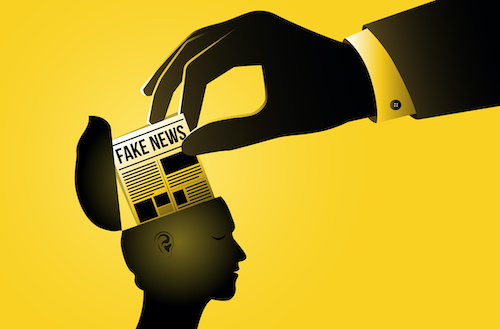
AI literacy isn't just about using tools; it's about understanding their implications. Students need to recognize AI-generated content, understand algorithmic bias, and evaluate AI outputs critically. As misinformation and deepfakes become more sophisticated, the ability to question and verify AI-generated information becomes a crucial life skill.
Young people are already interacting with AI through social media algorithms, chatbots, and recommendation systems. Without proper education, they consume AI-mediated content without understanding how their experiences are being shaped, potentially making them vulnerable to manipulation.
Equity and Social Justice

Making AI literacy universal is fundamentally an equity issue. Historically, technological revolutions have widened gaps between the privileged and disadvantaged. Students from well-resourced schools already have access to AI tools and instruction, while those from underfunded schools fall further behind.
By integrating AI literacy into core curriculum standards, we ensure that zip codes and family income don't determine who gets to participate fully in the AI age. This democratization of knowledge helps create pathways for diverse voices to shape AI's future development rather than remaining passive consumers.
What AI Literacy Education Should Include

A comprehensive AI literacy program should cover several key areas appropriate to students' developmental stages.
Foundational Concepts
Students should understand basic principles of how AI systems work, including machine learning, neural networks, and data training. This doesn't require advanced mathematics but rather conceptual understanding that AI systems learn from patterns in data rather than following explicit rules.
Practical Application Skills
Hands-on experience with AI tools helps students become comfortable users. This might include working with AI writing assistants, image generators, coding tools, or data analysis platforms. Students should learn effective prompting techniques, how to iterate on AI outputs, and when AI tools are or aren't appropriate for specific tasks.
Ethical Considerations
AI education must address privacy, bias, transparency, and accountability. Students should explore questions like: Who benefits from AI systems? Whose perspectives are represented in training data? What happens to personal information used by AI? How do we ensure AI is used responsibly?
Creative and Problem-Solving Applications
Rather than viewing AI as a threat to creativity, students should explore how AI can enhance creative expression and problem-solving. From art and music generation to scientific research and community projects, AI can be a powerful tool when guided by human creativity and values.
Addressing Common Concerns

Some educators and parents worry that teaching AI literacy might make students overly dependent on technology or reduce emphasis on fundamental skills. However, AI literacy actually reinforces critical thinking, reading comprehension, and analytical skills. Using AI effectively requires understanding context, evaluating quality, and synthesizing information, all essential academic competencies.
Others fear that AI education requires expensive technology or highly specialized teachers. While some resources are helpful, AI literacy can begin with unplugged activities, discussions about AI in students' lives, and freely available tools. Professional development can help existing teachers integrate AI literacy into their subjects rather than requiring entirely new courses.
Implementation Strategies for Schools

Starting Early and Building Progressively
AI concepts can be introduced in age-appropriate ways from elementary school through high school. Younger students might explore how recommendation algorithms work through simple activities, while older students can engage with more complex topics like algorithmic bias and AI ethics.
Cross-Curricular Integration
Rather than treating AI as solely a computer science topic, it should be woven throughout the curriculum. English classes can examine AI-generated text and discuss authorship, social studies can explore AI's societal impacts, science classes can use AI for data analysis, and art classes can experiment with generative tools.
Teacher Training and Support
Successful implementation requires investing in teacher professional development. Educators need time to learn about AI, experiment with tools, and develop lesson plans. Creating communities of practice where teachers share resources and strategies can accelerate adoption.
Equitable Access to Technology
Schools must ensure all students can access AI tools through school-provided devices and internet connectivity. Partnerships with technology companies, government programs, and community organizations can help bridge resource gaps.
The Cost of Inaction

Failing to make AI literacy universal carries significant risks. Students without this education will face limited career opportunities, decreased earning potential, and reduced ability to participate fully in civic life. Communities already facing systemic disadvantages will fall further behind, exacerbating existing inequalities.
Beyond individual impacts, society needs an AI-literate population to make informed decisions about how these powerful technologies are developed and deployed. Democratic participation in the AI age requires citizens who understand what they're voting on, advocating for, or opposing.
Moving Forward Together
The integration of AI literacy into education represents both a challenge and an opportunity. It requires commitment from policymakers, school administrators, teachers, parents, and communities. But the investment is essential.
By making AI literacy a universal part of education, we ensure that every child, regardless of background, has the knowledge and skills to thrive in an AI-enhanced world. We empower students to be informed users, critical thinkers, and active shapers of technology rather than passive recipients. Most importantly, we fulfill education's promise of providing all students with the tools they need for success and the opportunity to reach their full potential.
The question is not whether AI literacy should be part of education, but how quickly we can make it accessible to every student. The future belongs to those who understand and can work effectively with AI, and that future should belong to all our children, not just the privileged few.
previous
Animoca Brands: The Architects of Digital Freedom in Gaming's Next Revolution
next
Yat Siu – Building Digital Freedom: The Visionary Behind Web3's Property Rights Revolution
Share this

Sara Srifi
Sara is a Software Engineering and Business student with a passion for astronomy, cultural studies, and human-centered storytelling. She explores the quiet intersections between science, identity, and imagination, reflecting on how space, art, and society shape the way we understand ourselves and the world around us. Her writing draws on curiosity and lived experience to bridge disciplines and spark dialogue across cultures.
More Articles
Blenheim Palace Brings Megalosaurus to Life Through Art, Science and Engineering

Architecture of Movement: What Deserts, Nomads and World Heritage Teach Us About Belonging

The Spiritual Meaning of the AI Singularity: What Remains Human in the Age of Artificial Intelligence?

Geometry or Pixels: Where Generative Video Belongs in a 3D Pipeline
AI Love? 50+ Million People Are Dating AI Agents
About
Where Wisdom Meets AI Utopia Edutainment
Wisdomia.ai is a 3D AI edutainment platform that seamlessly blends learning with immersive play. As the first AI-powered 3D Web 3.0 marketplace created by creators for creators. Founded by renowned serial entrepreneur and author Dinis Guarda, Wisdomia empowers individuals to flourish in an ecosystem designed for collective wisdom EQ. Join us in shaping humanity's future as we harness the power of AI to visualise and create a better world—where technology serves human potential, and innovation is guided by utopian wisdom.
Contact us
Produced by

