
loading...

 Elder Voices of the Millennium: William Kentridge
Elder Voices of the Millennium: William Kentridge
Wed Dec 24 2025
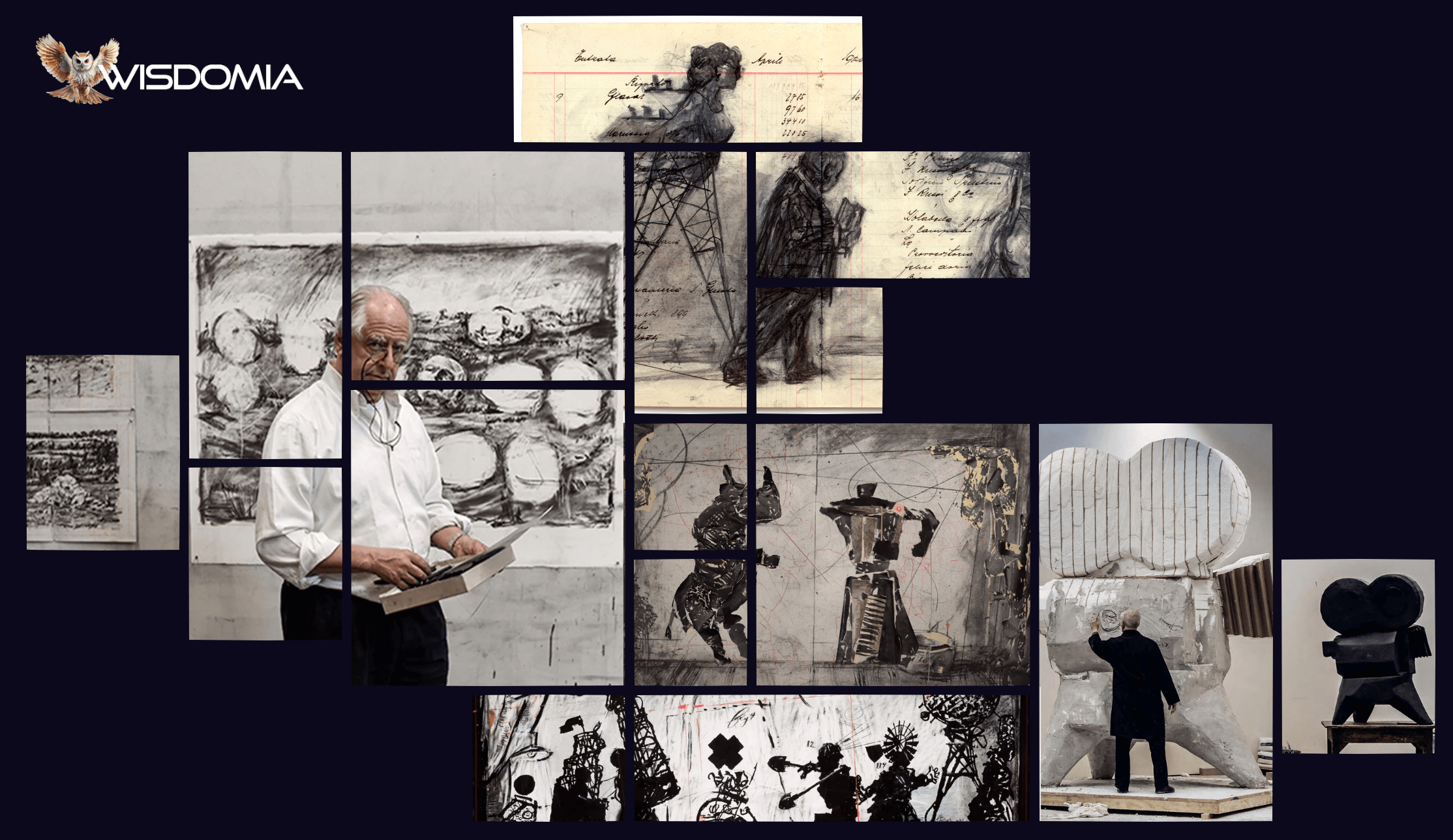
Discover how South African artist William Kentridge transforms uncertainty into wisdom through his groundbreaking animated films, drawings, and philosophical approach to art-making.
The Artist Who Draws Wisdom from Uncertainty

In the landscape of contemporary art, few voices speak with the profound philosophical depth of William Kentridge. Born in 1955 in Johannesburg, South Africa, this internationally acclaimed artist has spent nearly five decades transforming the simple act of drawing into a meditation on history, memory, and what it means to be human. As one of the millennium's most significant artistic thinkers, Kentridge offers a rare form of wisdom: one that embraces uncertainty rather than fleeing from it.
The Philosophy of Imperfection
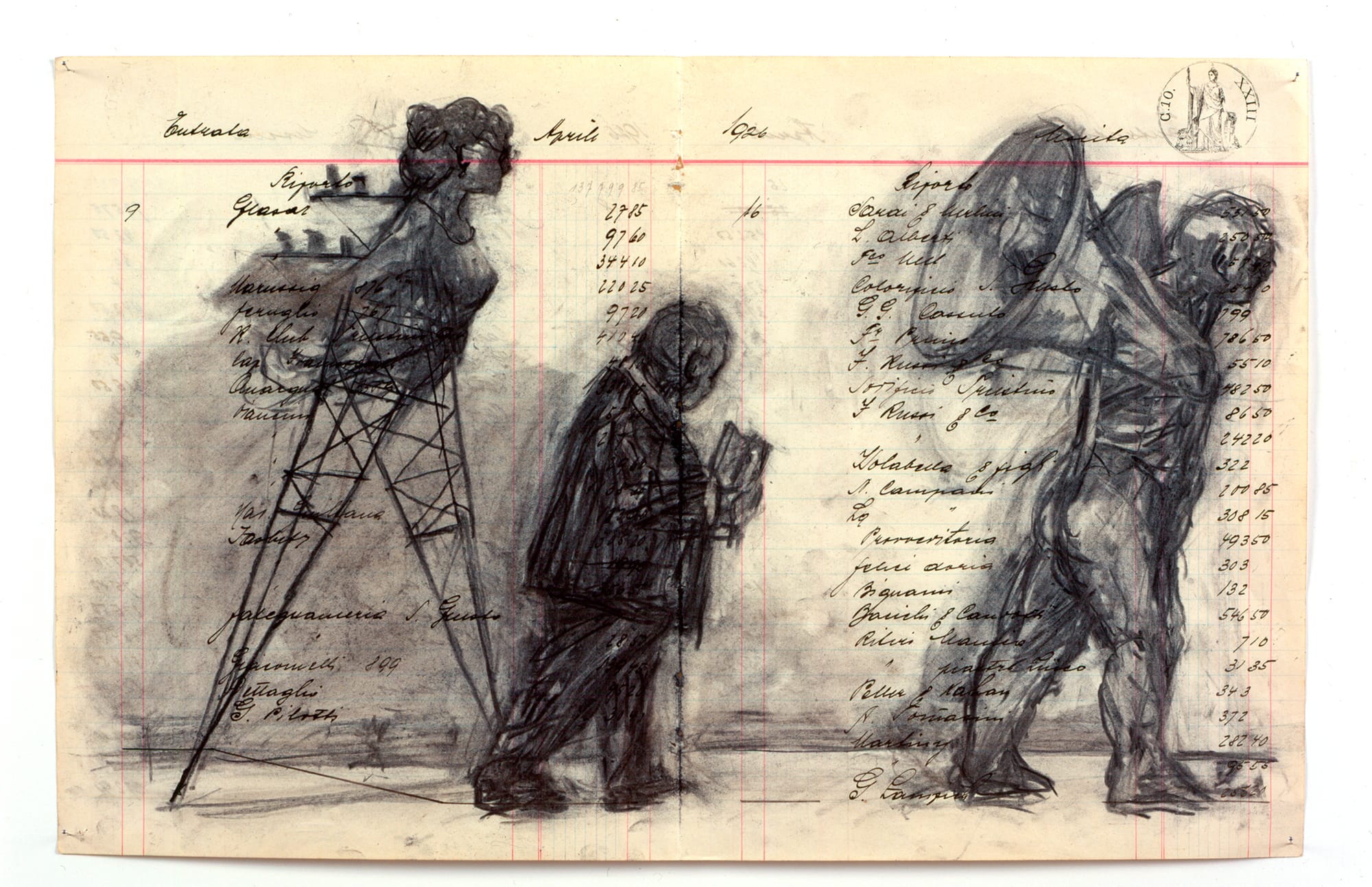
Kentridge has stated that there is a desperation in all certainty, and that philosophical uncertainty and uncertainty of images are much closer to how the world actually is. This philosophy permeates every aspect of his work, from his famous animated films to his recent opera productions and television series.
Unlike artists who seek perfection or final answers, Kentridge works through a process of continuous revision and erasure. His signature technique involves creating charcoal drawings, filming them, then erasing and redrawing them repeatedly to create animated sequences. Each finished frame is a palimpsest, a layered document where previous marks remain visible beneath new ones, creating what he describes as works that explore uncertainty and provisional moments.
Drawing as Thinking
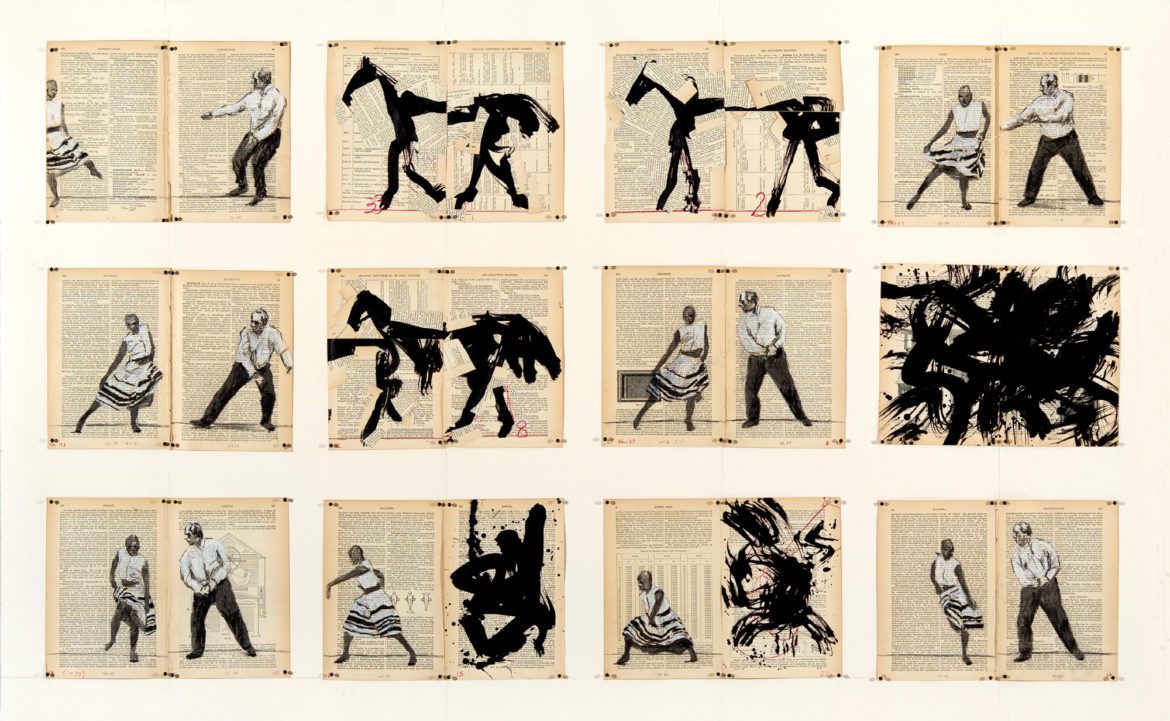
Kentridge has described printmaking as a way of thinking aloud and testing ideas, comparing the process to building a logical argument. This approach extends to all his work. Rather than planning every detail in advance, he allows his hand to guide his brain, trusting the physical act of making to reveal unexpected connections and meanings.
This embodied wisdom, the knowledge that comes through doing rather than abstract planning, reflects Kentridge's training in theater and mime at Jacques Lecoq's school in Paris during the early 1980s. He credits theater with teaching him more than art school ever did, particularly about the relationship between movement, gesture, and meaning.
Art from Apartheid's Shadow
/https://agsa-prod.s3.amazonaws.com/media/dd/images/80438-EX-WR-L-WK-1-37.c8f2556.jpg)
Growing up in Johannesburg during apartheid as the son of prominent human rights lawyers who defended those marginalized by the system, Kentridge's artistic vision was shaped by witnessing injustice firsthand. Yet his response has never been straightforward political propaganda. Instead, he creates what he calls an art of ambiguity, contradiction, and uncertain endings, one where optimism is tempered and nihilism is held at bay.
His internationally acclaimed animated film series from the 1990s examined themes of violent oppression, class struggle, and social hierarchies through the lives of fictional characters. These films, including the celebrated "9 Drawings for Projection," established Kentridge as an artist who could transform historical trauma into universal meditations on power, complicity, and moral responsibility.
A Multimedia Visionary

Kentridge's wisdom manifests not in a single medium but through radical cross-pollination. He seamlessly combines drawing, printmaking, animation, sculpture, theater, opera, and collaborative performance. His method includes drawing and erasing, tearing, gestural painting, collage, weaving, casting, writing, film, performance, music and theater, all grounded in politics, science, literature, and history while maintaining space for contradiction and uncertainty.
His opera productions have reimagined works by Mozart, Shostakovich, and Alban Berg, bringing his visual vocabulary to some of the world's most prestigious stages, including the Metropolitan Opera in New York and the Salzburg Festival. In 2023, he received the Laurence Olivier Award for Outstanding Achievement in Opera.
Recent Innovations: Self-Portrait as a Coffee Pot
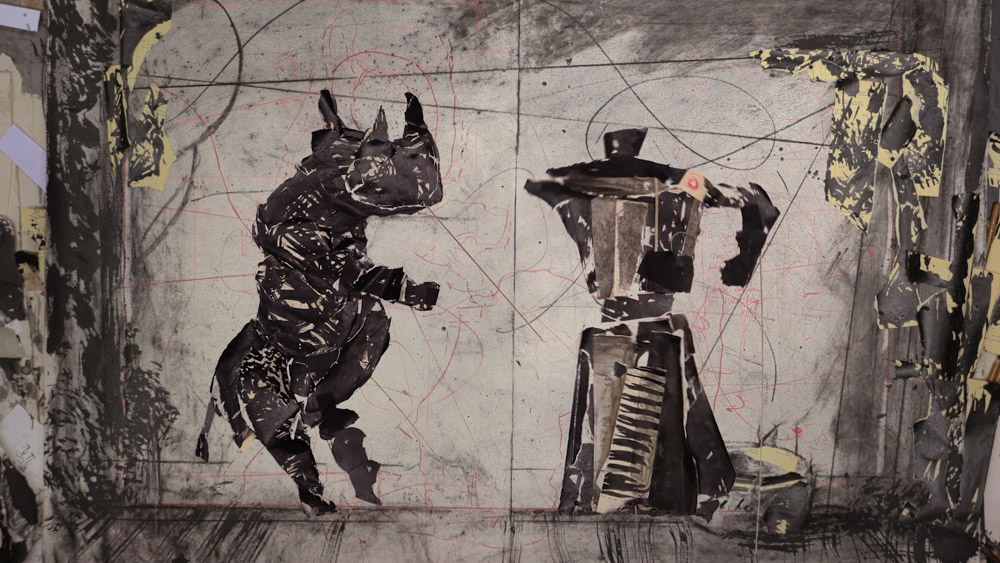
In 2024, Kentridge premiered a nine-episode video series titled "Self-Portrait as a Coffee Pot" at the Arsenale Institute for Politics of Representation in Venice. Created during coronavirus lockdowns, the series features multiple versions of Kentridge engaging in philosophical dialogue within his studio, exploring how artists fragment the world and remake it through their work.
The series exemplifies Kentridge's mature wisdom: playful yet profound, it demonstrates that the studio is not just a place of production but a site for undoing certainties and allowing provisional meanings to emerge.
Recognition and Global Impact
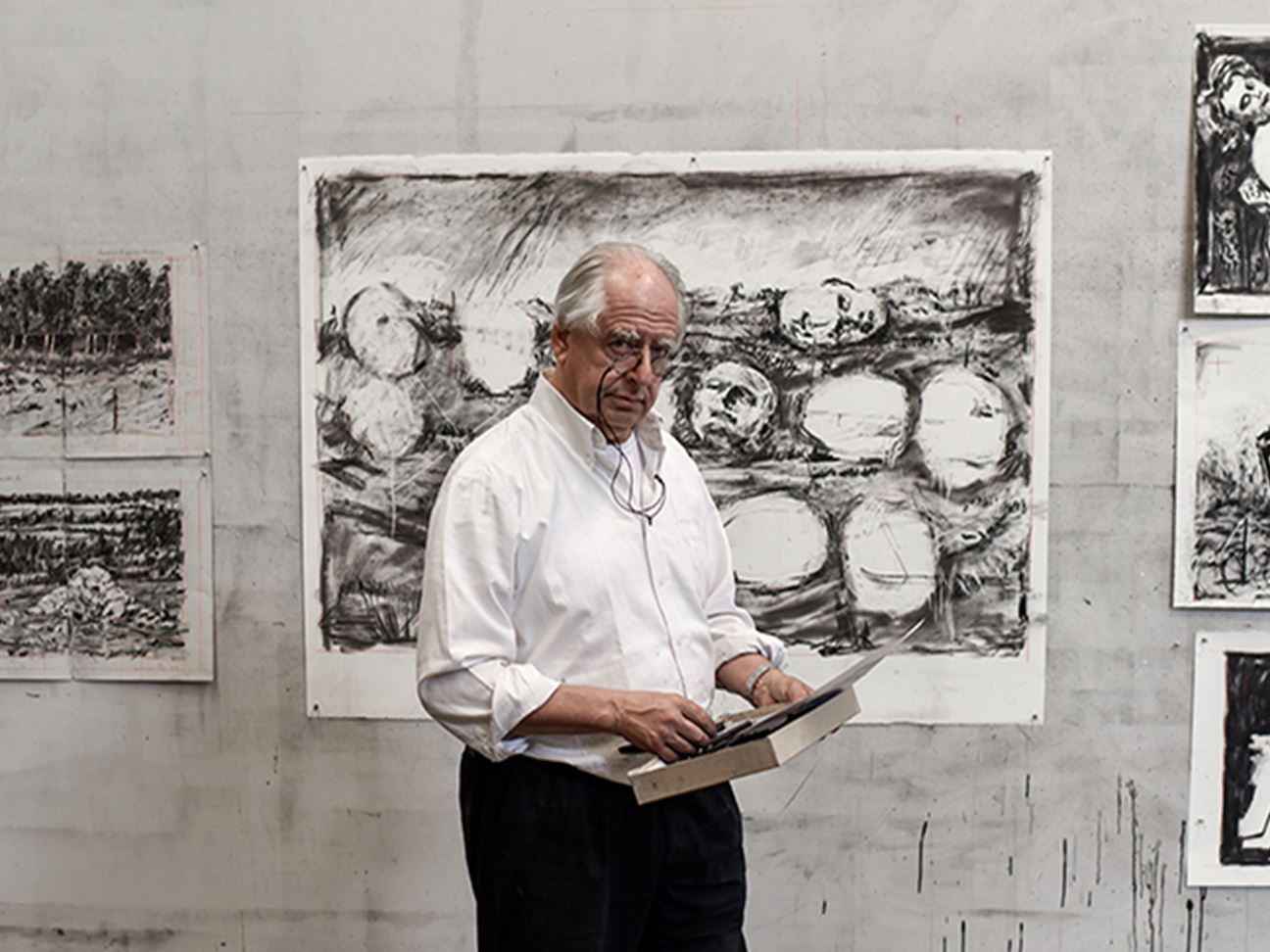
Kentridge's contributions have been recognized with numerous prestigious awards, including the Kyoto Prize in 2010, the Praemium Imperiale award for painting in 2019, and most recently, the International Folkwang Prize in 2024 for his transformative impact on arts and culture.
His work has been exhibited at major institutions worldwide, including the Museum of Modern Art in New York, the Musée du Louvre in Paris, and the Tate Modern in London, and he has participated in Documenta and the Venice Biennale multiple times.
The Centre for the Less Good Idea
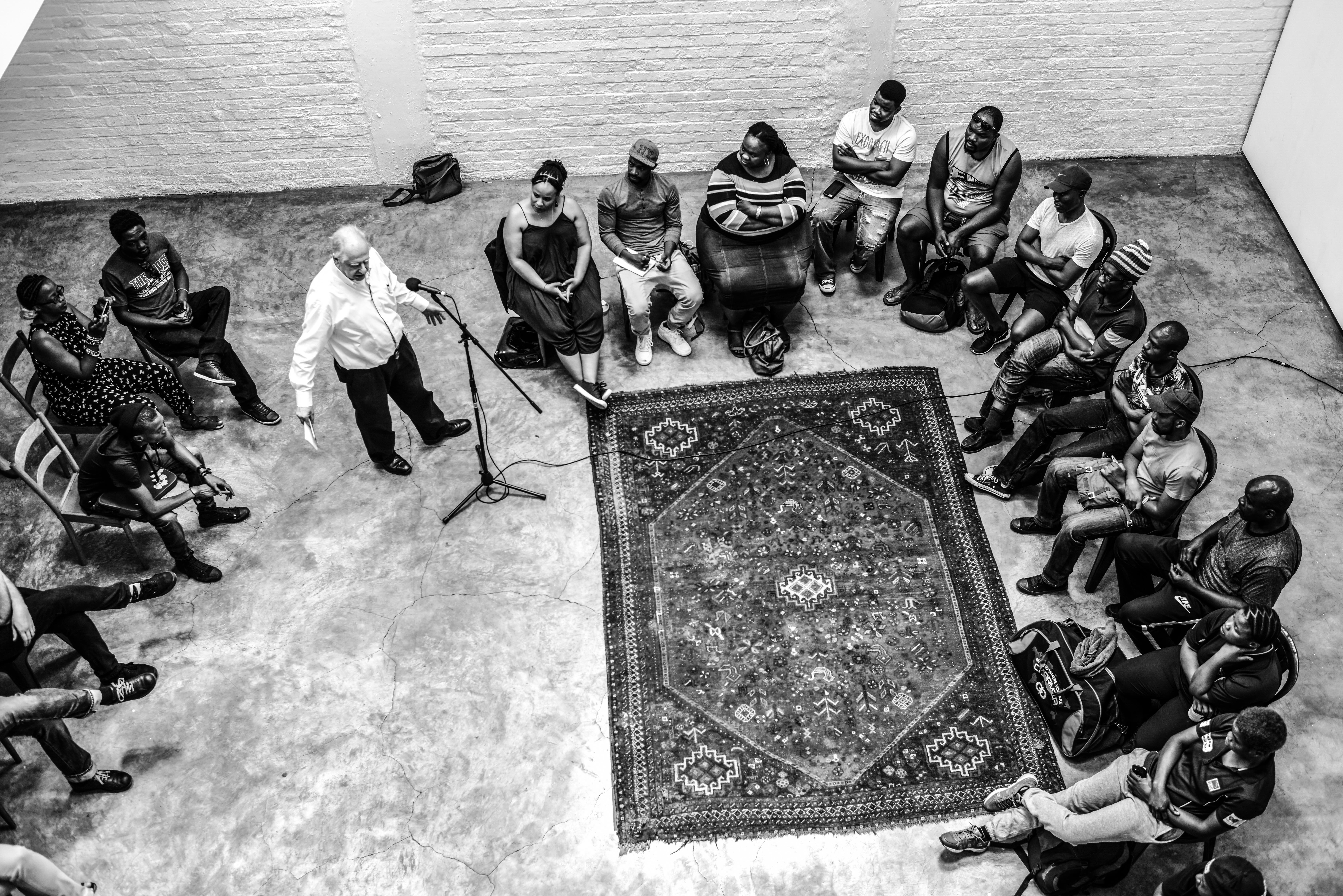
In 2017, Kentridge founded The Centre for the Less Good Idea in Johannesburg, a cross-disciplinary incubator for experimental, collaborative arts practices. The name itself embodies his wisdom: in a world obsessed with excellence and certainty, Kentridge creates space for risk, failure, and discovery. The center hosts workshops, performances, and mentorship activities, extending his philosophy of creative uncertainty to a new generation of artists.
Wisdom for Our Time
What makes Kentridge an "elder voice of the millennium" is not just his age or achievements, but the particular quality of wisdom he offers. In an era of algorithmic certainty and ideological rigidity, he reminds us that:
- Uncertainty is not weakness but honesty. The world is complex and contradictory; art that acknowledges this reflects reality more truthfully than work that pretends to have all the answers.
- Process matters as much as product. The traces of making, the erasures, revisions, and visible struggles, tell important truths about how meaning emerges.
- Memory is always reconstruction. Kentridge's work explores the provisionality of the moment, acknowledging that each new image bears signs of previous erasures. We constantly remake the past as we encounter it in the present.
- Humor and gravity can coexist. Kentridge has noted that absurdism is an accurate and productive way of understanding the world, because the impossible is what happens all the time.
- Art should expand rather than narrow. By working across media and embracing contradiction, Kentridge's practice resists the reduction of complex realities into simple narratives.
The Studio as Philosophical Laboratory

Kentridge describes his studio as a place where fragments of the world swirl around, are rearranged, and sent back out as drawings, films, and stories, a place of undoing certainties and allowing provisionality. This vision of the artist's workspace as a site of philosophical inquiry rather than mere production offers a model for creative thinking in any field.
Currently, Kentridge's exhibition "History on One Leg" at A4 Arts Foundation in Cape Town features an innovative element where pages from his studio notebooks are randomly printed every two minutes, layering thoughts and chronologies. This ongoing gesture captures his belief that ideas don't arrive fully formed but accumulate like leaves in autumn, without hierarchy.
Contemporary Relevance
As we navigate an increasingly polarized world where artificial intelligence promises computational certainty and social media amplifies ideological absolutes, Kentridge's wisdom becomes more relevant. His 2024 Slade Lectures at Oxford University continued his examination of how we make sense of the world when traditional certainties have collapsed.
His recent exhibition "The Pull of Gravity" at Yorkshire Sculpture Park, marking the first museum presentation outside South Africa to focus on his sculpture, includes over 40 works from 2007 to 2024. At 69, Kentridge remains extraordinarily prolific and innovative, constantly pushing his practice into new territories.
Lessons from a Master
What can we learn from William Kentridge's artistic wisdom?
Embrace the incomplete. Finished works often emerge from processes that remain intentionally open-ended and responsive.
Let materials think. Physical engagement with media—whether charcoal, paper, or the human body in performance—generates insights that pure conceptualization cannot.
Make visible the process of making. Showing your work, including its hesitations and revisions, can be more truthful than presenting a polished final product.
Remember that history is never settled. The past continues to shape the present in complex ways that require ongoing interrogation.
Find freedom in limitation. Kentridge's signature technique of drawing, filming, erasing, and redrawing is highly constrained, yet within these limits he has created an extraordinarily rich body of work.
Cultivate intellectual promiscuity. Draw inspiration from literature, science, philosophy, music, and theater—wisdom emerges from unexpected combinations.
The Artist as Philosopher
William Kentridge stands as one of the millennium's essential artistic voices precisely because he refuses the role of prophet or sage who delivers absolute truths. Instead, he models a different kind of wisdom: humble, questioning, provisional, yet deeply committed to engaging with the world's complexity.
As a philosophical artist, Kentridge constantly reflects on what it means to be human, starting with rigorous personal interrogation and successfully giving insight into a shared human story. His work reminds us that in times of uncertainty—which is to say, in all times—the artists who most help us understand our condition are those who embrace doubt, contradiction, and the beautiful imperfection of being alive.
In Kentridge's studio in Johannesburg, charcoal marks appear and disappear, drawings transform into films, notebooks accumulate fragments of thought, and from this controlled chaos emerges work that mirrors the texture of lived experience. This is wisdom not as fixed knowledge but as ongoing practice, an invitation to all of us to make meaning from the fragments of our own lives, one provisional gesture at a time.
previous
Vince Zampella's Legacy: Remembering a Gaming Industry Visionary Who Shaped Modern Gaming
next
The Neuroscience of Curiosity: How Your Brain Learns Through Wonder
Share this
Sara Srifi
Sara is a Software Engineering and Business student with a passion for astronomy, cultural studies, and human-centered storytelling. She explores the quiet intersections between science, identity, and imagination, reflecting on how space, art, and society shape the way we understand ourselves and the world around us. Her writing draws on curiosity and lived experience to bridge disciplines and spark dialogue across cultures.
More Articles

Coalition for Content Provenance and Authenticity (C2PA): Building the Trust Infrastructure Behind Digital Content
The Coronation of the Legendary King of Maharashtra, India - How Wisdomia AI.DNA / Ztudium Recreated It In 3D AI Spatial Computing?
Face Protocol: The Trust Infrastructure for Digital Identities
AI & Consciousness: EQ/IQ with AI?
Author Leslie Lee Sanders Turns a Lifetime of Quiet Signs Into a Memoir on Spiritual Awakening
About
Where Wisdom Meets AI Utopia Edutainment
Wisdomia.ai is a 3D AI edutainment platform that seamlessly blends learning with immersive play. As the first AI-powered 3D Web 3.0 marketplace created by creators for creators. Founded by renowned serial entrepreneur and author Dinis Guarda, Wisdomia empowers individuals to flourish in an ecosystem designed for collective wisdom EQ. Join us in shaping humanity's future as we harness the power of AI to visualise and create a better world—where technology serves human potential, and innovation is guided by utopian wisdom.
Contact us
Produced by

