
loading...

 TeamHuman: Can a Creator-Led Movement Help Keep Humans in Control of AI?
TeamHuman: Can a Creator-Led Movement Help Keep Humans in Control of AI?
Wed Sep 02 2026
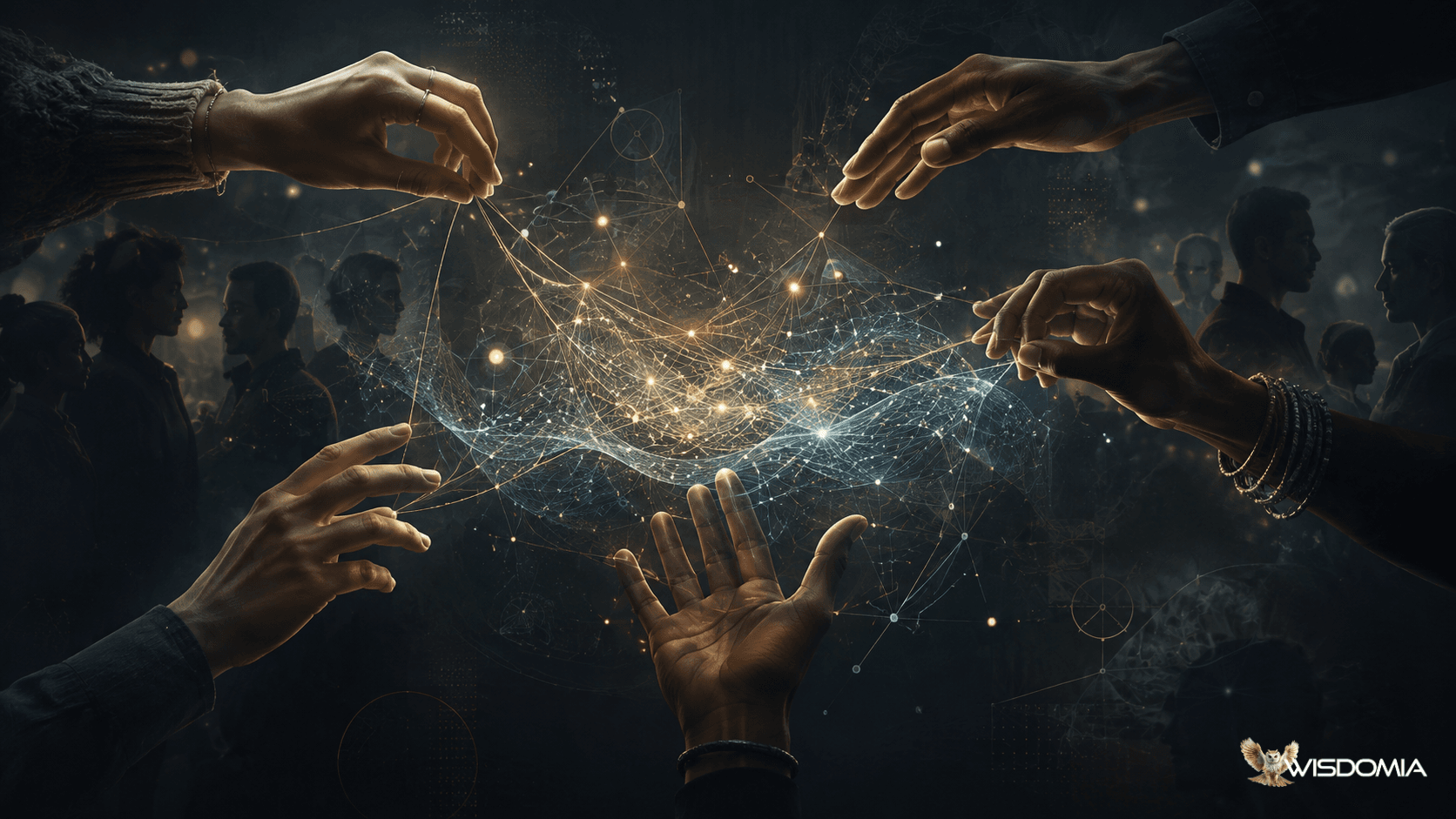
TeamHuman is building a creator-led movement around AI safety, human control and international coordination as concerns grow over the accelerating AI arms race.
TeamHuman is building a creator-led campaign around AI safety, human agency and international coordination, as concern grows that AI development is moving faster than governance.
Artificial intelligence is advancing at a speed that is forcing a difficult question into public debate: how do we make sure humans remain in control?
TeamHuman is one of the latest movements trying to answer that question. The initiative is bringing creators together around a simple message: AI development should not become an unchecked race between companies and countries, particularly if the systems being built become increasingly autonomous.
The movement says participating creators collectively reach around 200 million followers and plans a coordinated campaign in early October focused on AI safety and a pledge calling for a slowdown in the AI arms race.
From AI Safety to Public Movement
Until recently, much of the debate around advanced AI safety stayed inside research labs, policy circles and technology companies.
That is changing.
AI is now part of everyday life, and the questions around it are becoming broader: who controls increasingly capable systems, what decisions should remain human, and how much risk should society accept in exchange for faster technological progress?
TeamHuman’s approach is notable because it tries to move those questions into mainstream creator culture.
Instead of relying only on technical papers or government regulation, the movement is using online creators to reach large audiences directly.
That matters because public understanding of AI remains uneven. Many people use generative AI daily without necessarily engaging with questions around model autonomy, military use, manipulation, misinformation or long-term control.
The AI Arms Race Problem
The phrase “AI arms race” can sound dramatic, but it reflects a real coordination problem.
Technology companies may recognise risks while still feeling pressure to move quickly because competitors are doing the same. Governments face a similar dilemma: slowing domestic AI development can look strategically dangerous if rival countries continue accelerating.
This creates a situation where individual restraint becomes difficult.
That is why AI safety discussions are increasingly moving toward international coordination rather than relying solely on voluntary company policies.
The central argument is not that all AI development should stop. It is that societies may need mechanisms to slow or control development if frontier systems begin advancing faster than governance, oversight and safety research can keep up.
What Does “Human Control” Actually Mean?
Keeping humans in control can mean different things depending on the context.
In healthcare, it may mean ensuring doctors retain final responsibility for clinical decisions. In finance, it may mean preventing autonomous agents from moving capital without clear authority. In military systems, it raises far more serious questions about whether lethal decisions should ever be delegated to machines.
The common issue is accountability.
If an AI system makes a consequential decision, someone still needs to be responsible for what happened.
As AI becomes more autonomous, that responsibility becomes harder to define.
Creators Could Play a Bigger Role

Creators are increasingly influential in how people understand technology.
They can translate complex subjects into language that reaches millions of people far faster than traditional institutions often can.
That gives movements like TeamHuman potential reach, but also responsibility.
AI safety cannot become another simplified culture-war topic. The debate needs to distinguish between real present-day harms, longer-term risks and the enormous benefits AI can also bring across science, education, medicine and productivity.
A credible human-centred AI movement should not be anti-technology.
It should ask what kind of technology people actually want to build, who gets to make those decisions, and where clear limits should exist.
The Bigger Question
TeamHuman is still an emerging movement, but the idea behind it is becoming harder to ignore.
AI capability is advancing rapidly. Regulation moves more slowly. International coordination is difficult, and competitive pressure encourages companies and countries to keep accelerating.
Creators entering that debate could help make AI governance something discussed beyond research laboratories and government offices.
The real issue is not whether AI should continue advancing.
It is whether humanity can build the rules, institutions and safeguards needed to advance with it.
previous
Human Peer Review and AI: Do Machine-Verified Proofs Change What Scientific Trust Means?
next
Indie Lab to Help Independent Studios Build AAA-Quality Games
Share this

Sara Srifi
Sara is a Software Engineering and Business student with a passion for astronomy, cultural studies, and human-centered storytelling. She explores the quiet intersections between science, identity, and imagination, reflecting on how space, art, and society shape the way we understand ourselves and the world around us. Her writing draws on curiosity and lived experience to bridge disciplines and spark dialogue across cultures.
More Articles
Indie Lab to Help Independent Studios Build AAA-Quality Games

Human Peer Review and AI: Do Machine-Verified Proofs Change What Scientific Trust Means?
Yayoi Kusama Dies at 97, Leaving Behind One of Contemporary Art’s Most Recognisable Visual Worlds

AI Is Entering the Frontier of Mathematics But Human Understanding Still Sets the Pace