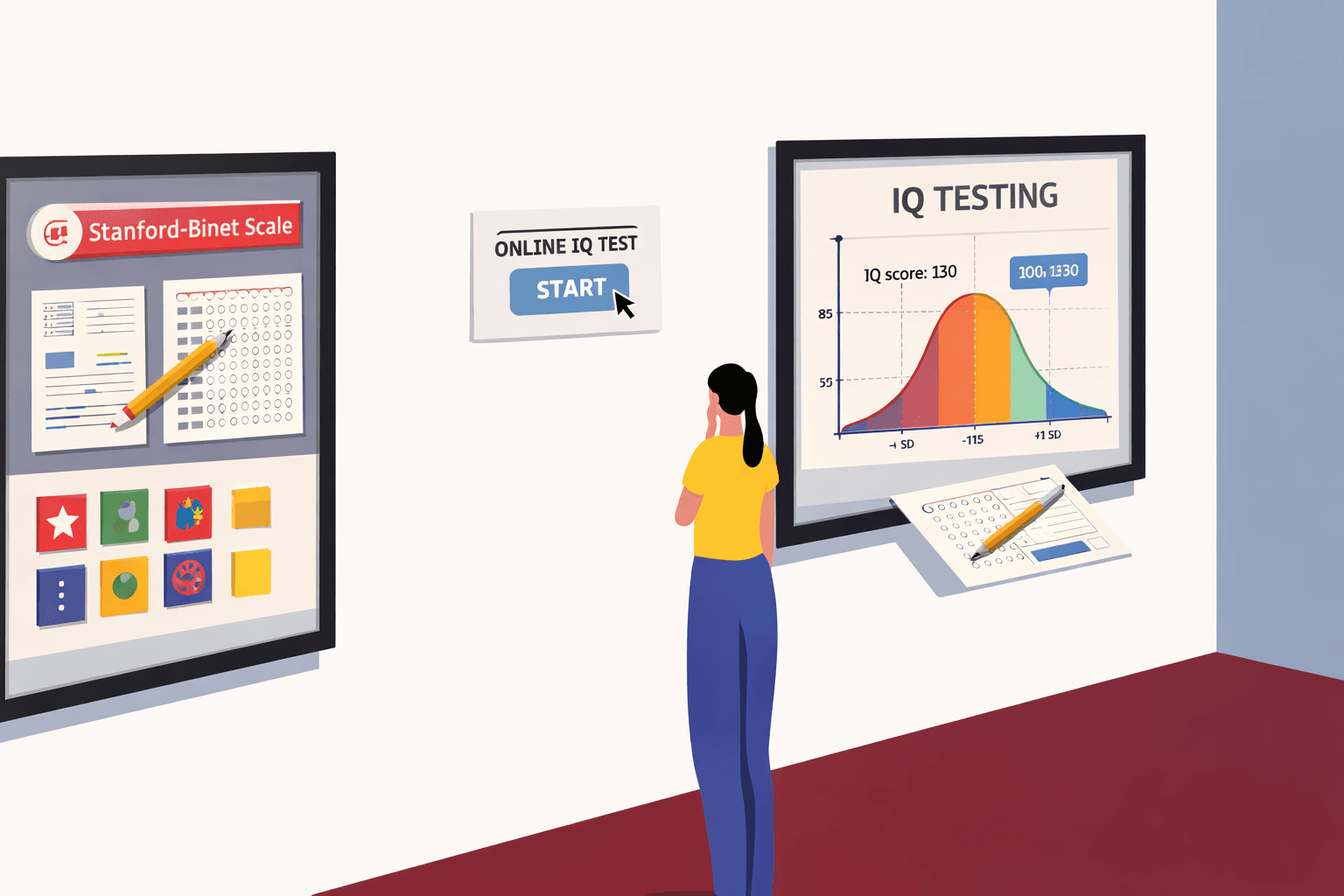
Stanford-Binet Scale
Lewis Terman of Stanford University translates and standardizes Binet's test, introducing a two-scale measurement system for greater accuracy.


 The Measure of a Mind: A History of IQ and Why It Still Matters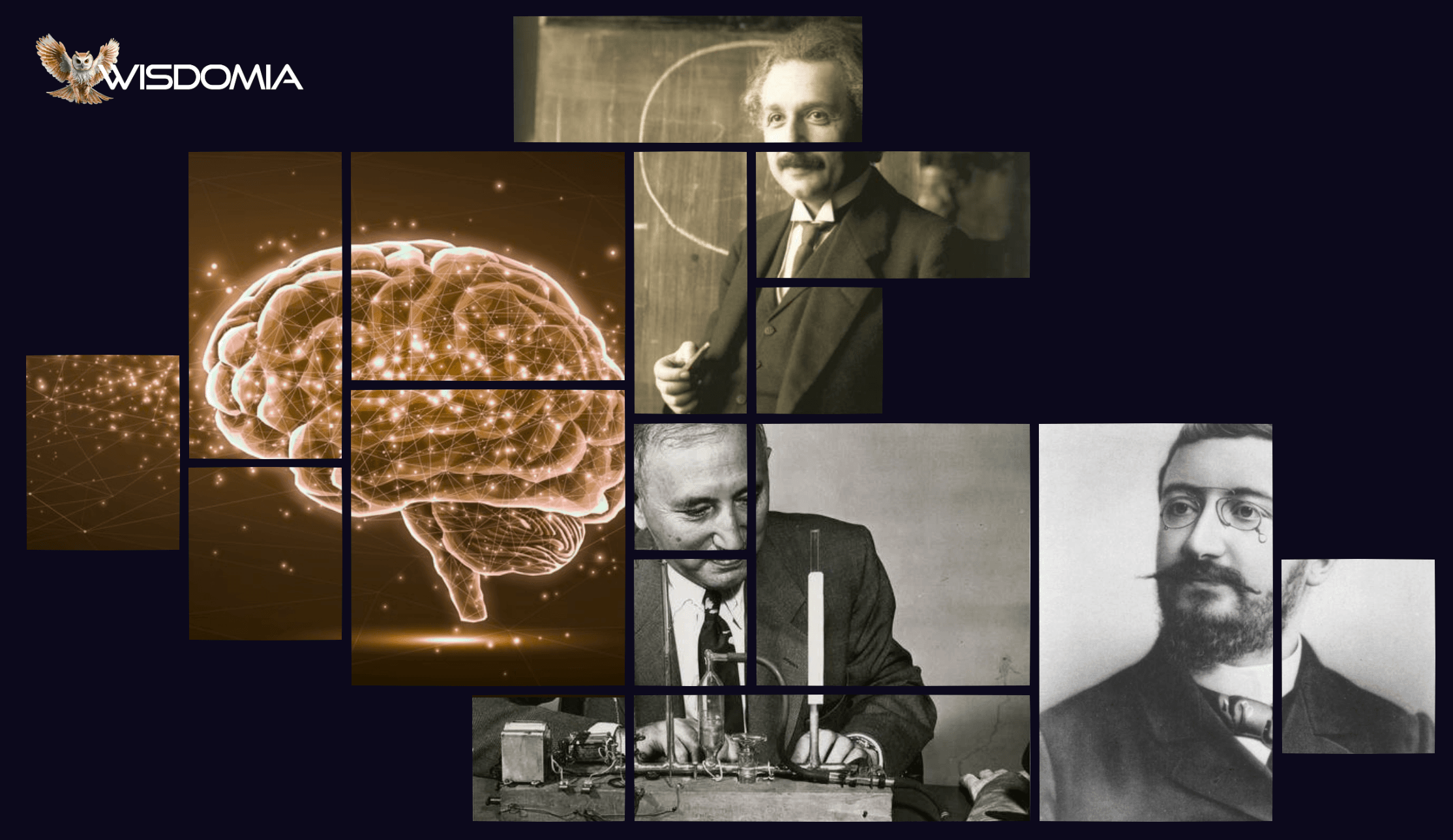
What does it mean to be smart? For over a century, one deceptively simple number has attempted to answer that question. The intelligence quotient — IQ — has been used to screen soldiers, educate children, and crown geniuses. It has shaped careers, influenced policy, and sparked fierce debate. Yet the more scientists study the human mind, the clearer it becomes that intelligence is far too vast and strange a thing to be captured in a single score.
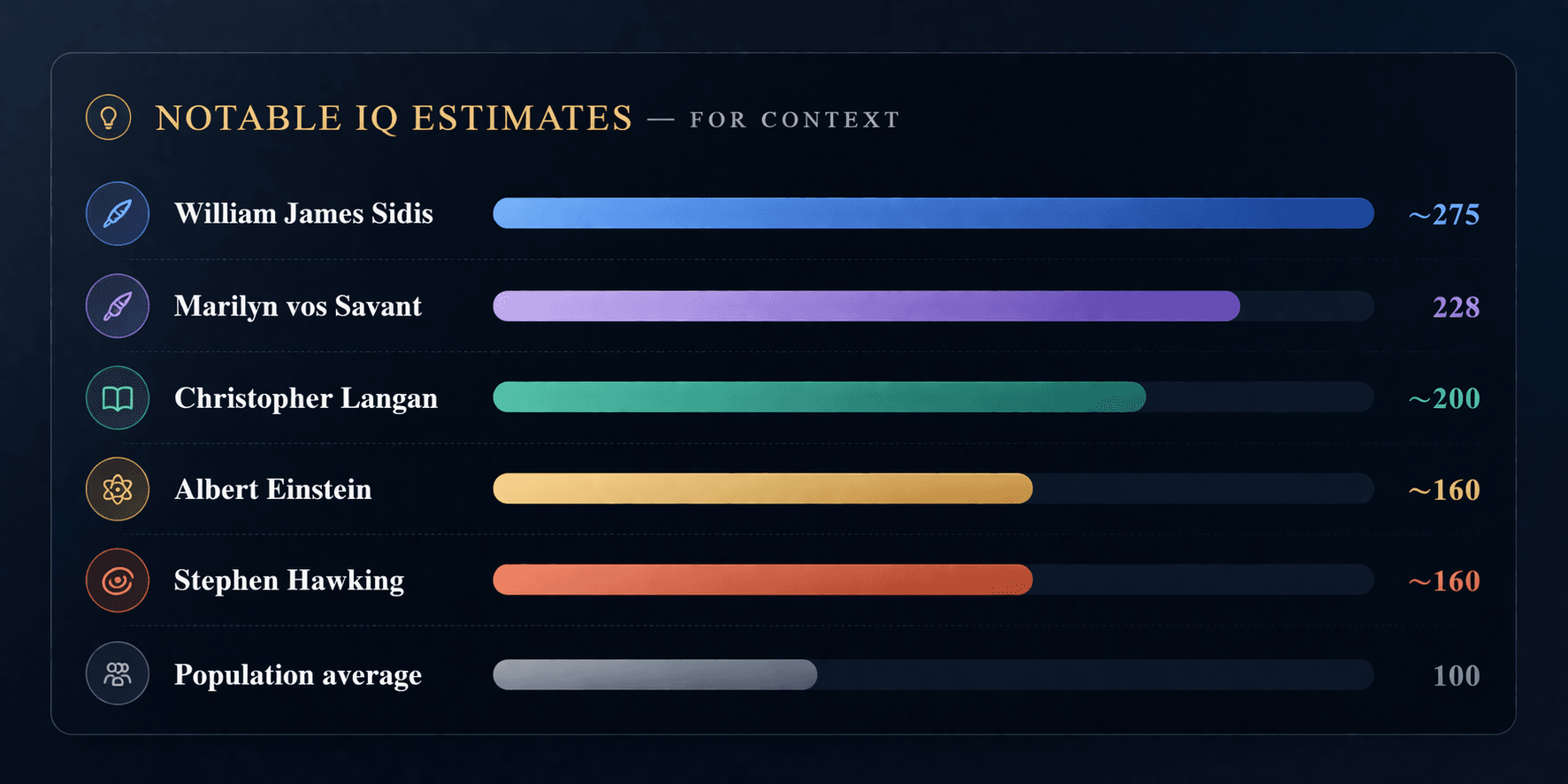
Albert Einstein—perhaps the most celebrated intellect of the modern era— had an estimated IQ of around 160. That is extraordinary by any measure. And yet, there are individuals who have scored well above him: William James Sidis, a child prodigy of the early twentieth century, is estimated to have had an IQ somewhere between 250 and 300. Marilyn vos Savant holds a recorded IQ of 228. These numbers raise an uncomfortable question: does the highest IQ truly make someone the smartest person in the world?
The story begins in the late nineteenth century with Sir Francis Galton, an English polymath and the founder of differential psychology. Galton believed that intelligence was hereditary and could be measured through sensorimotor tasks — the speed and accuracy with which the brain receives a signal and produces a response. His ideas were rigorous for their time, though they carried troubling assumptions about heredity and race that would haunt the field for decades.
Around the turn of the century, a French lawyer-turned-psychologist named Alfred Binet took a more practical approach. In 1904, the French government commissioned him to identify which children were likely to struggle most in school. Working with his colleague Théodore Simon, Binet devised a series of thirty questions targeting attention, memory, and problem-solving — skills that shape learning, not merely recall. The result was the Binet-Simon Scale: the world's first official IQ test.
It has always seemed odd that we like to call the human brain the most complex object in the Universe, yet many of us still accept that we can measure brain function with a few IQ tests.
Roger Highfield, Director of External Affairs, Science Museum London

IQ testing has not always been used in service of human flourishing. In the early twentieth century, tests were used to screen immigrants entering the United States, with government officials citing supposedly "inferior" scores to justify discriminatory restrictions on entire ethnic groups. This history is a reminder that a tool designed to understand the mind can be turned into a weapon of exclusion when divorced from ethical scrutiny.
The case of Christopher Langan — sometimes called "the smartest man in America," with a reported IQ between 195 and 210 — illustrates the problem vividly. Despite his extraordinary scores, Langan has publicly promoted September 11th conspiracy theories and white replacement ideology, leading some commentators to describe him, memorably, as "Alex Jones with a thesaurus."
A high IQ, it seems, is no guarantee of wisdom, judgment, or intellectual humility. Critics have long called IQ tests "fundamentally flawed," arguing that they measure not raw intelligence but a combination of motivation, quality of schooling, health status, and cultural familiarity with the test format itself.
The 2012 study referenced above found that intelligence is not a single river but a delta—branches into at least three distinct streams. No single score can map all of them. Some researchers wrote:
"We have shown that the idea of a general intelligence expressed as a single number is just wrong,"
None of this means IQ is useless. At a population level, IQ scores correlate meaningfully with academic achievement, certain job performance outcomes, and even health indicators. Used carefully and in combination with other measures, they remain a valuable tool for researchers and educators. The problem arises when IQ is treated as a verdict rather than a variable — when a number is used to declare someone smart or not smart, capable or incapable, worthy or unworthy.
The truest measure of a mind may be something IQ tests were never designed to capture: curiosity, resilience, creativity, empathy — the capacity to keep learning in the face of what you do not yet know. Einstein understood this.
The measure of intelligence," he reportedly said, "is the ability to change.
Sources: Verywell Mind; The Independent (2012 cognitive study); AllThatsInteresting.com, "27 Geniuses With The Highest IQs In History" (March 2026).
Milan's Domus Academy bets on AI and futures thinking with two new master's degrees
Beeple: INFINITE_LOOP Opens at NODE Foundation in Palo Alto: What You Need to Know
Sara is a Software Engineering and Business student with a passion for astronomy, cultural studies, and human-centered storytelling. She explores the quiet intersections between science, identity, and imagination, reflecting on how space, art, and society shape the way we understand ourselves and the world around us. Her writing draws on curiosity and lived experience to bridge disciplines and spark dialogue across cultures.

Coalition for Content Provenance and Authenticity (C2PA): Building the Trust Infrastructure Behind Digital Content
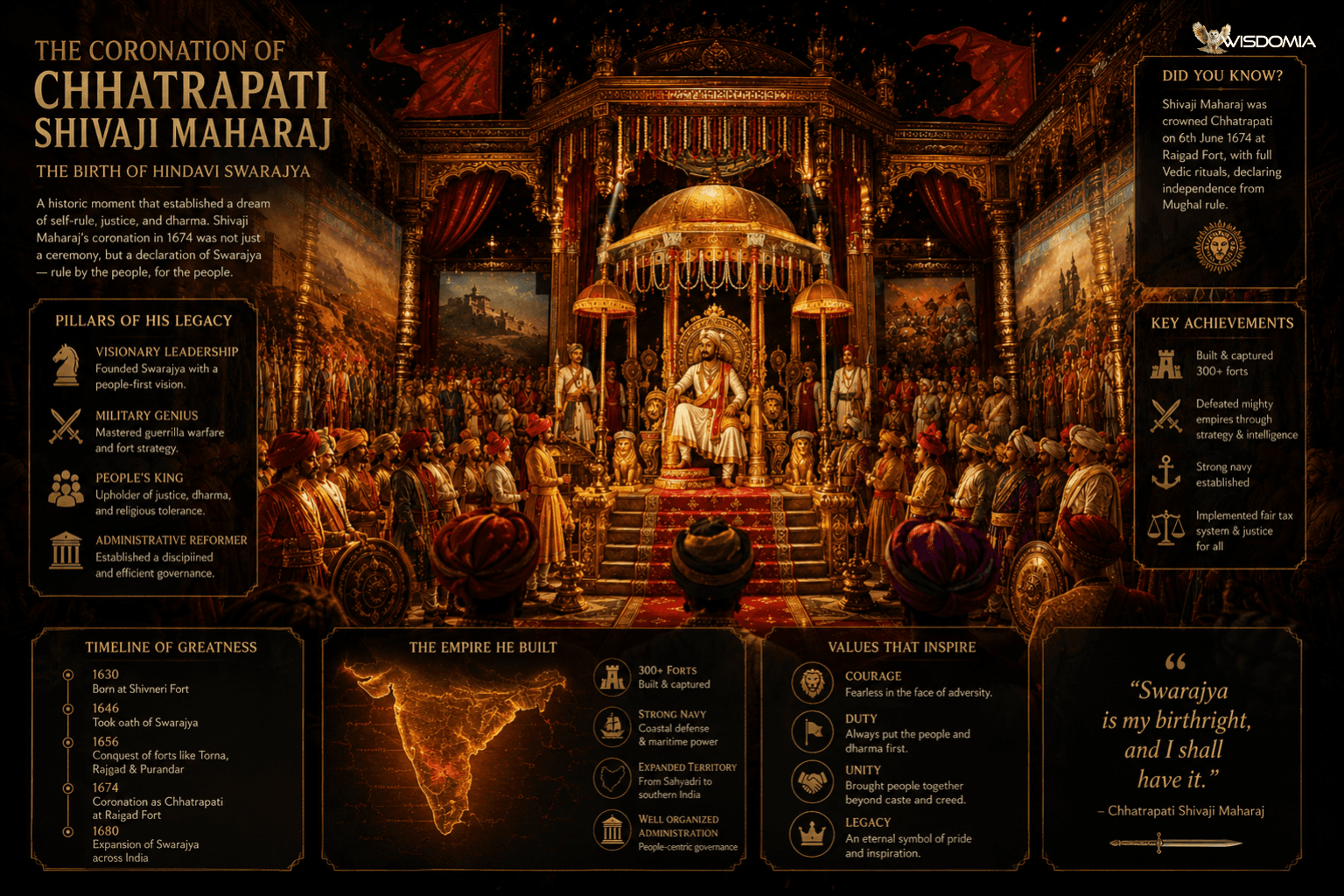
The Coronation of the Legendary King of Maharashtra, India - How Wisdomia AI.DNA / Ztudium Recreated It In 3D AI Spatial Computing?
Face Protocol: The Trust Infrastructure for Digital Identities
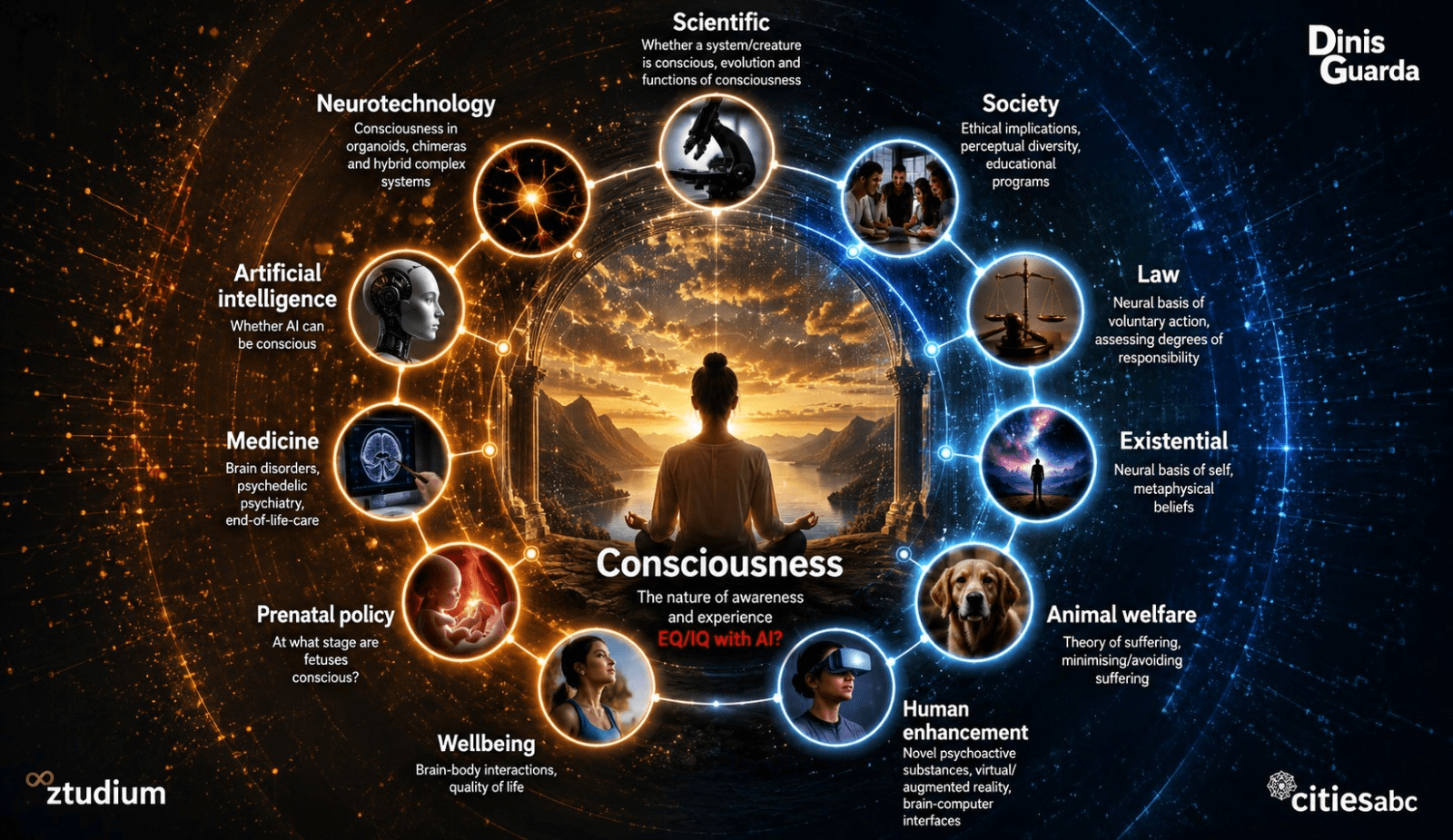
AI & Consciousness: EQ/IQ with AI?
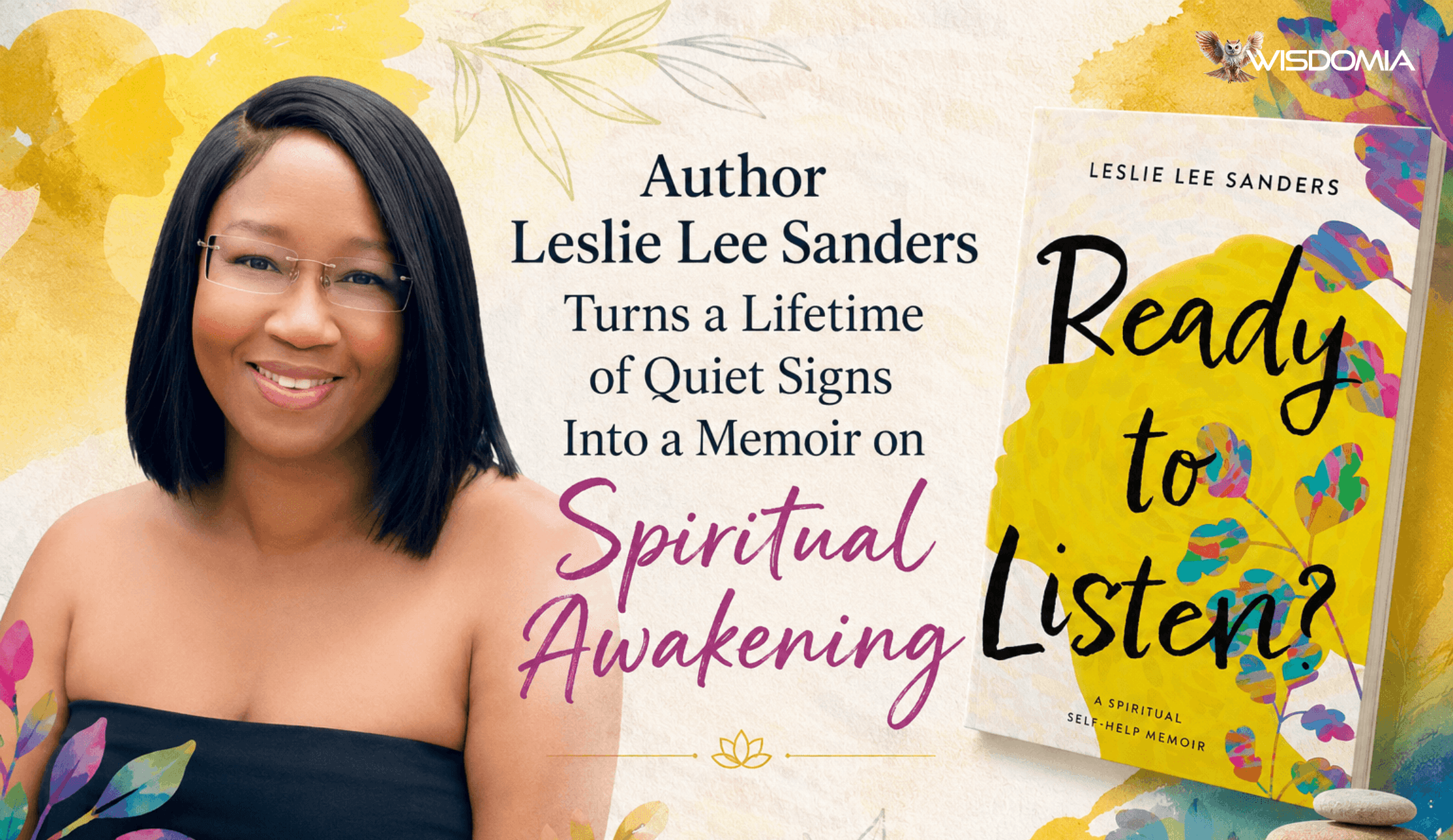
Author Leslie Lee Sanders Turns a Lifetime of Quiet Signs Into a Memoir on Spiritual Awakening
Where Wisdom Meets AI Utopia Edutainment
Wisdomia.ai is a 3D AI edutainment platform that seamlessly blends learning with immersive play. As the first AI-powered 3D Web 3.0 marketplace created by creators for creators. Founded by renowned serial entrepreneur and author Dinis Guarda, Wisdomia empowers individuals to flourish in an ecosystem designed for collective wisdom EQ. Join us in shaping humanity's future as we harness the power of AI to visualise and create a better world—where technology serves human potential, and innovation is guided by utopian wisdom.

