
loading...

 Serpentine Launches Future Art Ecosystems R&D Fellowship to Explore AI, Culture and Public Life
Serpentine Launches Future Art Ecosystems R&D Fellowship to Explore AI, Culture and Public Life
Wed Sep 02 2026
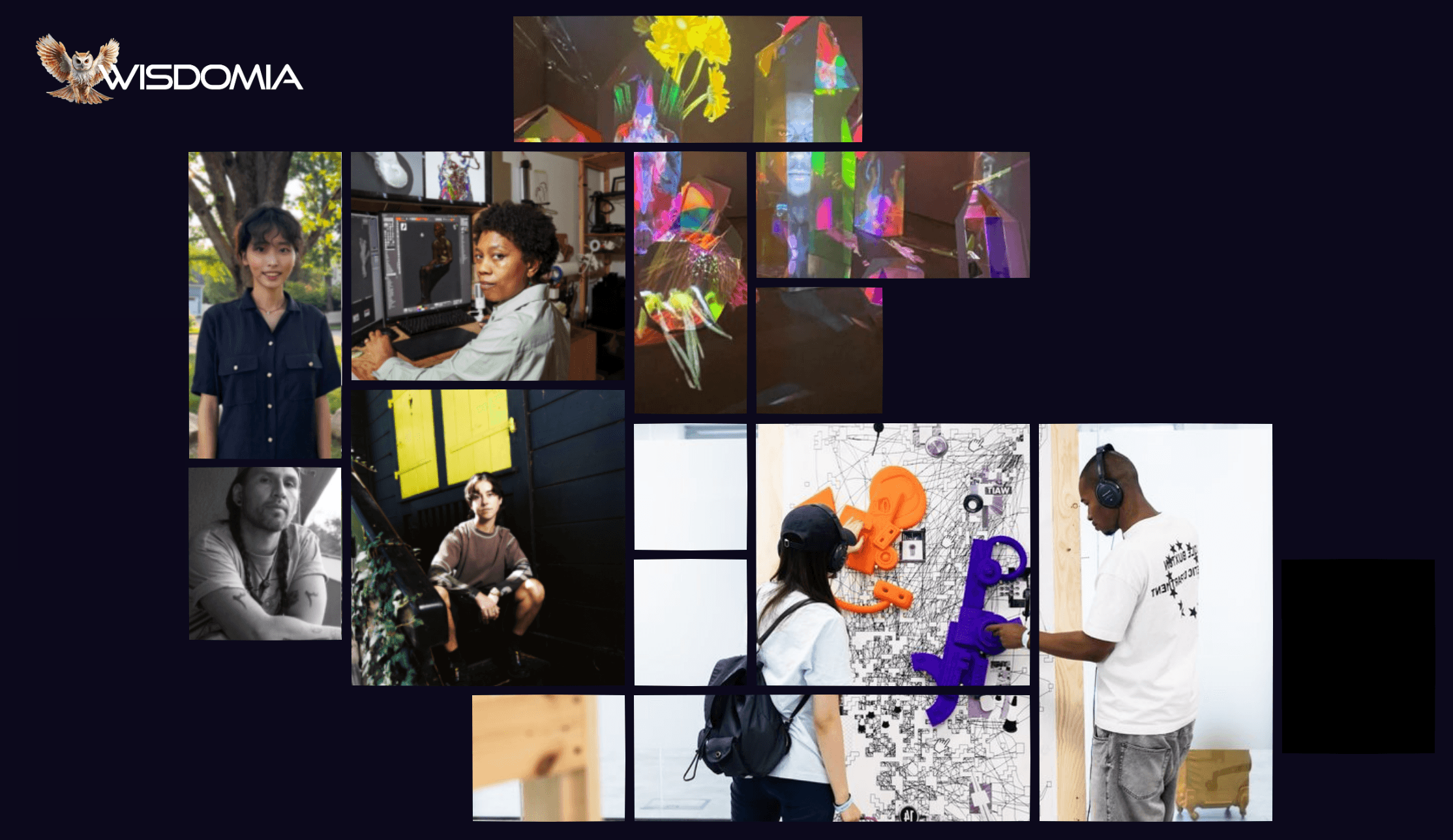
Serpentine has launched the Future Art Ecosystems R&D Fellowship, bringing together four artists to explore how AI is reshaping culture, institutions and public life.
Alfredo Salazar-Caro, Alice Bucknell, Auriea Harvey and Reina Mun have been named the inaugural fellows in a new six-month programme examining how artificial intelligence is reshaping cultural production, institutions and everyday life.
Serpentine has launched the Future Art Ecosystems R&D Fellowship, a new flagship programme designed to support artists and technologists researching the relationship between advanced technologies, culture and society. The fellowship will begin in September 2026 and is supported through a new three-year partnership with philanthropic organisation Glass Castle.

The inaugural fellows are Alfredo Salazar-Caro, Alice Bucknell, Auriea Harvey and Reina Mun, selected from close to 1,000 international applications. Over six months, the four practitioners will develop original research around how advances in AI are affecting cultural production, institutions and public life.
Artists as Participants in Technological Change
The fellowship is built around the idea that artists should not be treated simply as observers of technological change.
Instead, Serpentine is positioning artistic practice as part of the wider process through which emerging technologies are interpreted, governed and shaped.
Each fellow will receive a bursary, mentorship and support for research and development, alongside travel to London. The programme will combine online sessions, specialist seminars, workshops and in-person intensives.
Bettina Korek, CEO of Serpentine, and Hans Ulrich Obrist, Artistic Director, said the programme creates space for “innovation, pragmatic interventions and new ways of thinking about the relationship between technology, society and culture.”
The intention is not simply to respond to AI as a technical development, but to examine the values, assumptions and cultural consequences embedded in the systems being built.
Four Fellows, Four Different Questions About AI
The four inaugural research projects approach AI and emerging technology from very different perspectives.
- Alfredo Salazar-Caro, an artist and worldbuilder working across installation, XR and social sculpture, will explore how emerging technologies could intersect with ancestral knowledge systems. His research will examine computational design, robotic earth construction and Indigenous building traditions to imagine new forms of post-digital architecture and regenerative worldbuilding.
- Alice Bucknell, an artist, writer and educator, will develop Medium Sized World, a project focused on AI world models: systems that simulate environments and predict possible futures. The work will look at the assumptions and value systems built into these models, drawing connections between video games, climate forecasting, robotics and philosophies of AI.
- Auriea Harvey, a digital artist and sculptor, will investigate how figures move between physical and digital form. Her research will explore authorship, craft and artistic agency as digital objects are shaped by AI, transmitted across borders and realised differently depending on where and how they are produced.
- Reina Mun, a doctoral researcher at Harvard, will examine one of AI’s most persistent promises: enhancement. Her project will ask what enhancement actually means, who defines it and how AI’s effects on wellbeing, creativity and productivity can be meaningfully assessed while keeping humans actively involved.
A Jury Spanning Art, AI and Institutional Change
The inaugural cohort was selected by a jury that reflects the programme’s cross-disciplinary ambitions.
Members included artists Refik Anadol, Cao Fei and Holly Herndon, alongside Lila Ibrahim, Chief AI Readiness Officer at Google DeepMind, economist and author Mariana Mazzucato, writer Venkatesh Rao, Suneil Setiya, Chair of Glass Castle, and Evan Spiegel, Co-Founder and CEO of Snap Inc.
They were joined by Serpentine leadership and members of the Future Art Ecosystems team.
Lila Ibrahim said the cohort demonstrates how artistic inquiry can become a tool for public agency rather than simply speculation.
She argued that by confronting the human dimensions of advanced systems, artists can help shape a technological future that remains grounded in social values.
Beyond AI Capability and Market Competition
The programme arrives at a moment when public discussion around AI is often dominated by capability, safety, market share and competition between technology companies.
Serpentine is asking a different question: who gets to imagine what living with these technologies should feel like?
That shift in emphasis is important.
Artists can examine questions that are often difficult to capture in conventional technology research: how AI affects identity, cultural memory, creative ownership, trust, social relationships and the meaning of human agency.
The fellowship therefore places culture alongside engineering, policy and economics in discussions about AI’s future.
Building on the Future Art Ecosystems Programme
The new fellowship extends Serpentine’s longer-term work at the intersection of art and technology.
Since 2019, its Future Art Ecosystems programme has operated as an innovation hub focused on culture, technology and society, producing research and supporting experiments across blockchain, AI and game technologies.
Serpentine has also worked with artists including Refik Anadol, Cao Fei and Holly Herndon & Mat Dryhurst, while developing collaborations that connect cultural practice with policymakers, academics and the technology sector.
The R&D Fellowship adds another layer to that work by giving artists more time and resources to investigate emerging technologies before those ideas are translated into exhibitions or public commissions.
Glass Castle Backs Three-Year Partnership
The programme is supported through a three-year partnership with Glass Castle, which will also contribute to one major Serpentine commission each year.
Suneil Setiya, Chair of Glass Castle, said the partnership is intended to give artists the conditions to develop ambitious research while exploring “the frontiers of how we are living together.”
The partnership will also support wider artistic, research and convening activity across Serpentine.
About Serpentine
Serpentine is a London-based contemporary art institution with more than half a century of history.
Based in Kensington Gardens, it operates across Serpentine North and Serpentine South, presenting year-round exhibitions, architecture, education, live events and technology programmes with free public access.
Its programme has featured internationally recognised artists, writers, scientists and cultural figures, while public art has become a major part of its work.
Serpentine’s Arts Technologies programme focuses specifically on the relationship between technology and culture, supporting artists working with advanced technologies and bringing together practitioners from art, law, policy, academia and industry.
About Glass Castle
Glass Castle is a philanthropic organisation supporting artists, audiences and experimental cultural infrastructure.
Its work includes grants, partnerships, residencies, presentation spaces and digital engagement. The foundation is also redeveloping the Wapping Hydraulic Power Station as a destination for experimental arts and creating a new artist residency programme in the South Downs National Park.
Share this
Sara Srifi
Sara is a Software Engineering and Business student with a passion for astronomy, cultural studies, and human-centered storytelling. She explores the quiet intersections between science, identity, and imagination, reflecting on how space, art, and society shape the way we understand ourselves and the world around us. Her writing draws on curiosity and lived experience to bridge disciplines and spark dialogue across cultures.
More Articles
Indie Lab to Help Independent Studios Build AAA-Quality Games
TeamHuman: Can a Creator-Led Movement Help Keep Humans in Control of AI?
Human Peer Review and AI: Do Machine-Verified Proofs Change What Scientific Trust Means?
Yayoi Kusama Dies at 97, Leaving Behind One of Contemporary Art’s Most Recognisable Visual Worlds