
loading...
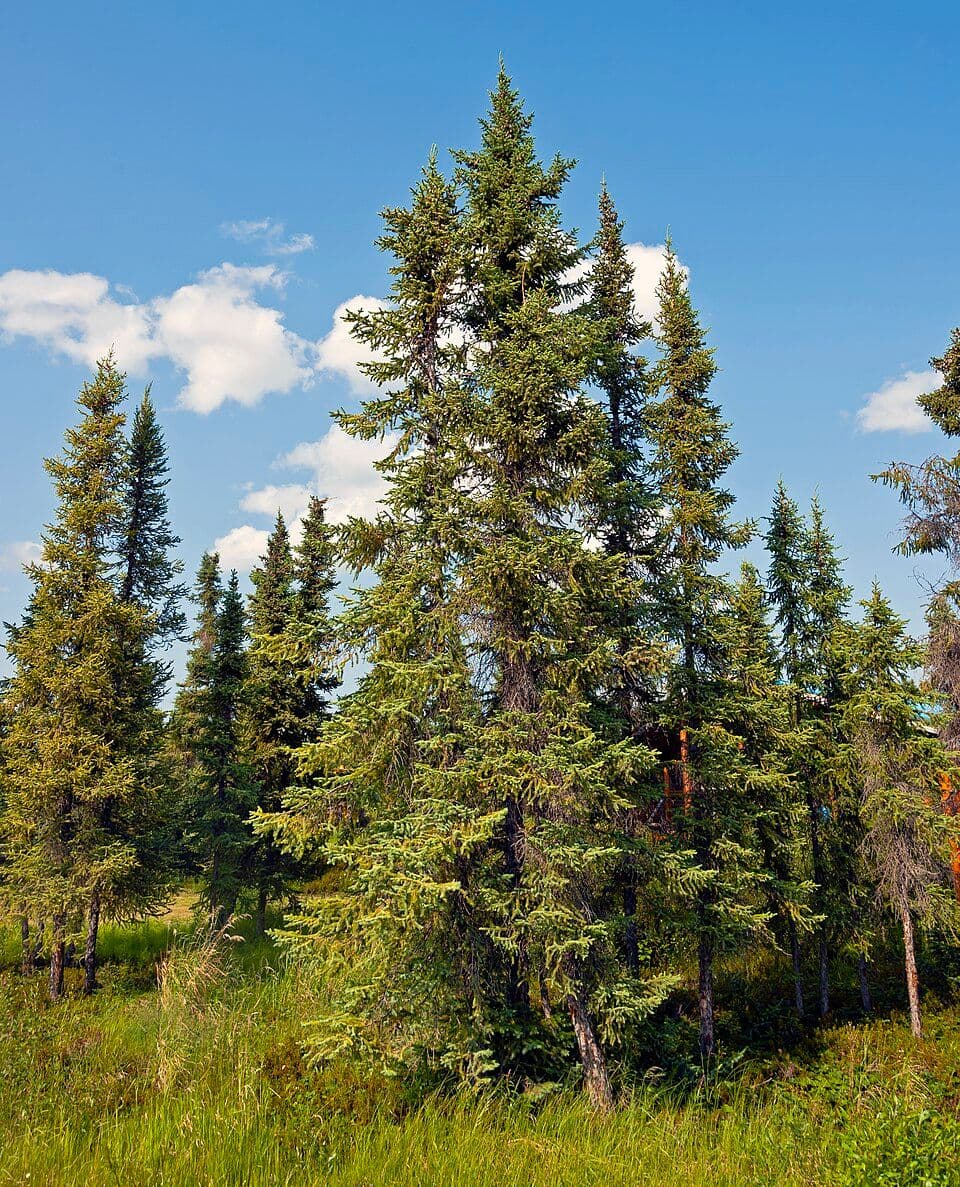


Black Spruce is a slow-growing, small upright evergreen coniferous tree having a slender conic form. It is one of the most important conifers in the boreal forests of North America.
Summary
The Black Spruce is a small, evergreen tree that is native to North America. It is commonly found in the northern parts of the United States and throughout Canada. Black Spruce is known for its dense, dark green foliage and its distinctive, pyramid-shaped crown. The tree can grow up to 20 meters in height, although it is typically much smaller in its native environment. The tree has a slow growth rate, often taking several decades to reach maturity.
The Black Spruce is a hardy tree that can tolerate a wide range of soil conditions. It is often found in wet, swampy areas, but it can also be found in dry, rocky soils. The tree prefers acidic soils, and it can tolerate soils with a pH as low as 4.0. Despite its adaptability to different soil types, the Black Spruce does require a good amount of sunlight to thrive. It is not a tree that does well in shaded areas.
The tree's leaves are needle-like, a common characteristic of evergreen trees. The needles are dark green in color and are typically around 1 cm in length. The needles are arranged in a spiral pattern around the branches, giving the tree its dense, bushy appearance. The bark of the Black Spruce is thin and flaky, with a dark brown to grey color. The tree's cones are small, typically around 2 to 3 cm in length, and are a dark brown color. The cones typically remain on the tree for several years before falling to the ground.
The Black Spruce is an important tree in its native ecosystem. It provides habitat and food for a variety of wildlife species, including birds, squirrels, and deer. The tree's dense foliage also provides important cover for these animals, protecting them from predators and harsh weather conditions. In addition to its role in the ecosystem, the Black Spruce also has several uses for humans. The tree's wood is used for a variety of purposes, including construction, pulpwood, and firewood. The tree's resin is also used in the production of turpentine and other products.
The Black Spruce has a long history of use by indigenous peoples in North America. The tree's roots were used to make cordage, while the bark was used for making baskets and other items. The tree's resin was used as a sealant for canoes and other items, and it was also used as a medicine. The tree's needles were also used to make a tea, which was used as a treatment for a variety of ailments, including coughs and colds.
In recent years, the Black Spruce has been affected by a variety of threats. These include logging, climate change, and pests such as the spruce budworm. These threats have led to declines in Black Spruce populations in some areas. Despite these challenges, the tree remains a common and important species in its native range.
The Black Spruce is a tree that is known for its resilience and adaptability. Despite the challenges it faces, it continues to thrive in a variety of environments, providing important habitat and resources for wildlife and humans alike. Its dense, dark green foliage and distinctive shape make it a beautiful and unique addition to the landscape.
Despite the tree's slow growth rate, the Black Spruce is a popular tree for use in landscaping and reforestation projects. Its ability to tolerate a wide range of soil conditions and its resilience to pests and diseases make it a good choice for these purposes. In addition, the tree's unique shape and dense foliage make it an attractive addition to any landscape.
In conclusion, the Black Spruce is a unique and important species of tree. Its ability to thrive in a wide range of conditions, its importance to wildlife and humans, and its unique appearance make it a tree that is truly worth knowing and appreciating. Despite the challenges it faces, the Black Spruce continues to be a vital part of the landscapes and ecosystems in which it is found.
Human Use and Interaction
Black spruce, known scientifically as Picea mariana, is a species of spruce native to North America. It is a slow-growing, small to medium-sized evergreen tree that typically grows to a height of 5 to 20 meters. It is a highly adaptable tree that can tolerate a variety of soil conditions and climates, making it an important species for forest regeneration and reforestation efforts.
Human use and interaction with the black spruce are varied and extensive. This tree species has been an essential part of human life for centuries, from the native peoples of North America who used it for various purposes to modern industries that rely on it for timber and other products. It is a significant cultural, economic, and ecological resource.
The wood of the black spruce is light, soft, and straight-grained, making it easy to work with. It is used in a variety of ways by humans, including for making paper, construction, and furniture. The high pulpwood content of the black spruce makes it ideal for the production of pulp and paper. It is also used in the construction industry for making frames, sheathing, and roofing. Its lightness and strength make it a suitable material for furniture and cabinet making.
Traditional uses of the black spruce by Native American tribes are also noteworthy. The tree was used in many ways, from building materials to medicinal purposes. The bark was used to make baskets and mats, while the roots were used for sewing and lacing. The resin was used as a sealing and adhesive agent, while the needles were used to make tea, which was believed to have medicinal properties.
In addition to its use as a material resource, the black spruce also plays a significant role in the ecosystem. It provides habitat and food for various wildlife species. Birds such as crossbills and siskins feed on the seeds, while moose and deer browse the foliage. The dense stands of black spruce also provide cover for wildlife.
Moreover, black spruce forests help to regulate climate and water cycles. They store large amounts of carbon, helping to mitigate climate change. They also play a crucial role in maintaining water quality by filtering rainwater and slowing down runoff.
Despite its many benefits, there are also challenges associated with human interaction with the black spruce. Overexploitation for timber and paper production has led to depletion in some areas. Furthermore, climate change poses a threat to the survival of this species, as it is adapted to cold climates and may struggle to survive in a warming world.
Efforts are being made to sustainably manage black spruce forests to ensure their continued availability. This includes practices such as selective logging, which minimizes damage to the forest ecosystem, and reforestation efforts to replace harvested trees. Research is also being conducted to understand the impacts of climate change on this species and develop strategies for its conservation.
In conclusion, the black spruce is a valuable resource for humans, providing materials for various industries and traditional uses, as well as playing a significant role in the ecosystem. However, sustainable management and conservation efforts are needed to ensure its continued availability and health in the face of challenges such as overexploitation and climate change.
Cultural and Symbolic Significance
The Black Spruce, also known as Picea mariana, is a North American tree that is not only of great ecological importance but also carries significant cultural and symbolic significance. This tree has been a part of the natural landscape for thousands of years and has been used in various ways by different cultures throughout history.
In the Native American cultures, the Black Spruce has been used for various purposes. For the tribes living in the regions where these trees are found, they have been a source of material for housing, tools, and transportation. The wood of the Black Spruce, being resilient and lightweight, was used in the construction of canoes, sleds and snowshoes. The bark of the tree was used to cover the roofs of the shelters and the roots were used to sew birch bark canoes together. The tree also provided firewood and materials for smoking fish and meat.
The Black Spruce is also an important tree in the spiritual and symbolic practices of various cultures. In many Native American cultures, it is believed that the Black Spruce possesses a spirit. The tree is often used in sacred ceremonies and rituals. It is also used as a symbol of strength and resilience, due to its ability to thrive in harsh conditions.
In the European cultures, the Black Spruce has been used as a symbol of the winter season and the Christmas holiday. The tree is often used as a Christmas tree due to its conical shape and dense foliage. The tradition of using the Black Spruce as a Christmas tree dates back to the 16th century in Germany. The tree was traditionally decorated with apples, nuts, and dates and was lit with candles. The tree symbolizes life, light, and hope in the midst of the dark and cold winter season.
For the Canadian culture, the Black Spruce holds a special significance. The tree is a symbol of the Canadian wilderness and is also the provincial tree of Newfoundland and Labrador. The tree is also featured on the coat of arms of Quebec and is a symbol of the resilience and strength of the Quebecois people. The tree is also used in the production of spruce beer, a traditional Canadian beverage.
In the field of medicine, the Black Spruce has been used for its medicinal properties. The Native Americans used the resin of the Black Spruce to treat wounds and infections. The leaves and twigs of the tree were used to make a tea that was used to treat respiratory problems. The tree is also used in modern aromatherapy due to its calming and grounding scent.
Furthermore, the Black Spruce is also an important symbol in the field of ecology. The tree is a keystone species in the Boreal and Taiga forests of North America. The tree provides habitat for various species of birds and mammals. The tree is also a symbol of the resilience of nature, as it is able to thrive in harsh conditions and recover from disturbances like fire and logging.
In conclusion, the Black Spruce is not just a tree, it is a symbol of strength, resilience, and life. It is a tree that has been used by different cultures for various purposes. It is a tree that holds a special place in the hearts of many people. Its cultural and symbolic significance is a testament to its importance in the history and culture of North America.
From providing material for survival to being a part of sacred rituals, from symbolizing the spirit of the winter season to being a symbol of the Canadian wilderness, the Black Spruce is a tree that carries a rich cultural and symbolic significance. It is a tree that tells a story of resilience and survival. It is a tree that stands as a symbol of the enduring spirit of nature.
Aesthetic and Experiential
The aesthetics and experiential aspects of the Black Spruce, a tree species native to North America, convey a profound sense of natural beauty and wilderness. With its slender trunk and dense foliage of dark green needles, the Black Spruce creates a striking silhouette against the backdrop of its native boreal forests and wetlands. The tree’s visual appeal is further enhanced by the delicate cones that hang from its branches, offering a contrast of shapes and textures that add to its overall aesthetic appeal.
From a distance, a stand of Black Spruce trees presents a uniform, almost monotonous image of greenery. However, on closer inspection, this seeming uniformity gives way to a rich tapestry of details. The tree’s bark, for example, is a complex pattern of scales and ridges that catch the light in different ways, creating subtle variations in color and texture. The needles, meanwhile, are arranged in a spiral pattern around the branches, a detail that becomes evident only upon close examination. These and other details contribute to the aesthetic fascination of the Black Spruce, inviting observers to explore and discover its beauty.
However, the aesthetic appeal of the Black Spruce is not limited to its visual qualities. The tree also appeals to other senses, creating a multi-sensory experience for those who encounter it. For example, the Black Spruce is known for its characteristic scent, a fresh, resinous aroma that is often associated with the northern forests. This scent is particularly noticeable after a rain, when the air is filled with the smell of spruce resin and damp earth, creating a sensory experience that is both invigorating and calming.
Moreover, the Black Spruce is a source of auditory experiences as well. The wind rustling through its branches creates a soothing sound that echoes the silence of the wilderness, while the movements of birds and other animals in its branches add another layer of sound. These sounds contribute to the sense of peace and tranquility that is often associated with the Black Spruce and its natural habitats.
The experiential aspect of the Black Spruce also involves the tree’s role as a living part of its ecosystem. As a dominant species in many boreal forests, the Black Spruce is a vital component of these habitats, providing food and shelter for a variety of wildlife. Observing the interactions between the Black Spruce and its surrounding environment can be a rewarding experience, revealing the complex web of relationships that characterize these ecosystems.
Furthermore, the Black Spruce is not just a passive observer of its environment. The tree is also a dynamic participant in the processes of growth and change that shape these ecosystems. For instance, the Black Spruce is a pioneer species, often being one of the first trees to colonize areas disturbed by fire or other disturbances. This ability to thrive in challenging conditions and contribute to the recovery of damaged ecosystems is another aspect of the Black Spruce that can be appreciated from an experiential perspective.
In conclusion, the aesthetic and experiential aspects of the Black Spruce encompass a wide range of qualities and experiences. From the visual beauty of its form and details, to the sensory experiences it offers, to the insights it provides into the workings of its ecosystems, the Black Spruce is a source of rich and varied experiences. Whether viewed from a distance or up close, whether experienced through a single sense or multiple senses, the Black Spruce is a testament to the beauty, complexity, and resilience of nature.
References
Share with friends
Black Spruce is a slow-growing, small upright evergreen coniferous tree having a slender conic form. It is one of the most important conifers in the boreal forests of North America.
Common Name
Black Spruce
Scientific Name
Picea mariana
Family
Pinaceae
Native Region / Habitat
North America
Tree Type
Evergreen Conifer
Lifespan / Age Range
Up to 200 years
Growth Habit
Upright, Conical
Leaves / Foliage Description
Needle-like, dark green
Trunk
Straight and slender with scaly, dark grey bark
Fruit / Flowering Characteristics
Cones, small, purple turning brown with maturity
Ecological Role
Provides habitat and food for wildlife, stabilizes soil, and plays a role in nutrient cycling in its ecosystem
Related Trees of The World


About
Where Wisdom Meets AI Utopia Edutainment
Wisdomia.ai is a 3D AI edutainment platform that seamlessly blends learning with immersive play. As the first AI-powered 3D Web 3.0 marketplace created by creators for creators. Founded by renowned serial entrepreneur and author Dinis Guarda, Wisdomia empowers individuals to flourish in an ecosystem designed for collective wisdom EQ. Join us in shaping humanity's future as we harness the power of AI to visualise and create a better world—where technology serves human potential, and innovation is guided by utopian wisdom.
Contact us
Produced by

