
loading...
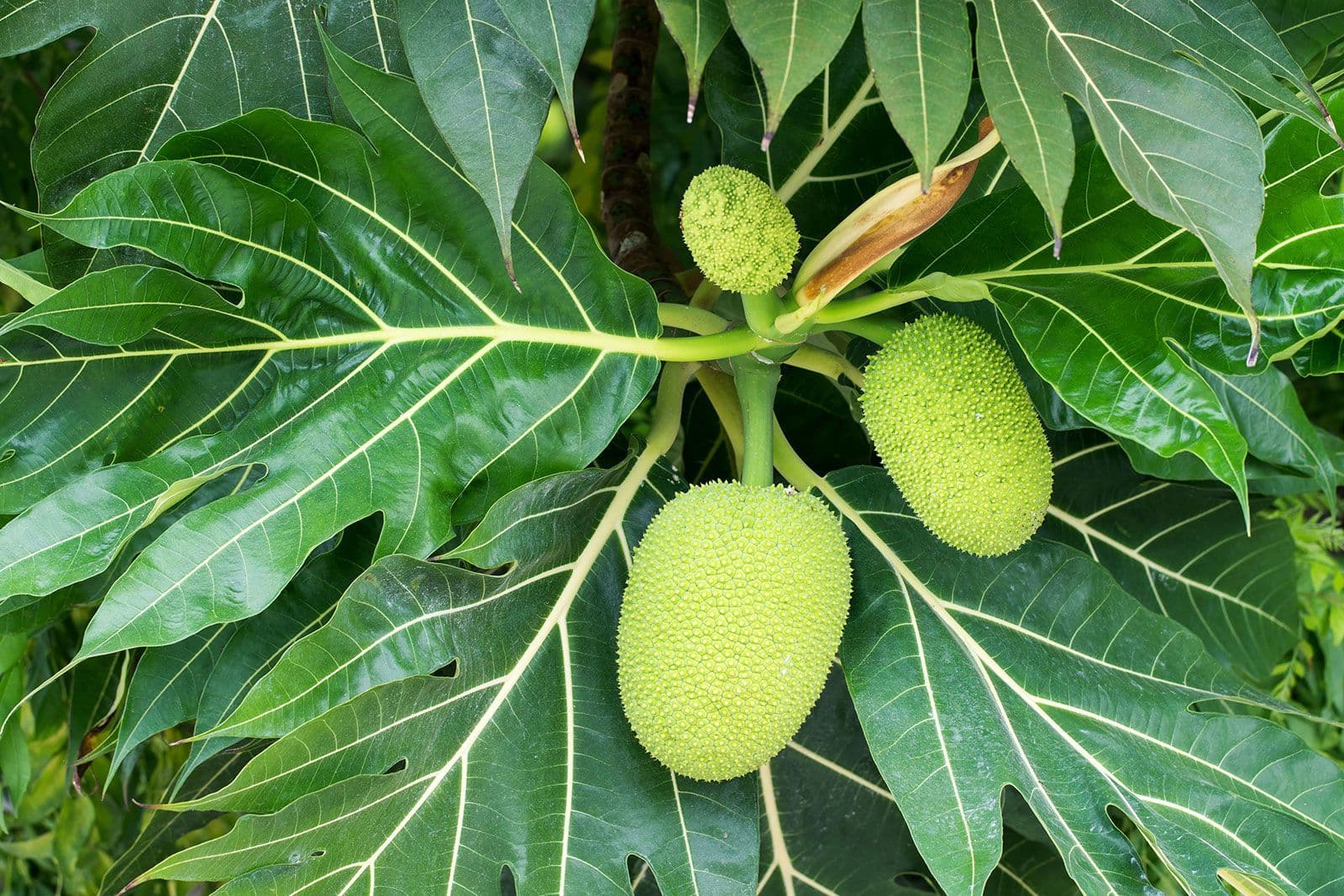


The breadfruit tree is a species of flowering tree in the mulberry and jackfruit family. Its large, starchy fruits are a common food source in the tropics.
Summary
The breadfruit tree, scientifically known as Artocarpus altilis, is a species of flowering tree in the mulberry and jackfruit family, Moraceae. Native to the Malay Peninsula and western Pacific islands, it has been widely cultivated in tropical regions globally due to its high food value and adaptability to various environments.
The breadfruit tree is a large and fast-growing tree that can reach a height of 26 meters. It has a broad, robust trunk and a wide, spreading canopy of large, thick leaves, making it an excellent shade tree. The tree's leaves are deeply cut into pinnate lobes. All parts of the tree yield latex, a milky juice, which is useful for boat caulking. The tree's flowers are inconspicuous, with the male flowers emerging as a cylindrical cluster and the female flowers as a spiky ball. The male flowers are shed, and the female flowers develop into a large, round, starchy fruit.
The fruit of the breadfruit tree is incredibly versatile. It can be eaten raw, cooked, roasted, or used in a variety of dishes. The fruit is also used to produce a flour that can be used for baking and cooking. The taste of the breadfruit is often compared to that of potato or fresh-baked bread, hence its name. The fruit is a good source of vitamins and minerals, particularly vitamin C and potassium, as well as dietary fiber. It also contains a small amount of protein and is low in fat.
The breadfruit tree is highly productive, with a single mature tree capable of producing up to 200 fruits per year. This high productivity, combined with the nutritional value of the fruit, makes the breadfruit tree an important food crop in many tropical regions. The tree is also valued for its wood, which is lightweight yet strong and resistant to termites and marine borers. The wood is used for construction, furniture, and boat building, among other uses.
Despite its many benefits, the breadfruit tree is not without its challenges. The tree is susceptible to a number of pests and diseases, including root rot, leaf spot, and fruit flies. It also requires a warm, humid climate with well-drained soil, limiting its cultivation to tropical regions. However, with proper care and management, the breadfruit tree can thrive and provide a wealth of benefits for many years.
The breadfruit has also been used in traditional medicine for centuries. Different parts of the tree, including the leaves, fruit, and root, have been used to treat a variety of ailments, from skin diseases to digestive disorders. While more research is needed to confirm these health benefits, some studies have suggested that breadfruit may have potential as a natural treatment for conditions such as diabetes, high blood pressure, and heart disease.
Historically, the breadfruit tree has played a significant role in Pacific Island cultures. It was a staple food crop and a symbol of abundance and life. The tree's resilience and productivity made it a valuable resource for island communities, and its cultural significance continues to this day. In addition to its use as a food source and building material, the breadfruit tree is often planted in agroforestry systems to improve soil fertility and reduce erosion.
The breadfruit tree's history is also tied to colonial exploration and exploitation. The tree was brought to the Caribbean by British explorers in the late 18th century as a food source for enslaved people. The tree quickly spread throughout the region, and today it is a common sight in many Caribbean landscapes. However, the history of the breadfruit tree serves as a reminder of the complex and often painful relationships between food, culture, and colonialism.
Today, the breadfruit tree continues to be an important food crop in many tropical regions. It is also gaining recognition for its potential as a sustainable crop in the face of climate change. The tree's ability to thrive in a variety of conditions, along with its high productivity and nutritional value, make it a promising option for improving food security in vulnerable regions. At the same time, the breadfruit tree's cultural significance and historical legacy remind us of the complex relationships between humans and the natural world.
Human Use and Interaction
The breadfruit tree, scientifically known as Artocarpus altilis, is a species of flowering tree in the mulberry and jackfruit family. This tree, native to the Malay Peninsula and western Pacific islands, has been utilized by humans for centuries. Its name derives from the texture of the cooked fruit, which has a potato-like consistency and a flavor somewhat reminiscent of fresh-baked bread.
The interaction of humans with the breadfruit tree is profound and multidimensional, including its use as a food source, its role in traditional medicine, its significance in cultural practices, and its potential in modern sustainability efforts. The tree is considered versatile due to its adaptability to various climatic conditions and soil types, as well as the numerous uses of its different parts, such as the fruits, leaves, and wood.
The most well-known use of the breadfruit tree is for its fruits, which serve as a staple food for many Pacific Islander and Caribbean populations. The fruit is rich in carbohydrates and provides a good source of dietary fiber, potassium, and vitamin C. It can be prepared in various ways, including boiling, baking, frying, or roasting. The fruit is typically harvested while still firm and then allowed to ripen. When fully ripe, the fruit can be used to make desserts, beverages, or preserves. The seeds are also edible and can be boiled or roasted, similar to chestnuts.
Beyond its culinary uses, the breadfruit tree also has significant medicinal value. Traditional medicine in various cultures has utilized different parts of the tree to treat a range of ailments. The latex, or sap, of the tree has been used to treat skin infections, burns, and wounds. The leaves have been used to relieve pain and inflammation, while the bark has been used for its purported antimicrobial properties. However, it's worth mentioning that while these traditional uses are widespread, scientific research to validate these claims is still ongoing.
The cultural significance of the breadfruit tree is another important aspect of human interaction with this species. In many Pacific Island cultures, the tree is considered sacred and plays a central role in various rituals and ceremonies. The tree is often planted at the birth of a child, symbolizing the connection between the individual and their ancestral land. The wood of the tree is also used in the construction of canoes, houses, and various tools, highlighting its importance in the socio-economic life of these communities.
In recent years, the breadfruit tree has garnered attention for its potential in sustainability and environmental efforts. The tree is highly productive and can provide a significant amount of food with minimal inputs, making it a potential solution to food security issues in tropical regions. The tree's ability to thrive in a variety of soil conditions, including poor and degraded soils, also makes it a useful tool in reforestation and soil restoration efforts.
Furthermore, the tree's fast growth rate and dense foliage make it an effective carbon sink, contributing to climate change mitigation. Its resistance to pests and diseases also reduces the need for chemical inputs, further enhancing its environmental benefits.
Research into the potential uses of the breadfruit tree in modern industries is also underway. The tree's latex has been explored as a potential source of biofuel, while the starch-rich fruit has potential in the production of biodegradable plastics and other sustainable materials.
Despite its numerous benefits and potential uses, the breadfruit tree is still underutilized, especially outside of its native regions. Efforts are currently being made to promote the cultivation and use of this tree in other tropical and subtropical regions around the world.
In conclusion, the breadfruit tree is a fascinating example of the complex and multifaceted ways in which humans interact with the natural world. From its role as a food source and its medicinal uses, to its cultural significance and its potential in sustainability efforts, the breadfruit tree demonstrates the incredible value that a single species can bring to human societies. As we continue to navigate the challenges of the 21st century, this versatile tree may offer important solutions for food security, environmental restoration, and sustainable development.
Cultural and Symbolic Significance
The Breadfruit tree, scientifically known as Artocarpus altilis, is a species of flowering tree in the mulberry and jackfruit family, Moraceae. Originating from the South Pacific and the Malay Peninsula, the Breadfruit tree holds cultural and symbolic significance in various societies. This tree is not only a source of food but also a symbol of life, sustenance, and connection with the divine in many cultures.
Primarily, in Polynesian culture, the Breadfruit tree is considered sacred. This is because of its association with the god Tane, who, according to Polynesian mythology, created humans. The Breadfruit tree is considered as Tane's embodiment, symbolizing life and abundance. Notably, in ancient Hawaii, the Breadfruit tree, known as 'ulu', was a symbol of transformation and change. It was believed that the transformation of the 'ulu' from a flower to a fruit represented the transition of a child into adulthood. The tree was also a symbol of royalty, as it was believed that the gods gifted it to the Hawaiian people. Consequently, many traditional Hawaiian ceremonies and festivals feature the Breadfruit tree prominently.
In the Caribbean, the Breadfruit tree holds significant cultural value due to its introduction by Captain William Bligh in the 18th century as a cheap food source for slaves. Today, it serves as a symbol of survival, resilience, and the history of slavery. In Jamaica, the Breadfruit tree is an integral part of the national cuisine, and its presence reminds the people of their ancestors' endurance. Additionally, in Barbados, the Breadfruit tree is associated with the spirit of community and sharing, as its fruits are often used in communal meals.
Moreover, in the Philippines, the Breadfruit tree, locally known as 'Rimas' or 'Kolo', is a symbol of prosperity. This is due to its high yield of fruit, which can feed a large number of people. In many Filipino households, having a Breadfruit tree in the yard is considered a sign of good fortune. The tree is also used in several traditional Filipino rituals, particularly those associated with ensuring a good harvest.
Furthermore, in many parts of Africa, the Breadfruit tree is seen as a symbol of fertility and abundance due to its prolific fruiting. In Nigeria, for example, the tree is often planted at the birth of a child, symbolizing the parents' wishes for the child's prosperous and fruitful life. The tree also plays a vital role in traditional African medicine, where its leaves, bark, and fruit are used in various treatments.
In the context of environmental symbolism, the Breadfruit tree represents sustainability and resilience. This is owing to its ability to thrive in various climatic conditions, its long lifespan, and its high yield of nutritious fruit. Additionally, the tree is known for its carbon sequestration capabilities, making it a symbol of environmental health and balance.
Lastly, the Breadfruit tree holds artistic and architectural significance in many cultures. Its wood is used in the construction of houses, canoes, and various tools in the Pacific Islands. In Hawaii, the tree's wood is used to create the 'Ipu Heke', a musical instrument used in traditional Hawaiian music. The tree's leaves, bark, and fruit are also used in various art forms, including textile design, painting, and sculpture.
In conclusion, the Breadfruit tree holds immense cultural and symbolic significance across various societies. It is a symbol of life, transformation, survival, prosperity, fertility, sustainability, and artistic expression, amongst others. Its presence in various cultures and its integration into their practices and beliefs highlight the deep-rooted connection between nature and human societies.
Aesthetic and Experiential
The breadfruit tree, scientifically known as Artocarpus altilis, is a tropical plant that presents a unique blend of aesthetic beauty and experiential enrichment. Native to the Malay Peninsula and western Pacific islands, this tree is not just a source of sustenance, but also a symbol of tropical allure and rich cultural heritage. The breadfruit tree is characterized by its lush, broad-leafed foliage, which is a vibrant green hue that imparts a sense of tranquility and connection with nature. The leaves, often as large as 60cm in length, have a deeply cut, pinnate shape, adding to the overall grandeur and visual appeal of the tree.
The tree can grow up to 26 meters in height, with a large, dome-shaped canopy that provides ample shade. This architectural form of the tree adds a certain aesthetic appeal to the landscape, with the tree often serving as a natural focal point in parks, gardens, and public spaces in tropical regions. The bark of the breadfruit tree is rough and grayish-brown, providing a striking contrast against the bright green leaves. This juxtaposition adds to the visual appeal of the tree, making it a popular choice for landscaping in tropical and subtropical regions.
But the aesthetic appeal of the breadfruit tree is not limited to its verdant foliage or its imposing stature. The tree also produces large, round fruits that are green when immature, turning a yellowish-green when ripe. These fruits, often up to 25cm in diameter, hang from the branches, adding an interesting dimension to the tree's visual appeal. The fruits have a rough, hexagonal pattern on the skin, which adds texture and interest to the overall appearance of the tree.
On an experiential level, the breadfruit tree offers much more than just visual beauty. The tree is known for its multipurpose nature, with every part of the tree being utilized in some way. The fruits are a staple food source in many Pacific Island and Caribbean countries. They can be roasted, baked, fried, or boiled and are used in a variety of dishes, from main courses to desserts. The taste of the fruit, often described as a blend of potato and fresh-baked bread, offers a unique culinary experience.
The wood of the breadfruit tree is lightweight yet durable, and is often used in construction and for making furniture, canoes, and other items. The sap of the tree serves as a natural adhesive and caulking agent, and the leaves are used for livestock feed. Thus, the breadfruit tree provides a wealth of resources, contributing significantly to the livelihoods of people in many tropical regions.
The breadfruit tree also plays a crucial role in cultural practices and traditions in many Pacific Island communities. It is often planted during special ceremonies and its fruits are used in traditional dishes during festivals and celebrations. The tree, with its abundant fruit and striking appearance, is often associated with abundance, prosperity, and community. It is deeply ingrained in the cultural fabric of these societies, with stories, songs, and folklore often revolving around the breadfruit tree and its fruits.
In conclusion, the breadfruit tree is a perfect blend of aesthetic appeal and experiential richness. Its lush, green foliage, imposing stature, and unique fruits add visual interest and beauty to the landscape. At the same time, its multipurpose nature and cultural significance provide a wealth of experiences and connections to tradition and community. Whether you are admiring its beauty or enjoying its fruits, the breadfruit tree offers a unique and enriching experience that transcends the ordinary.
References
Encyclopedia Britannica: Breadfruit
Breadfruit: Artocarpus altilis
Academia.edu: Artocarpus altilis (Breadfruit)
PLOS ONE: Breadfruit cultivation and traditional uses on the island of Pohnpei
PubMed: Breadfruit (Artocarpus altilis) as a source of dietary fiber
Frontiers: Genetic Diversity and Biogeography of Breadfruit
MDPI: Breadfruit—Potential Species for Tropical Agroforestry Systems
Breadfruit Fermentation for the Production of Value-Added Products
Breadfruit as a Traditional and Modern Food Crop in the South Pacific
Breadfruit and its Potential in Samoa
FAO: Breadfruit Production and Use
Breadfruit as a Staple Crop in the Pacific
Breadfruit in Polynesian Culture
FAO: Breadfruit in Agroforestry Systems
Breadfruit in Traditional Medicine
FAO: Breadfruit for Animal Feed
Breadfruit in Climate Change Adaptation
FAO: Breadfruit for Reforestation
Breadfruit for Nutritional Security
FAO: Breadfruit for Ecosystem Services
Breadfruit in Global Food Systems
Share with friends
The breadfruit tree is a species of flowering tree in the mulberry and jackfruit family. Its large, starchy fruits are a common food source in the tropics.
Common Name
Breadfruit
Scientific Name
Artocarpus altilis
Family
Moraceae
Native Region / Habitat
New Guinea, the Maluku Islands, and the Philippines
Tree Type
Evergreen
Lifespan / Age Range
Over 50 years
Growth Habit
Upright, branching
Leaves / Foliage Description
Large, deeply lobed, dark green
Trunk
Straight with light grey bark
Fruit / Flowering Characteristics
Large, round, green when unripe, yellow when ripe
Ecological Role
Source of food for wildlife, contributes to ecosystem nutrient cycling
Related Trees of The World


About
Where Wisdom Meets AI Utopia Edutainment
Wisdomia.ai is a 3D AI edutainment platform that seamlessly blends learning with immersive play. As the first AI-powered 3D Web 3.0 marketplace created by creators for creators. Founded by renowned serial entrepreneur and author Dinis Guarda, Wisdomia empowers individuals to flourish in an ecosystem designed for collective wisdom EQ. Join us in shaping humanity's future as we harness the power of AI to visualise and create a better world—where technology serves human potential, and innovation is guided by utopian wisdom.
Contact us
Produced by

