
loading...
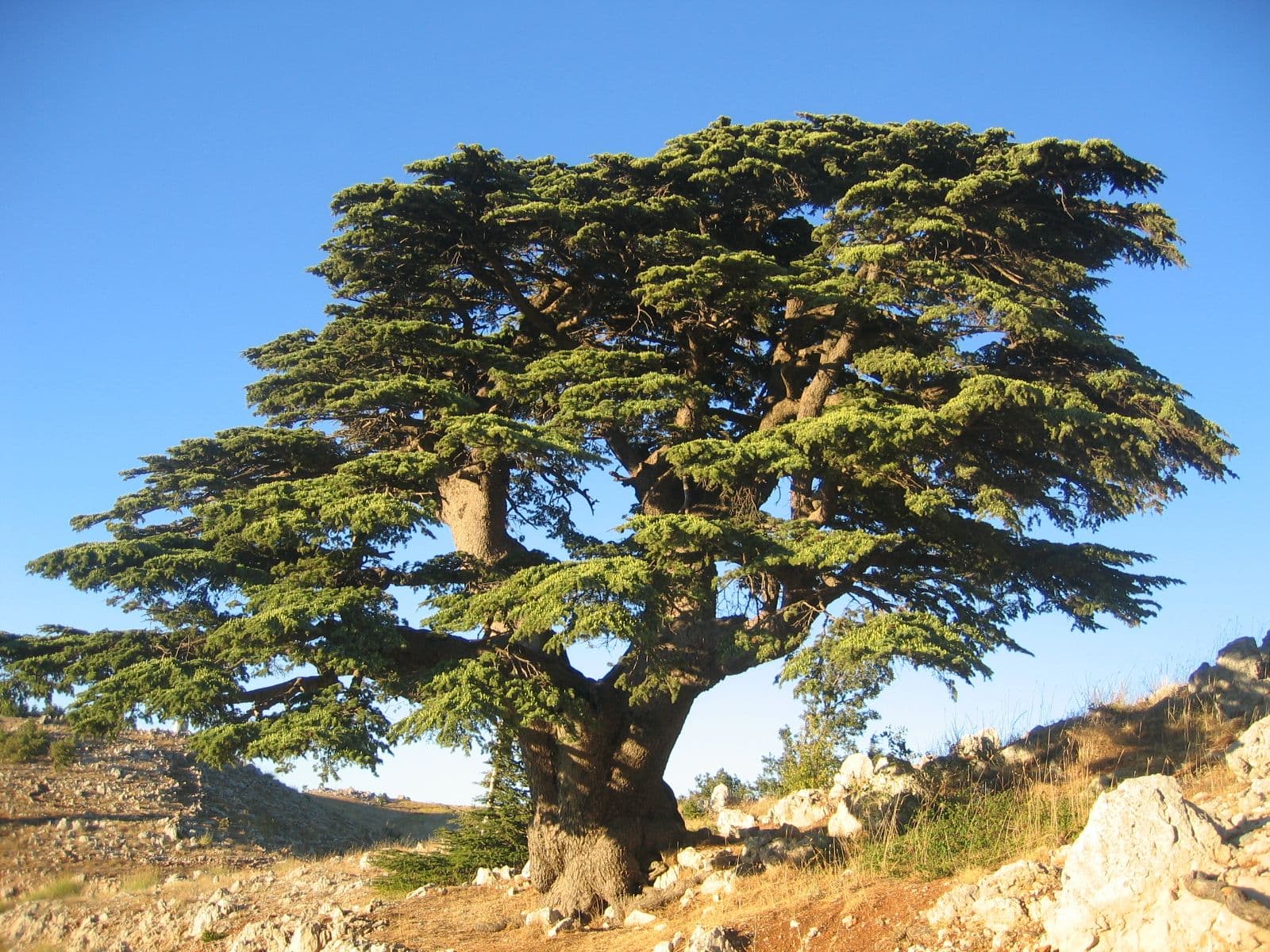


The Cedar of Lebanon is an evergreen coniferous tree recognized by its pyramidal or conical shape and dark green foliage.
Summary
The Cedar of Lebanon, scientifically known as Cedrus libani, is a species of cedar native to the mountains of the Eastern Mediterranean basin. It is a large evergreen conifer that can reach up to 40 meters in height. The tree has a large trunk that can stretch up to 2.5 meters in diameter. The bark is dark grey to black, while the crown is dense and conic when young, becoming broadly tabular with age.
The leaves are needle-like, ranging from 1 to 3 cm long and are borne in dense clusters. The seed cones are ovoid or barrel-shaped, green at first, maturing into a grey-brown color. These trees are famous for their high-quality timber, which has been used for various kinds of construction, including ships and buildings, due to its durability, resistance to decay, and aromatic properties.
Historically, Cedars of Lebanon were highly sought after by ancient civilizations. The Phoenicians used them for shipbuilding, the Egyptians for constructing royal sarcophagi, and the Hebrews for building the Temple of Solomon. The tree was a source of wealth and pride for the ancient Phoenician city-states and played a critical role in their maritime trade and economy.
The Cedar of Lebanon is deeply ingrained in the culture and history of the Lebanese people. It is a national emblem and is prominently displayed on the national flag. The tree symbolizes eternity, immortality, and biblical peace and protection. The highest concentration of these trees can be found in the Kadisha valley of northern Lebanon, also known as the Holy Valley.
The Cedar of Lebanon thrives in cold, dry, and high-altitude climates. It is found at altitudes of 1,300-3,000 meters above sea level. Although it can survive in poor quality soil, it prefers well-drained, sandy, and loamy soils. The tree is drought-resistant and can withstand cold temperatures, making it an ideal tree for harsh mountain climates.
Unfortunately, the Cedar of Lebanon is facing a threat of extinction due to a combination of factors. Overexploitation for its timber, land conversion for agriculture, climate change, and the proliferation of pests and diseases have all contributed to its decline. Conservation efforts are underway to save this iconic tree from extinction. These efforts include reforestation programs, strict logging bans, and creating protected areas.
The Cedar of Lebanon has also been successfully cultivated outside its native range. It is a common feature in parks and gardens in Europe, particularly in the United Kingdom and France. In the United States, it has been grown successfully in the Pacific Northwest and the northeastern states.
Despite their challenges, Cedar of Lebanon trees can live for a very long time. Some of the oldest known trees are estimated to be over 1,000 years old. They are a testament to endurance and resilience, standing tall and majestic against the test of time.
The Cedar of Lebanon has a distinct, pleasant scent that is often associated with wisdom and spiritual strength in many cultures. It is often used in aromatherapy for its calming and grounding effects. The wood of the Cedar of Lebanon is also highly valued for its beautiful grain patterns and is often used in high-quality furniture, woodwork, and crafting.
Not just a symbol of cultural significance, the Cedar of Lebanon also plays a crucial ecological role. It helps to prevent soil erosion in the mountainous regions where it grows. The trees also act as a significant carbon sink, helping to combat climate change by absorbing carbon dioxide from the atmosphere.
In conclusion, the Cedar of Lebanon is much more than just a tree. It is a symbol of strength, resilience, and longevity. It holds a special place in the hearts of the people of Lebanon and the world. Despite the threats it faces today, the Cedar of Lebanon continues to stand tall, reminding us of the importance of preserving our natural heritage for future generations.
Human Use and Interaction
The Cedar of Lebanon (Cedrus libani) is a tall evergreen tree which is greatly prized for its high-quality timber, oil, and resin. The tree is native to the mountains of the Eastern Mediterranean, where it has been a significant resource for humans for thousands of years. This majestic tree has been mentioned in the Bible, and its image is depicted on the Lebanese flag, symbolizing strength and eternity.
The wood of the Cedar of Lebanon is known for its excellent quality. It is aromatic, durable, and resistant to decay and insects. Its heartwood has a beautiful reddish-brown color and a straight grain, making it an ideal material for furniture and construction. The tree was widely used by the ancient Egyptians for shipbuilding, and by the Phoenicians and Greeks to build their fleets. The wood was also used for furniture, doors, and paneling in royal palaces and temples.
The Cedar of Lebanon is not just valued for its wood, but also for its resin and oil. The resin, also known as cedar oil, has a strong, pleasant smell and has been used in the past for mummification and as a preservative in cosmetics. The oil obtained from its wood is used in aromatherapy and to make soaps, perfumes, and other fragrant products. The tree's resin is also used in traditional medicine for its antiseptic and anti-inflammatory properties.
The Cedar of Lebanon has been a symbol of power and longevity in many cultures. The ancient Egyptians associated the tree with the god Osiris, the god of the afterlife, and used its resin in the mummification process. The Greeks considered the tree sacred to Apollo, the god of music and healing, and used its wood to make musical instruments. The tree is also mentioned several times in the Bible, where it is used as a metaphor for the righteous.
Despite its cultural and economic importance, the Cedar of Lebanon is now facing a number of threats. Overexploitation for its timber and changes in land use have led to a significant decline in its population. Climate change and diseases are also posing a threat to the survival of these ancient trees. Conservation efforts are now underway to protect and restore the Cedar forests of Lebanon, with reforestation programs and the creation of protected areas.
Human interaction with the Cedar of Lebanon is not limited to its exploitation for timber and resin. The tree also plays a key role in the local ecosystem, providing habitat for a variety of wildlife. It also contributes to soil stability and water regulation in the mountainous regions where it grows. The tree's wide canopy provides shade and shelter, and its fallen leaves enrich the soil with organic matter.
The Cedar of Lebanon also has significant cultural and spiritual value. It is a symbol of national pride in Lebanon and features prominently in local folklore and traditions. The tree is often used in religious ceremonies, and its wood is used to make religious artifacts. The tree also has a place in literature and art, with its majestic form inspiring poets and artists for centuries.
Despite its current threats, the Cedar of Lebanon continues to be a valuable resource for humans. Its wood is still used in furniture making, and its oil and resin are used in a variety of products. The tree is also an important part of the tourism industry in Lebanon, with visitors flocking to the famous Cedar forests to marvel at these ancient and majestic trees.
In conclusion, the Cedar of Lebanon has a long history of human use and interaction. This majestic tree has been a source of high-quality timber, oil, and resin for thousands of years, and continues to be a valuable resource for humans today. However, the tree is now facing a number of threats, and conservation efforts are needed to ensure its survival for future generations. Despite these challenges, the Cedar of Lebanon remains a symbol of strength and eternity, and its importance to humans extends beyond its material uses, to its cultural, spiritual and ecological roles.
Cultural and Symbolic Significance
The Cedar of Lebanon, known scientifically as Cedrus libani, holds a place of exceptional cultural and symbolic significance throughout the world, especially in the Middle East. This majestic tree, with its wide-spreading branches and deep roots, is a symbol of endurance, immortality, and resilience. It has been revered and celebrated for thousands of years by numerous civilizations, from the ancient Egyptians to the Greeks and Romans and the people of the modern-day Middle East.
The Cedar of Lebanon holds particular importance in the culture of Lebanon itself. The tree is prominently featured in the center of the national flag, symbolizing peace, holiness and eternity. The Lebanese regard the cedar as a symbol of their strength and resilience, having survived and thrived in spite of numerous historical trials and challenges. It is also considered a symbol of hope, as its survival and longevity signify the potential for recovery and renewal.
In addition to this, the Cedar of Lebanon is deeply embedded in religious symbolism. In Christian tradition, the tree is often associated with Christ himself. It symbolizes Christ's endurance and resilience, his eternal nature, and his role as the 'tree of life'. The wood of the cedar tree was used in the construction of Solomon's temple in Jerusalem, further cementing its significance in religious history. In Islamic tradition, the tree is also revered as a symbol of beauty and strength.
Moreover, the Cedar of Lebanon holds significant importance in ancient mythology. In Greek mythology, cedars were associated with the gods, particularly Zeus. The trees were believed to be a favorite of the gods and were often depicted in ancient art alongside deities. This association with the divine extended to Roman mythology as well. The tree was also symbolically linked with immortality and resurrection in Phoenician and Egyptian mythologies. Its resin was used in mummification, further associating it with themes of death and rebirth.
Furthermore, the cedar tree also holds symbolic significance in literature and the arts. It is frequently referenced in the Bible, symbolizing righteousness, strength, and holiness. In the Quran, it is associated with paradise. The tree has also been a recurring motif in various forms of literature and poetry, symbolizing everything from strength and resilience to beauty and immortality. In visual art, the tree often represents strength, stability, and endurance.
Despite its wide-ranging cultural and symbolic significance, the Cedar of Lebanon is currently under threat due to factors such as climate change, deforestation, and urbanization. Efforts are being made to conserve and protect these iconic trees, which are an integral part of the cultural, historical, and natural heritage of Lebanon and the world. The cedar tree is a symbol of the need for environmental preservation and sustainability, reminding us of our responsibility to care for the planet and its biodiversity.
In conclusion, the Cedar of Lebanon is not just a tree, but a potent symbol with deep cultural, religious, and historical significance. Its enduring presence throughout the ages speaks to its resilience and strength. It serves as a symbol of hope and renewal, reminding us of the potential for recovery and regeneration even in the face of adversity. Its association with the divine and the eternal make it a symbol of spiritual strength and immortality. Whether on a national flag, in a religious text, or in an ancient myth, the Cedar of Lebanon stands as a testament to the enduring power of nature and the deep roots of human culture.
Aesthetic and Experiential
The Cedar of Lebanon, scientific name Cedrus libani, is a tree that holds a rich tapestry of aesthetic and experiential properties. Its visual appeal lies not only in its lofty height, reaching up to 40 meters, but also in its broad, dense crown and the deep green hue of its needle-like leaves. The tree's pyramidal shape when young evolving into a more flat-topped form as it matures adds to its visual intrigue. The bark, a stunning silvery-gray, provides a striking contrast to the foliage, particularly in the colder months when the rest of the landscape may be devoid of color.
Beyond its striking visual appearance, the Cedar of Lebanon offers a multi-sensory experience. The tree exudes a distinct, pleasant scent, particularly noticeable when its wood is freshly cut. This aroma has been described as warm, slightly sweet, and reminiscent of the forest after rain. This scent, combined with the sound of wind rustling through the dense branches, creates a calming, grounding experience for those who stand beneath its boughs.
The tactile experience of the Cedar of Lebanon is also noteworthy. The bark is a rough tapestry of ridges and furrows, providing a stimulating contrast to the smooth, slightly resinous feel of the leaves. The cones, both male and female, add another layer of textural interest. The male cones are small and delicate, while the female cones are larger and tougher, with scales that harden as they mature.
Experientially, the Cedar of Lebanon holds deep cultural and historical significance. It has been revered for thousands of years, featuring prominently in ancient texts and mythology. Its timber was highly prized by ancient civilizations for building, particularly for shipbuilding and construction of temples and palaces. This historical reverence adds a layer of intrigue and depth to the experience of encountering a Cedar of Lebanon today.
Aesthetically, the Cedar of Lebanon is an artist's dream. Its grand scale, unique form, and the play of light and shadow through its branches have inspired countless works of art, from ancient carvings to modern photography. Photographers often find that the tree's scale and the intricate detail of its leaves and cones provide endless opportunities for both wide-angle landscape shots and close-up macro photography.
The tree's aesthetic appeal extends throughout the year. In spring and summer, its deep green foliage provides a lush backdrop for other plants and flowers. In autumn, it provides a stark contrast to the fiery hues of deciduous trees. And in winter, a dusting of snow on its branches transforms the Cedar of Lebanon into a stunning, monochromatic sculpture.
From a landscaping perspective, the Cedar of Lebanon offers a striking focal point. Its large size and unique form make it a natural centerpiece for a garden or park. It is also valuable for providing shade, and its dense foliage offers shelter for birds and other wildlife. The tree's slow growth rate and longevity add to its appeal, making it a symbol of endurance and permanence.
The experience of seeing a Cedar of Lebanon can elicit a profound sense of awe and wonder. This is particularly true of the ancient specimens found in the Cedars of God forest in Lebanon, some of which are estimated to be over a thousand years old. These ancient trees, with their gnarled trunks and sprawling branches, serve as a living testament to the passage of time, providing a link to the past that is both humbling and inspiring.
In conclusion, the Cedar of Lebanon offers both a visually stunning aesthetic experience and a rich, multi-sensory encounter that engages the sense of smell, touch, and even sound. Its historical and cultural significance adds depth to this experience, making it not just a beautiful tree, but a symbol of endurance, strength, and the timeless beauty of nature.
References
Share with friends
The Cedar of Lebanon is an evergreen coniferous tree recognized by its pyramidal or conical shape and dark green foliage.
Common Name
Cedar of Lebanon
Scientific Name
Cedrus libani
Family
Pinaceae
Native Region / Habitat
Mountains of the Eastern Mediterranean
Tree Type
Evergreen coniferous
Lifespan / Age Range
Hundreds to Thousands of years
Growth Habit
Slow-growing, large and upright, forming a pyramidal or columnar shape
Leaves / Foliage Description
Dark green, needle-like, densely arranged in clusters
Trunk
Massive, with deep longitudinal fissures in old age
Fruit / Flowering Characteristics
Cones, initially resinous, maturing after about two years
Ecological Role
Provides habitat and food for various bird species, used for timber and ornamental purposes
Related Trees of The World


About
Where Wisdom Meets AI Utopia Edutainment
Wisdomia.ai is a 3D AI edutainment platform that seamlessly blends learning with immersive play. As the first AI-powered 3D Web 3.0 marketplace created by creators for creators. Founded by renowned serial entrepreneur and author Dinis Guarda, Wisdomia empowers individuals to flourish in an ecosystem designed for collective wisdom EQ. Join us in shaping humanity's future as we harness the power of AI to visualise and create a better world—where technology serves human potential, and innovation is guided by utopian wisdom.
Contact us
Produced by

