
loading...
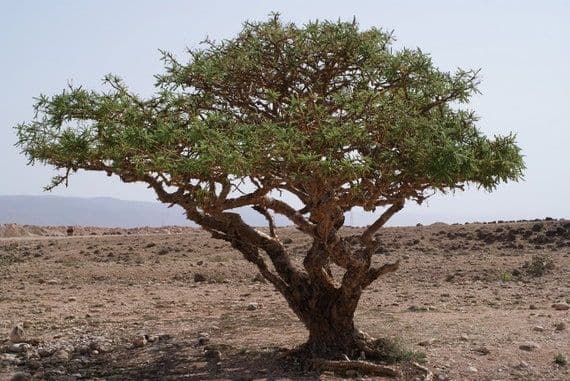


The Frankincense tree is a small, deciduous tree that reaches a height of 2-8 meters. It is known for its fragrant resin, which has been harvested for thousands of years for its aromatic and medicinal properties.
Summary
The Frankincense Tree, also known by its scientific name, Boswellia Sacra, is a tree native to the Arabian Peninsula and the northeastern parts of Africa, particularly Somalia and Ethiopia. These trees play an integral role in the cultural, social, and economic fabric of these regions.
Frankincense, the resin extracted from the tree, is widely used for its aromatic and medicinal properties. The resin is usually harvested by making a deep cut into the thick, paper-like bark of the tree, which then exudes a milky-white resin that hardens upon exposure to air. This resin, once hardened, is the raw frankincense, which can be further processed for various uses.
The frankincense resin has a rich history and has been used in religious and spiritual rituals for thousands of years, particularly in the Christian, Jewish, and Muslim faiths. It is burned as incense in churches and mosques, and it is mentioned in the Bible and the Quran. It was also one of the gifts that the Three Wise Men presented to the newborn Jesus, according to the Christian tradition. In addition to its religious significance, frankincense was historically used in traditional medicine and cosmetics.
The Frankincense Tree is an arid, desert-loving plant that typically grows in rocky and sandy soils. It can withstand harsh environmental conditions, including high temperatures and low rainfall. The tree has a unique ability to adapt and survive in these conditions due to its deep root system and its ability to store water in its bark and leaves. Despite its resilience, the Frankincense Tree is endangered in some regions due to over-harvesting and habitat loss.
Frankincense has been traded for more than 5000 years and continues to be a valuable commodity. It is primarily used in the perfume and personal care industries today. The resin is steam-distilled to extract the oil, which is then used in the manufacture of soaps, lotions, and perfumes. The oil is also used in aromatherapy for its soothing and calming effects. It is believed to have anti-inflammatory properties and to support the immune system.
While the frankincense tree is renowned for its resin, it is also a source of food and habitat for various wildlife species. Birds, insects, and small mammals often inhabit these trees. Some species of birds even feed on the resin, while others use it for nesting materials. The leaves of the Frankincense Tree are also consumed by various herbivores.
Scientific research on the Frankincense Tree and its resin continues to reveal new potential uses and benefits. Some studies suggest that the resin may have anti-cancer properties, while others indicate that it could be useful in the treatment of arthritis and other inflammatory conditions. However, more research is needed to confirm these findings and to fully understand the potential of this incredible tree.
Despite its significance and the increasing demand for its resin, the Frankincense Tree is facing numerous threats. Over-exploitation, unsustainable harvesting methods, land-use change, and climate change are among the issues threatening the survival of these trees. Efforts are being made to conserve the Frankincense Tree and to promote sustainable harvesting practices, but more needs to be done to ensure the survival of this remarkable species.
Frankincense is more than just a tree or a source of resin. It is a symbol of the rich cultural heritage and biodiversity of the regions where it grows. It is a reminder of the intricate relationships between humans and the natural world, and of the importance of protecting and preserving these relationships for future generations.
In conclusion, the Frankincense Tree, with its rich history, cultural significance, and numerous uses, is a fascinating species. Its resin has been cherished for thousands of years for its unique scent and purported health benefits, and it continues to be a valuable commodity in the modern world. However, the survival of the Frankincense Tree is at risk, and it is our collective responsibility to ensure its preservation for the future.
Human Use and Interaction
Frankincense, an aromatic resin obtained from trees of the genus Boswellia, has been widely used by humans for thousands of years. Frankincense trees, particularly Boswellia sacra, are known for their ability to grow in some of the most unforgiving environments on Earth. Even in these harsh conditions, they produce a rich, fragrant resin that has been highly valued by many cultures throughout history.
Frankincense has been used in religious rituals, in the production of perfumes and as traditional medicine. The use of frankincense dates back to ancient times, with references found in the Bible and other historical texts. It was one of the gifts brought by the three wise men to the baby Jesus in the Christian tradition. In the Jewish tradition, it was an important component of the sacred incense used in the Jerusalem temple.
In ancient Egypt, frankincense was used in the mummification process, in cosmetics, and as incense. The Egyptians would grind the hardened resin into a powder, known as kohl, which was then used as eyeliner. Frankincense was also used in traditional Chinese medicine and Ayurvedic medicine for its therapeutic properties.
In addition to its religious and medicinal uses, frankincense has also been used in a variety of commercial products. It is commonly found in skincare products due to its anti-inflammatory and anti-bacterial properties. The oil derived from frankincense resin is also used in aromatherapy for its calming and soothing effects.
Harvesting frankincense is a labor-intensive process that requires skill and knowledge of the trees. The resin is collected by making small cuts in the bark of the tree and allowing the sap to bleed out and harden. This hardened resin is then collected and further processed to produce the final product. The trees need to be at least 8 to 10 years old before they can be tapped for resin.
In recent years, frankincense trees have faced numerous threats, including overharvesting, climate change, and habitat loss. These factors have led to a decline in the population of these trees, threatening the future of frankincense production. There is growing concern among scientists and conservationists about the sustainability of frankincense harvesting, particularly in countries like Oman and Yemen where these trees are native.
Efforts are being made to protect and conserve frankincense trees and to promote sustainable harvesting practices. These include initiatives to train harvesters in sustainable practices, to establish protected areas for these trees, and to conduct research into how to increase their resilience in the face of climate change.
Despite these challenges, frankincense continues to be a highly valued product. Its rich history, myriad uses, and the unique environments in which it grows make it a fascinating subject of study. As we continue to learn more about this remarkable tree and its resin, we can appreciate not only its historical and cultural significance but also its importance to the economies of the regions where it grows and the people who depend on it for their livelihoods.
Moreover, research into the medicinal properties of frankincense is ongoing, with scientists exploring its potential uses in the treatment of a range of conditions from arthritis to cancer. Some studies suggest that compounds found in frankincense have anti-inflammatory, anti-tumor, and anti-microbial properties, among others. However, further research is needed to fully understand these properties and how they can be harnessed for therapeutic use.
In conclusion, the frankincense tree is a remarkable organism that has played a significant role in human history and continues to be of great value today. Its resilience in harsh environments, the unique resin it produces, and its numerous uses make it a truly fascinating subject of study. As we strive to protect and conserve this precious resource, we can learn much from the frankincense tree about survival, adaptation, and the intricate relationship between humans and the natural world.
Cultural and Symbolic Significance
The Frankincense Tree, scientifically known as Boswellia sacra, is a tree that is deeply rooted in history and culture. It is native to the southern Arabian Peninsula and the Horn of Africa, specifically in Oman, Yemen, and Somalia. This tree is renowned for its resinous sap, which, when dried, is transformed into the aromatic frankincense that has been coveted and traded on a global scale for thousands of years.
Frankincense, the resin extracted from the bark of the tree, holds significant cultural and symbolic value. It has been used in religious and spiritual rituals for over 5,000 years, across different cultures and religions. It is mentioned numerous times in the Christian Bible, with perhaps the most well-known reference being the gifts of the Magi to the newborn Jesus: gold, frankincense, and myrrh.
Indeed, in Christianity, frankincense symbolizes divinity. It is used in church services to create a spiritual atmosphere and is believed to symbolize the prayers of the faithful rising to heaven. A key component in Christian liturgical practices, particularly in the Orthodox, Catholic, and Anglican traditions, frankincense is burned during significant religious ceremonies, including Christmas and Easter.
In the Jewish tradition, frankincense was a component of the consecrated incense used in the First and Second Temples in Jerusalem. It was one of the gifts given to honor kings and, more significantly, the gift that symbolized a deity. Among the ancient Egyptians, frankincense was used in rejuvenating face masks, cosmetics, and perfumes. It was also a key ingredient in the embalming process, underscoring the connection between life, death, and spiritual transformation.
For Muslims, frankincense has a special place in religious ceremonies as well. It is used in traditional Islamic weddings and is a common scent in mosques. It is also used to scent homes, as it is believed to bring good health and ward off evil spirits.
In Eastern religions, like Buddhism and Hinduism, frankincense is used in meditation and worship as a means of purifying the self, and as an offering to deities. The burning of frankincense is thought to evoke a sense of tranquility, helping to deepen meditation and spiritual introspection.
Frankincense has also played a significant role in traditional medicine across cultures. Its therapeutic properties, including anti-inflammatory and analgesic effects, have been utilized in Ayurvedic medicine in India, traditional Chinese medicine, and also in ancient Greek and Roman cultures. The resin is used in remedies for a variety of ailments, from digestive disorders to skin diseases.
In addition to its cultural and symbolic importance, the Frankincense Tree also has ecological significance. It grows in some of the world's harshest environments, and its ability to adapt to these conditions makes it a key species in these ecosystems. Despite the tree's resilience, frankincense production is currently facing threats from overexploitation and habitat loss, putting this culturally and ecologically important species at risk.
The Frankincense Tree's rich history and cultural significance, coupled with its ecological importance, make it a symbol of resilience and reverence. It embodies the intersection of the human and natural world, reminding us of the deep connections that exist between culture, religion, medicine, and the environment. Its enduring presence throughout history is a testament to its intrinsic value, not just as a commodity, but as a living symbol of our shared human heritage.
Aesthetic and Experiential
The Frankincense tree, known scientifically as Boswellia sacra, is not just a tree but a living embodiment of history and culture, with an aesthetic that is as unique as its fragrance. This small, deciduous tree exudes an air of grace and resilience, thriving in the harshest of environments. Its beauty is not of the conventional kind, with lush foliage or vibrant blooms, but rather in its stark and rugged form, its peeling bark, and the precious resin it produces.
The tree, native to the Arabian Peninsula and northeastern Africa, has a gnarled and twisted appearance, a testament to its survival in arid, rocky terrains. The branches are sparse and irregular, covered in a thick, papery bark that peels away in places to reveal the smooth, greenish-gray wood beneath. The leaves, though small and seemingly insignificant, are a bright, fresh green, contrasting strongly against the otherwise stark appearance of the tree. The overall aesthetic is one of rustic beauty, with an almost sculptural quality to it.
The Frankincense tree is not usually described as a large tree. It is relatively small and often appears as a shrub. It has a unique aesthetic property that distinguishes it from other trees. Its bark is silvery, and it peels off to reveal a reddish-brown inner layer. The leaves are clustered and have a leathery texture. They are usually bright green and glossy, adding a touch of lushness to the otherwise stark landscape.
The tree blooms in the spring, with small, whitish-pink flowers that add a delicate beauty to the rugged tree. These flowers, though small, are significant, as they are the precursors to the tree's highly prized resin. The resin, which oozes from the tree's bark when it is cut or damaged, is the source of frankincense, a substance that has been highly valued for thousands of years for its aromatic and medicinal properties.
Experientially, the Frankincense tree is a marvel. The sight of these resilient trees clinging to rocky hillsides is a visual testament to nature's tenacity. The way the bark peels away, revealing the fresh, green layer beneath, is a tactile experience, a reminder of the cycle of growth and renewal. The sound of the wind rustling through the sparse leaves is a gentle whisper of life in an otherwise silent landscape.
But perhaps the most significant aspect of the Frankincense tree's experiential appeal is the scent. Frankincense is renowned for its rich, sweet, and slightly spicy aroma, which has been described as woody, earthy, and even slightly citrusy. The scent is released when the resin is burned, filling the air with a fragrance that is deeply calming and grounding. This scent has been used in religious and spiritual practices for thousands of years, and it continues to be valued for its capacity to promote a sense of peace and clarity.
The frankincense resin is harvested by making incisions in the tree's bark. The resin then bleeds out and hardens into 'tears'. These tears are collected and often used in their raw form, or further processed into essential oils or incense. This process is a labor-intensive one, requiring great skill and knowledge of the tree and its cycles. The harvesters have to be careful not to harm the tree during the process, ensuring its survival and continued production of resin.
Frankincense trees have been harvested in this way for thousands of years, and the process is steeped in tradition and cultural significance. The trees are often considered sacred, and the act of harvesting the resin is seen as a privilege, a way of participating in a practice that has been handed down through generations. The experience of being in the presence of these trees, of touching their bark and smelling the resin, is one that connects the individual to a sense of history, of connection to the earth, and to the cycles of nature.
The Frankincense tree, with its unique aesthetic and rich experiential qualities, is a remarkable example of nature's resilience and beauty. Its ability to thrive in harsh conditions, its stark yet striking appearance, its precious resin and the aromatic wonders it offers, all contribute to its intrigue and charm. Whether one is drawn to its visual appeal, its tactile qualities, its scent, or its historical and cultural significance, the Frankincense tree is a testament to the wonder and diversity of the natural world.
References
Share with friends
The Frankincense tree is a small, deciduous tree that reaches a height of 2-8 meters. It is known for its fragrant resin, which has been harvested for thousands of years for its aromatic and medicinal properties.
Common Name
Frankincense Tree
Scientific Name
Boswellia sacra
Family
Burseraceae
Native Region / Habitat
Arabian Peninsula, Northeastern Africa
Tree Type
Deciduous
Lifespan / Age Range
Over 100 years
Growth Habit
Small tree or shrub, often with a many-branched crown
Leaves / Foliage Description
Compound, with leaflets that are oval to elliptical and have a leathery texture
Trunk
The trunk is covered with papery flakes of bark that peel off to reveal a green layer beneath. The sap, or resin, seeps out of the trunk and hardens into lumps, known as 'tears'.
Fruit / Flowering Characteristics
Small, three-lobed capsules containing one to three seeds
Ecological Role
The tree plays a vital role in preventing soil erosion and providing food and shelter for wildlife. The resin is harvested by humans and used for various purposes, including as incense and in traditional medicine.
Related Trees of The World


About
Where Wisdom Meets AI Utopia Edutainment
Wisdomia.ai is a 3D AI edutainment platform that seamlessly blends learning with immersive play. As the first AI-powered 3D Web 3.0 marketplace created by creators for creators. Founded by renowned serial entrepreneur and author Dinis Guarda, Wisdomia empowers individuals to flourish in an ecosystem designed for collective wisdom EQ. Join us in shaping humanity's future as we harness the power of AI to visualise and create a better world—where technology serves human potential, and innovation is guided by utopian wisdom.
Contact us
Produced by

