
loading...
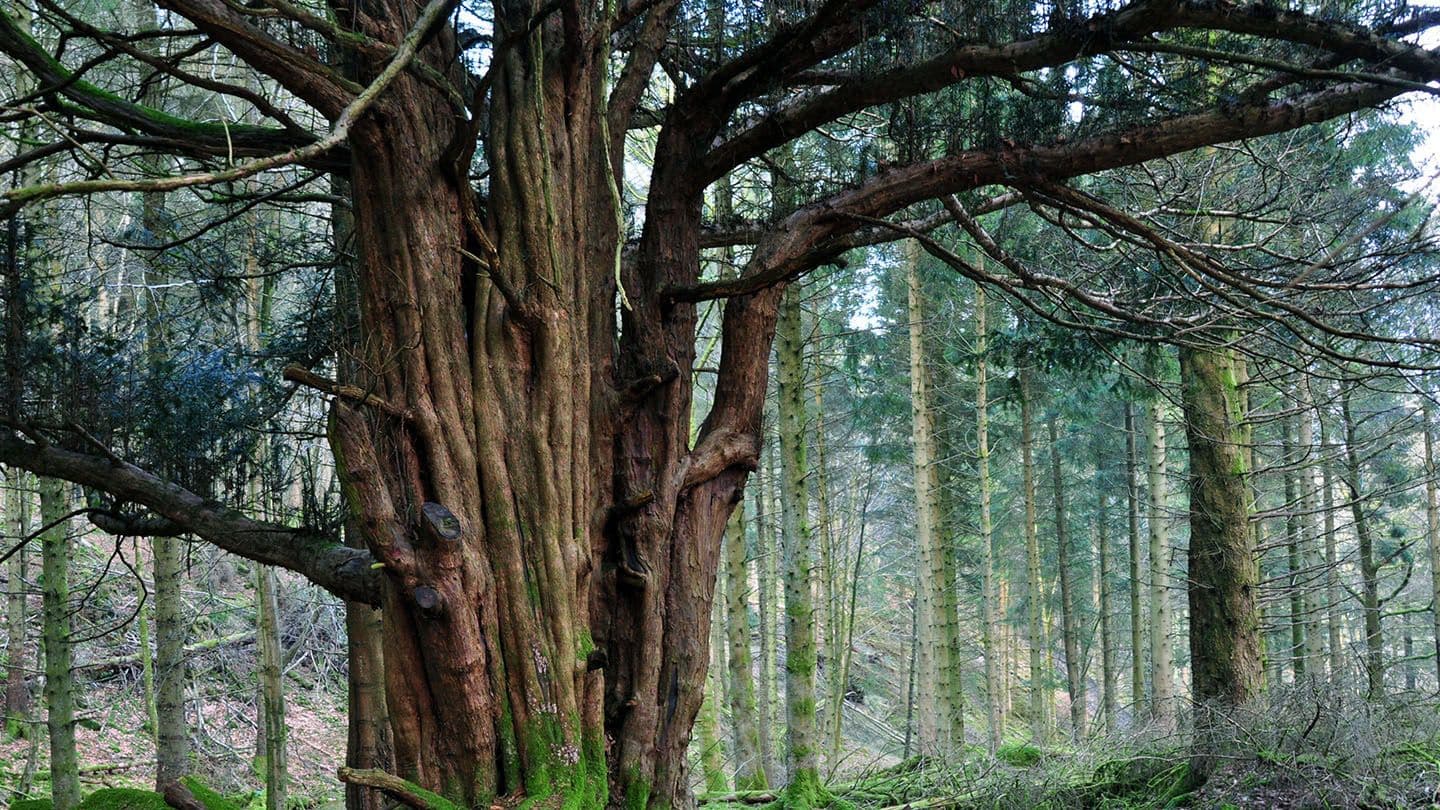


A small to medium-sized evergreen tree, known for its longevity and toxic properties.
Summary
The yew tree is a slow-growing, evergreen conifer native to parts of Asia, Europe, and North Africa. It is part of the Taxus genus, which is part of the Taxaceae family. Known for their longevity, some yew trees are believed to be thousands of years old. They are characterized by their dark-green needles and bright red berry-like fruits, which are technically arils. The seeds inside these arils are toxic, as are most parts of the tree.
Yew trees have a rich history in folklore and mythology. In many cultures, it is considered a symbol of death and resurrection due to its ability to stay green throughout the year and its longevity. The ancient Celts regarded the yew as sacred and believed it could predict the future. In Christianity, the yew is often associated with eternal life. Numerous old churches in the United Kingdom have yew trees planted in their graveyards, a tradition that dates back to the Middle Ages.
The yew tree has been utilized by humans for thousands of years. Its wood is hard and durable, making it ideal for various uses. In the Middle Ages, it was often used to make longbows. The wood's natural elasticity made it an excellent material for this purpose. Today, yew wood is still used in crafting furniture and musical instruments. The yew tree also has medicinal properties. The bark, needles, and seeds contain taxol, a compound used in chemotherapy drugs to treat cancer.
However, the yew tree's toxicity should not be underestimated. All parts of the tree, except the fleshy aril, are poisonous to humans and most animals. This is due to the presence of taxine alkaloids, which can cause fatal heart complications if ingested. Despite this, some animals, like the European roe deer, can tolerate the toxins. Ingesting the seeds can be especially dangerous as they contain a high concentration of these toxins. Therefore, while yew trees can be beautiful additions to a landscape, caution should be taken if they are accessible to children or pets.
The yew tree is a species that prefers shade or semi-shade. It is commonly found in the understory of forests or on north-facing slopes. It can adapt to a variety of soil types, but it prefers well-drained soils. The yew tree is also tolerant of urban pollution, making it a popular choice for urban landscaping. Despite its adaptability, the yew tree is threatened in some areas due to over-harvesting for its valuable wood and medicinal properties.
Yew trees have a unique growth habit. They typically have a single trunk, but as they age, they can develop multiple trunks and become quite sprawling. The branches tend to droop, and the foliage is dense, creating a canopy that blocks light and prevents other plants from growing underneath. The bark is reddish-brown and peels in small flakes. The trees are dioecious, meaning individual trees are either male or female. Male trees produce small, globular cones, while female trees produce the red arils.
Overall, the yew tree is a fascinating species with a rich history and numerous uses. Its longevity, beauty, and symbolic importance have made it a beloved tree in many cultures. Despite its toxicity, it continues to be utilized for its wood and medicinal properties. With proper care and attention to its potential dangers, the yew tree can be a wonderful addition to a garden or landscape.
Human Use and Interaction
The Yew tree, botanically known as Taxus baccata, has been a significant part of human culture and history for centuries. This evergreen conifer, native to western, central and southern Europe, northwest Africa, northern Iran and southwest Asia, is known for its longevity and resilience, with some specimens estimated to be over 2000 years old. Its dense, dark green foliage and bright red berries make it an attractive feature in gardens and landscapes, but it also has a multitude of practical uses.
The wood of the Yew tree is extremely hard, flexible and durable, making it ideal for a variety of applications. Historically, it was the preferred wood for making longbows, a type of weapon that was crucial in medieval warfare, most notably in the Battle of Agincourt during the Hundred Years War. The elasticity of Yew wood allowed the longbows to be drawn back far without breaking, while its hardness ensured that the arrows would fly straight and true. Beyond weaponry, Yew wood has also been used for making furniture, tool handles, and even musical instruments due to its acoustic properties.
Aside from its practical uses, the Yew tree also holds a significant place in folklore and mythology. In Celtic culture, it was considered sacred and was believed to symbolize death and resurrection due to its ability to regrow from its own decay. In Christian tradition, Yew trees are often found in churchyards, possibly because of their association with eternity and resurrection, or perhaps because their toxic properties deterred animals from disturbing the graves. The Druids also revered the Yew tree and used it in their rituals and ceremonies.
The Yew tree, however, is not just of historical and cultural importance, it also has significant medicinal properties. The bark, leaves and seeds of the Yew tree contain compounds that have been used in traditional medicine for centuries. One of these compounds, paclitaxel, is used today in the treatment of various forms of cancer. It was first discovered in the bark of the Pacific Yew tree in the 1960s, and since then, it has saved countless lives. The use of Yew in medicine, however, must be approached with caution as all parts of the tree, except the aril that surrounds the seed, are toxic to humans and animals if ingested.
In terms of its interaction with the environment, the Yew tree plays a crucial role in supporting biodiversity. Its dense foliage provides shelter for a variety of birds and small mammals, while its seeds are a source of food for certain bird species. The tree's longevity also means it can provide a stable habitat for many years. Furthermore, like all trees, the Yew tree plays a role in mitigating climate change by absorbing carbon dioxide from the atmosphere.
Despite the many uses and benefits of the Yew tree, it has faced threats due to overexploitation and habitat loss. In the past, the demand for Yew wood for longbows led to deforestation and the decline of Yew populations in many parts of Europe. Today, the tree is protected in many areas and efforts are being made to ensure its preservation.
In conclusion, the Yew tree is a remarkable species with a rich history and a multitude of uses, from practical applications in woodworking and medicine, to symbolic representations in culture and folklore. Its longevity and resilience make it a symbol of endurance, while its medicinal properties underline the importance of biodiversity and the potential of nature to provide solutions to human health challenges. As we continue to interact with and rely on the Yew tree, it is crucial that we do so in a sustainable and respectful manner, ensuring its preservation for generations to come.
Cultural and Symbolic Significance
The yew tree, a coniferous evergreen found throughout the world, holds a significant place in many different cultures. It is a tree that has been venerated for its longevity and resilience, often found in ancient churchyards and sacred sites. The yew tree embodies a variety of cultural and symbolic meanings, making it a fascinating subject of study.
In Celtic culture, the yew tree holds a special place. The Celts believed that the yew tree had magical properties, and they used its wood to make their longbows. The tree symbolizes death and resurrection in their folklore because of its ability to regenerate from its own decay. The Celts considered yew trees as sacred and often planted them near their temples and burial grounds. In fact, many ancient yew trees can still be found in old Celtic churchyards today.
The yew tree also has a significant place in Greek mythology. According to legend, the Greek god Apollo transformed his beloved Daphne into a yew tree to save her from the advances of Eros. Thus, the yew tree symbolizes transformation and immortality in Greek mythology.
In the British Isles, the yew tree has been associated with churches and sacred sites for centuries. Some of the oldest living yew trees are found in churchyards, often predating the churches themselves. The tree is often associated with the Christian symbol of eternal life, as the yew tree retains its green foliage throughout the year and can live for thousands of years.
In Scandinavian folklore, yew trees were believed to protect against evil spirits and were often planted around homes and churches for protection. In Norse mythology, the world tree Yggdrasil, which connects the nine worlds, is often thought to be a yew tree. The tree is associated with the god Odin, who hung himself from Yggdrasil as a self-sacrifice, further emphasizing the tree's association with death and resurrection.
In many Native American cultures, the yew tree holds medicinal significance. The bark, needles, and berries of the tree have been used in traditional medicine for ailments ranging from cancer to rheumatism. The tree's medicinal properties are now recognized by modern science, with the chemotherapy drug Taxol derived from the bark of the Pacific yew tree.
In Asian cultures, the yew tree holds a place of honor. In Japan, the tree is used to make the traditional longbow, the yumi. The tree is also significant in Chinese folklore, where it is associated with the god of the underworld, due to its long lifespan and association with death and rebirth.
The yew tree also holds symbolic significance in literature and art. In J.R.R. Tolkien's Middle Earth, the yew tree is associated with the elves, creatures known for their longevity and wisdom. In Shakespeare's Macbeth, the witches use yew in their brew, further emphasizing the tree's association with death and the supernatural.
Overall, the yew tree is a remarkable species that has held a significant place in human culture and symbolism for millennia. Its long lifespan, evergreen foliage, and ability to regenerate from decay make it a potent symbol of death and rebirth, transformation, and immortality. Whether in a Celtic churchyard, a Scandinavian saga, or a modern cancer treatment, the yew tree continues to fascinate and inspire with its resilience and beauty.
Aesthetic and Experiential
The Yew tree, known scientifically as Taxus baccata, is a tree of beauty, history, and intrigue. Its aesthetic appeal and experiential qualities make it a popular tree in both landscaping and mythology. The Yew tree has a striking visual appearance. With its dense, dark green foliage and reddish-brown, flaky bark, it is a tree that captures attention and inspires admiration. Its branches droop down to the ground, creating a cascading effect that adds to its visual appeal. In the autumn, the tree produces bright red berries, which contrast beautifully with the dark green of the leaves.
From an experiential perspective, the Yew tree offers many unique qualities. It's known for its longevity, with some Yew trees thought to be over a thousand years old. This sense of history and timelessness can be felt when standing beneath a Yew tree, as you are literally touching a living thing that has witnessed centuries of the world's history. The tree's longevity also means it's often found in historic places such as churchyards and ancient forests, adding to its experiential appeal.
Another aspect of the Yew tree's experiential quality is its association with mythology and symbolism. In Celtic mythology, the Yew tree is seen as a symbol of death and rebirth, a cycle it beautifully illustrates with its evergreen leaves and annual fruiting. This association with death is also reflected in the tree's toxicity. All parts of the Yew tree, except the flesh of the berries, are toxic to humans and animals, adding a dangerous allure to its beauty.
The Yew tree's aesthetic and experiential qualities extend to its uses. Its wood is dense and durable, making it ideal for crafting items such as furniture and musical instruments. Its strong, flexible nature also made it the wood of choice for English longbows in medieval times. This practical use of the tree adds another layer to its appeal, as it's not just a beautiful tree to look at, but also a useful one.
Furthermore, the Yew tree's aesthetic beauty is not limited to its physical appearance. Its shape and form have inspired many artists and poets over the centuries. From the intricate patterns of its bark to the delicate balance of its branches, the Yew tree provides endless inspiration for those with a creative eye. Its beauty is not just in its physical form but also in the emotions it evokes and the stories it tells.
From an experiential viewpoint, the Yew tree offers a rich sensory experience. The rustling of its leaves in the wind, the softness of its berries, the rough texture of its bark - all these elements combine to create a unique sensory experience. Even its scent, a mix of earthiness and freshness, adds to the overall experience of being near a Yew tree.
In conclusion, the Yew tree's aesthetic and experiential appeal lie not just in its physical beauty, but also in its history, symbolism, and sensory qualities. It's a tree that tells a story, a tree that has witnessed centuries of history, and a tree that offers a unique sensory experience. Whether you're appreciating its visual beauty, exploring its historical significance, or simply enjoying the sensory experience it offers, the Yew tree is a tree that offers a wealth of aesthetic and experiential qualities.
References
Share with friends
A small to medium-sized evergreen tree, known for its longevity and toxic properties.
Common Name
Yew Tree
Scientific Name
Taxus baccata
Family
Taxaceae
Native Region / Habitat
Europe, Northwest Africa, Northern Iran
Tree Type
Evergreen
Lifespan / Age Range
Up to 2000 years
Growth Habit
Slow growing, dense and bushy
Leaves / Foliage Description
Dark-green, needle-like, spirally arranged
Trunk
Brown, scaly bark, can be hollow in older trees
Fruit / Flowering Characteristics
A small, red, berry-like structure known as an aril
Ecological Role
Source of shelter and food for various wildlife, plays a role in stabilizing the ecosystem
Related Trees of The World


About
Where Wisdom Meets AI Utopia Edutainment
Wisdomia.ai is a 3D AI edutainment platform that seamlessly blends learning with immersive play. As the first AI-powered 3D Web 3.0 marketplace created by creators for creators. Founded by renowned serial entrepreneur and author Dinis Guarda, Wisdomia empowers individuals to flourish in an ecosystem designed for collective wisdom EQ. Join us in shaping humanity's future as we harness the power of AI to visualise and create a better world—where technology serves human potential, and innovation is guided by utopian wisdom.
Contact us
Produced by

